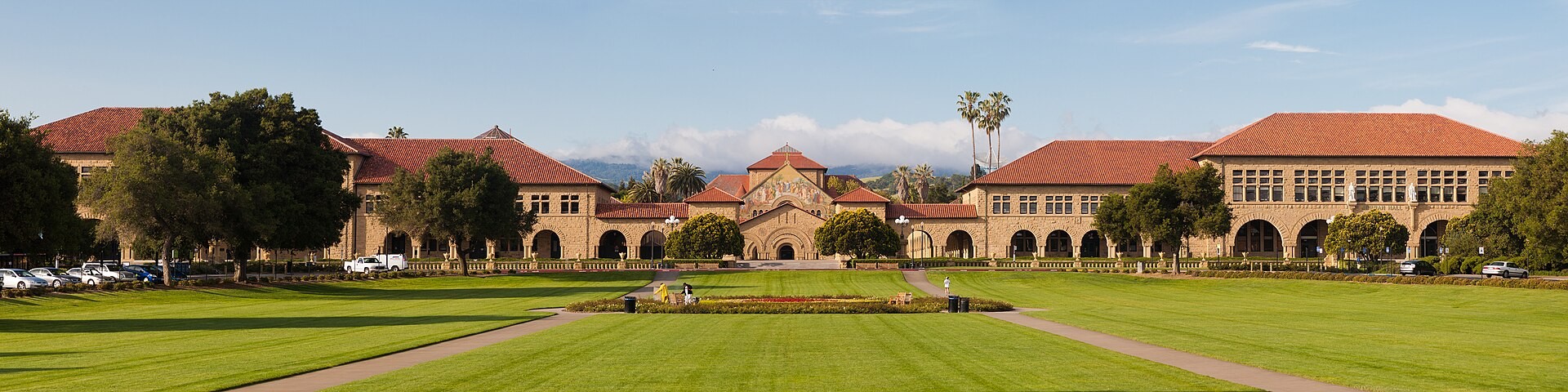
Stanford University is a private research university headquartered in Stanford, California, founded in 1885 by Leland Stanford and Jane Lathrop Stanford. It functions as a private not-for-profit educational institution and an open-access publisher, and it employs 16,673 people. The university began as a memorial to the couple’s only child, Leland Stanford Jr. who died of typhoid fever. The university remains one of the country’s major research institutions, with its Board of Trustees serving as custodian of its endowment and properties.
Key facts
- Country: United States
- Founded: 1885
- Headquarters: Stanford
- Founder: Leland Stanford; Jane Stanford
- Type: private university; research university; private not-for-profit educational institution; open-access publisher
- Employees: 16,673
- Website: https://stanford.edu
Founding and early years
The university’s founding grant of endowment was executed on November 11, 1885, conveying the Palo Alto Farm and other properties to 24 original trustees. Leland Stanford and Jane Stanford created the institution after the death of their son, establishing it as a memorial in his name.
Herbert Hoover, a member of Stanford’s Pioneer Class of 1895 and later a university benefactor and trustee, worked with university leadership in the 1920s to professionalize operations and put Stanford on a sound financial footing. Hoover went on to become a U.S. president.
Governance and finances
The Board of Trustees, chaired by Lily Sarafan, is custodian of the endowment and all the properties of Stanford University. At a January 2026 “State of Stanford” event, President Jonathan Levin said that new U.S. tax legislation on university endowments means Stanford will owe $200 to $300 million per year in additional taxes.
At the same event, Levin said the university plans to build a comprehensive cancer center.
Admissions and student support
Stanford offers need-blind admissions for domestic students and provides scholarship support to meet enrolled students’ demonstrated financial need. More than 80 percent of undergraduates graduate without debt.
The university was affected by a nationwide college admissions fraud scheme, which led to the firing of its sailing coach and the introduction of new admissions safeguards.
Recent controversies
Former Stanford president Marc Tessier-Lavigne resigned in 2023 after a Stanford Daily investigation, beginning with a report published November 29, 2022, revealed manipulated images and data discrepancies in multiple scientific papers he had co-authored. In 2026, Tessier-Lavigne publicly responded to new allegations in a book, which claimed that the Stanford board’s statement on the matter had described his handling of the controversy as reflecting an “admit-nothing, deny-everything approach.”
In 2026, Stanford admitted it had violated its own artificial intelligence rules when its Residential and Dining Enterprises division used generative AI to alter a promotional image, changing one student’s race, gender, and appearance without disclosure.
Did you know
- Stanford’s Hoover Tower stands 285 feet tall and offers panoramic views of the campus and surrounding areas. (facts.net)
Data sources
- Wikidata
- stanford.edu
- astotshandbook.stanford.edu
- bps.stanford.edu
- statnews.com
- stanfordmag.org
- legalinsurrection.com
- stanforddaily.com
Where it appears
- Hawaiians’ DNA Traces Back 4,400 Miles to Easter Island November 7, 2026
Data updated: 2026-11-07