Half Horse, Half Hero, All Nonsense (In the Best Way)
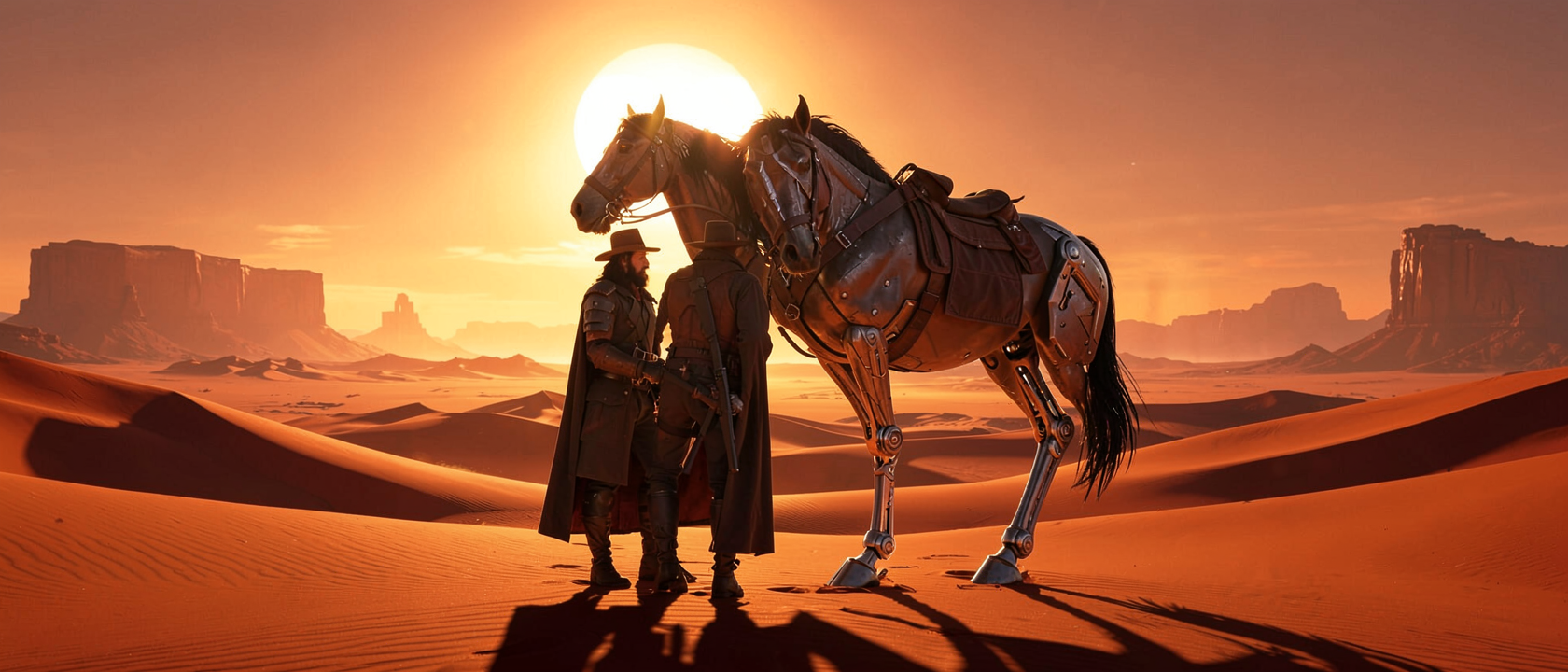
Picture a lawman patrolling the frontier of outer space who is also, somehow, part horse. He spots trouble a ridge away with a hawk’s eyes, hears a getaway ship warming up with a wolf’s ears, overpowers an outlaw with a bear’s strength, and outruns a buggy with a puma’s speed. It sounds like a toy company’s fever dream, but it was a real, syndicated American cartoon.
His name is Marshal BraveStarr, keeping the peace on New Texas, a multicultural desert planet on the frontier of a 23rd-century intergalactic society. The series ran in the United States from September 14, 1987, to February 24, 1988, though sources differ slightly on the exact premiere date. Filmation produced it: 65 half-hour episodes, syndicated to stations across the U.S. and abroad.
Why Would Anyone Combine a Horse, a Hawk, a Wolf, a Bear, and a Puma?
None of those four animals was picked at random. Hawks really do have remarkable eyesight, wolves really do hear better than most predators their size, bears are famous for raw power, and pumas, also called mountain lions, are built for short, fast chases. Whoever wrote BraveStarr’s bible matched each power to a real reputation, not a random trait.
So is this careful world-building, or 1980s toy-shelf logic dressed up as mythology? BraveStarr debuted a year after Mattel had already released a line of BraveStarr action figures, a suspicious timeline. His sidekick, Thirty-Thirty, was also a horse, a cyborg one, named in honor of a rifle, so apparently even a horse-man needs something to ride. Look closer at how the powers actually get used, though, and a real structure shows up underneath the weirdness.
The Logic Behind the Legend
Line the four powers up and a pattern appears. Hawk eyes spot trouble before it becomes a problem. Wolf ears catch a threat before he can even see it. Bear strength wins the fight once trouble finds him anyway. Puma speed runs down anyone who decides to flee instead. Spot it, hear it, fight it, catch it: four stages of frontier law enforcement, one power assigned to each.
It works like a multitool, one blade per job, nothing wasted. That same logic shaped the whole show: an old Western sheriff archetype rebuilt with science-fiction parts instead of magic. Filmation conceived BraveStarr as a futuristic lawman from a Native American culture, patrolling a 23rd-century frontier instead of the Old West. Historian Hal Erickson calls him one of the few Native American leads in American TV animation. He even traded a six-shooter for a sidearm called a Neutra-laser.
Why You’ve Never Actually Seen an Episode
Ask around and people will call BraveStarr a classic. Ask them to describe one episode and the conversation usually stalls. The show survives as a title, a logo, a horse-man silhouette, not as a remembered story.
What’s actually well documented is business, not plot. BraveStarr was Filmation’s final animated series before the studio closed in 1989. A tie-in prequel, BraveStarr: The Movie, arrived a month after the show ended, and a Prairie People spin-off called Bravo was already in development at the time. None of that tells you what happened on New Texas from one week to the next. For a certain tier of 1980s syndicated cartoons, that’s just normal: famous as a product, forgotten as a story.
How a Space Cowboy Horse Became T-Shirt Art
These days, if BraveStarr shows up anywhere, it’s probably on a shirt rather than a screen. Illustrator Russ Jericho, a self-taught digital artist working since 2004, turned him into one of his designs, sold through NeatoShop, a marketplace where independent artists sell their own work.
Much of retro pop culture survives exactly this way, as an image you wear rather than a show you actually sit down and rewatch. Jericho’s other designs make the pattern obvious: alongside BraveStarr, his catalog includes TyrannoRanger, TriceraRanger, Happy Mrs. Chicken, and Elfmade, each one pulling some half-forgotten corner of ’80s and ’90s pop culture into a fresh illustration. Nobody’s rewatching BraveStarr’s old episodes. People are recognizing him, printing him, and wearing him.
The Real Pattern You Just Spotted
Step back and BraveStarr turns out to be a clean example of something bigger. Some characters don’t last because of their stories; they last because of their concept, their silhouette, the one strange idea that sticks around after the plot is forgotten. A horse-man sheriff with a hawk’s eyes and a bear’s strength is exactly that kind of idea: no remembered episode needed, just instant recognition the second it’s printed on a shirt.
Once you notice that, you start spotting it everywhere: old toy-line mascots nobody can place, cereal-box characters with no memorable commercial, one-image legends that circulate online without anyone agreeing where they came from. The next time a strange piece of nostalgic art catches your eye and you can’t quite place the show it came from, that’s probably what happened. The image outlived the story a long time ago.