The Bartender Was Right All Along
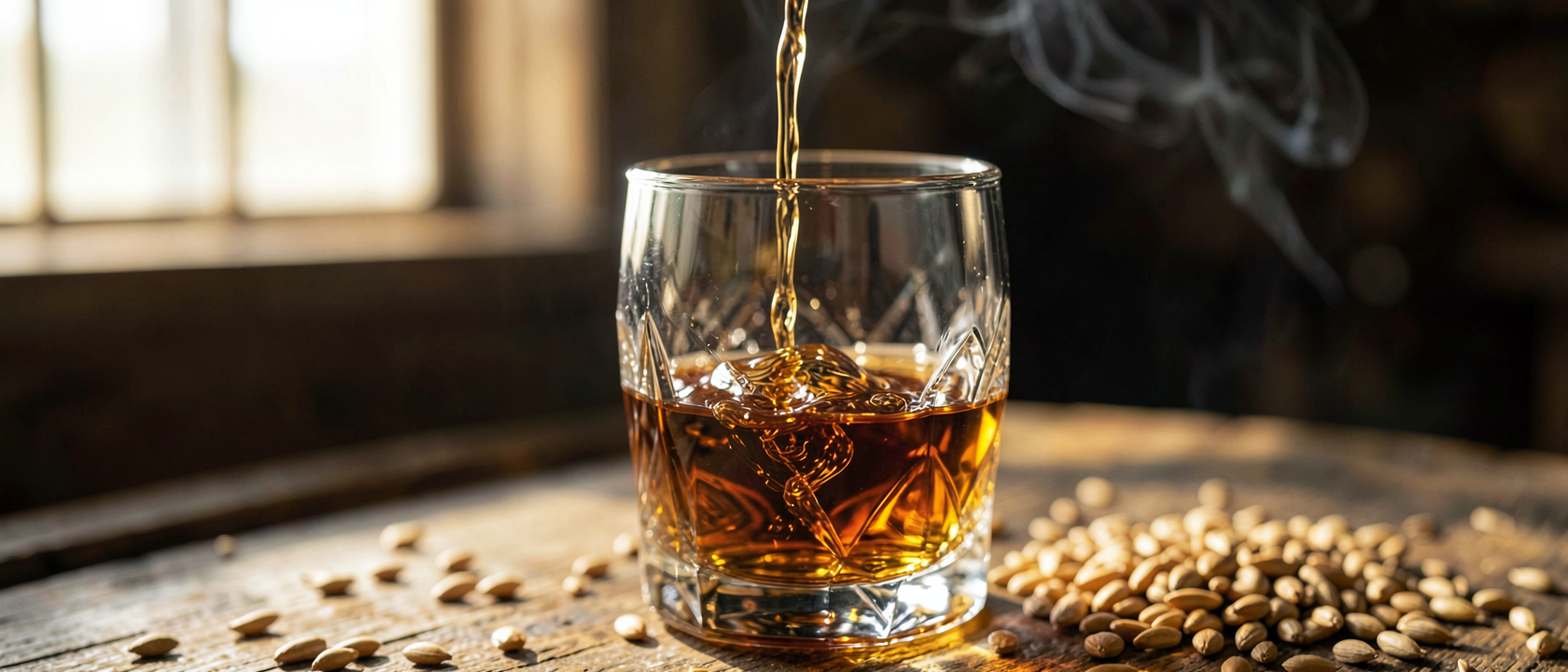
Someone orders a dram, asks for a splash of water, and the person next to them winces. Whisky purists have argued this for generations: water-adders say it opens the drink up, purists say it waters it down. Both sides usually argue from instinct, not evidence.
Chemists Björn Karlsson and Ran Friedman of Linnaeus University in Kalmar, Sweden, decided to look at what water does to whisky at the molecular level. What they found suggests the bartenders may have been onto something real, they just didn’t have the chemistry to explain it.
Wait, Shouldn’t Water Make It Weaker?
Water is, by definition, a diluting agent. Pour it in and you’re spreading the same flavor across more liquid, less flavor per sip, a flatter drink, not a more interesting one. That’s exactly what people assume when they watch someone “ruin” a good whisky with a few drops from a jug.
So why do experienced drinkers swear the opposite happens? Either centuries of tradition are built on placebo, or whisky chemistry doesn’t behave the way simple dilution math predicts. That gap between expectation and experience is worth chasing down.
Molecules That Can’t Decide Where They Belong
The answer starts with guaiacol (2-methoxyphenol), a compound that forms when malted grain is dried over peat smoke and gives whiskies like Islay single malts their smoky character.
Guaiacol has a split personality: part of its structure is drawn to water; part of it avoids water and prefers alcohol. Chemists call this “amphipathic”, the same trick soap uses, with one end grabbing grease and the other grabbing water. Because guaiacol is pulled in two directions at once, it doesn’t dissolve evenly and sit still; it moves, settling in different places depending on what’s around it.
The Surface Is Where the Magic Happens
Using molecular dynamics simulations, detailed computer models tracking thousands of molecules at once, Karlsson and Friedman simulated 5,000 water and ethanol molecules with a single guaiacol molecule at different alcohol concentrations.
At concentrations up to 45% alcohol by volume, guaiacol gathers at the liquid-air interface, the thin boundary layer at the top of the glass where molecules escape into the air you smell and interact most directly with your tongue. Diluting further, to 27% alcohol, pushed even more guaiacol to that surface, intensifying its presence where your senses can catch it.
Push alcohol content above 59%, and the effect reverses: ethanol binds more tightly to guaiacol and drags it back into the bulk liquid, away from the surface. That may help explain why a whisky straight from a high-proof cask can taste muted on the smoke until it’s cut with water.
Why Distillers Already Knew This
This lines up with distilling practice. Whisky comes off the still at around 70% alcohol. Maturation lowers that by roughly 5 to 15 percentage points, still too strong for most palates, so it’s diluted again to around 40% before bottling.
- Distilled off the still~70% alcohol by volume
- Maturation in caskloses 5–15 percentage points of alcohol
- Diluted before bottling~40% alcohol by volume
- Optional splash at the barfurther enhances guaiacol at liquid-air interface
That step isn’t only about easing the drink down. Per Karlsson and Friedman’s findings, it can shift guaiacol and similar compounds toward that flavor-amplifying surface layer. The same logic applies to a splash added at the bar: the bartender wasn’t just following ritual, they were unknowingly nudging the chemistry.
Before You Start Watering Down Everything
A few limits apply. The research centers on guaiacol specifically, not every flavor molecule in every spirit, and it was a computer simulation rather than a taste-panel experiment, so it explains a mechanism rather than proving how any given glass will taste to any given person.
There’s no universal “correct” amount of water. As Karlsson put it, there’s a fine balance between diluting whisky to taste and diluting it to waste. Since aroma and flavor are highly individual, how much water helps depends on the whisky and the drinker. Some researchers have suggested the same principle could apply to gin, rum, and brandy, though that remains untested.
The Skill Is Noticing What Others Walk Past
Most people taste a drink improving with a splash of water and leave it at that, without asking why. The interesting part of this story was never really the whisky, it’s the instinct to stop at something small and ordinary and wonder what’s happening underneath it.
That’s the same instinct that turned a bar-counter habit into a published chemistry study. Most people who notice something unexplained just shrug and move on. The ones who don’t are the ones who end up knowing something worth telling someone else.