The Spa Trip With a Secret Project
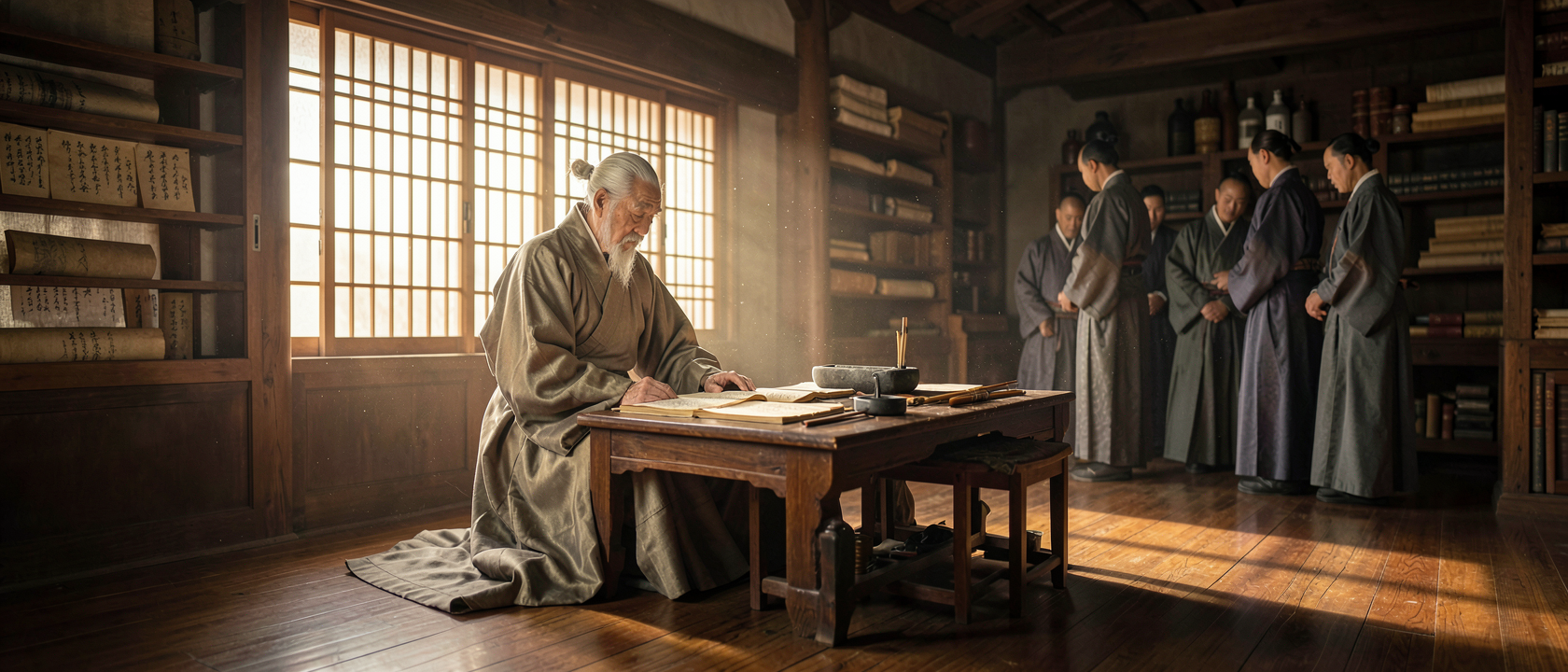
In the early 1440s, King Sejong of Korea was already in declining health, with failing eyesight and, by some accounts, chronic pain and a condition resembling diabetes, though the exact diagnoses come down to us through just one historical account and aren’t independently confirmed. He traveled to hot springs for treatment, then spent the time there secretly working on a new way of writing Korean, hidden from the very officials whose job was to advise him.
Why Hide a Writing System?
Teaching people to read is normally something a kingdom brags about, since literacy makes an administration look stronger. Sejong treated his alphabet as a secret worth protecting instead, for reasons that had little to do with the alphabet itself and everything to do with who already controlled access to writing.
The Alphabet That Took a Decade to Learn
Before Hangul, Korean had no writing system of its own. Educated Koreans used hanja, thousands of Chinese characters, each memorized individually and poorly suited to Korean grammar. Reaching fluency took close to a decade of study, time only a wealthy yangban family, Korea’s aristocratic ruling class, could spare for a son not expected to farm or trade. That difficulty worked in the ruling class’s favor: if literacy took a decade of a family’s resources, only families like theirs would gain it, keeping reading and status locked inside their circle.
An Alphabet Shaped Like Your Mouth
Hangul’s cleverness is in its shapes. Each consonant was drawn to sketch the tongue, teeth, or lip position used to make its sound: the letter for k echoes the tongue lifting toward the roof of the mouth, the one for n echoes the tongue tapping behind the front teeth, and the one for m echoes the closed lips. The original alphabet had 28 letters, 17 consonants and 11 vowels, built on this same principle. It is also a hybrid: every symbol stands for a single sound, as in English, but those symbols are grouped into blocks, one per syllable, deliberate engineering that still draws praise from linguists as one of the most logically built writing systems in use.
The Complaint Letter That Called Literacy Disrespectful
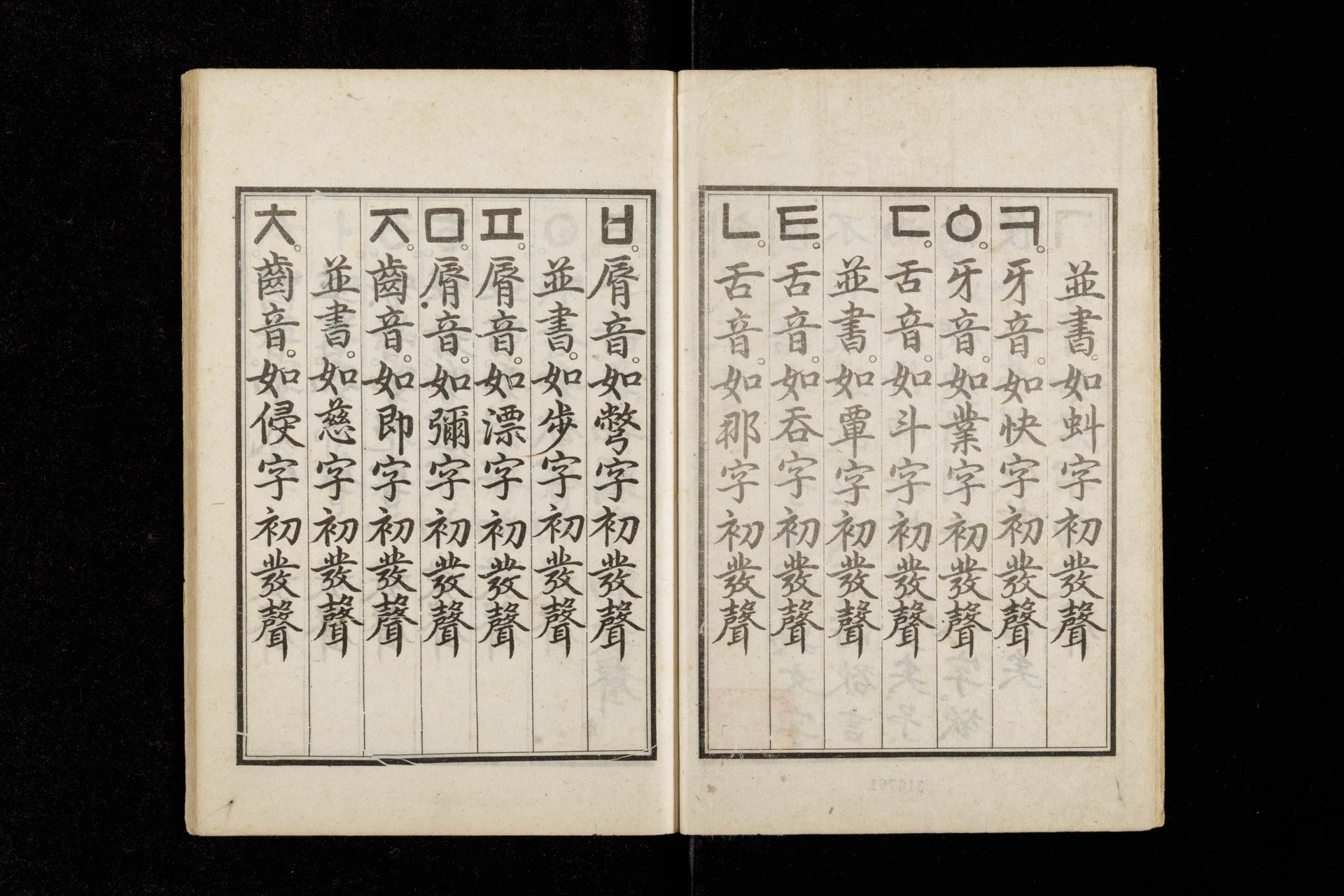
Sejong revealed the finished alphabet to his court in late 1443, then published the Hunminjeongeum (“The Correct Sounds for the Instruction of the People”) in 1446. His scholar-officials pushed back, arguing it would look disrespectful toward China and make Korea seem culturally backward. Some claimed it would cheapen generations of scholarship, and a few complained that Crown Prince Munjong had wasted his time helping with it. Left unsaid was why an easy alphabet might threaten the officials themselves: their mastery of thousands of characters was exactly what separated them from everyone below them.

Published Anyway, Then Quietly Buried
Sejong published the Hunminjeongeum regardless and died four years later, in 1450, taking the alphabet’s strongest protector with him. His son Munjong reigned only until 1452, and the throne passed to Munjong’s son Danjong, about twelve years old, neither one with the authority to shield Hangul from officials eager to push it aside. Without royal backing, the script survived mainly in personal letters and everyday writing among women and commoners, far from official documents, earning it a dismissive label among the elite: women’s letters. It kept going largely because ordinary people kept using it.
When an Alphabet Became a Crime
The clearest proof of what the yangban had feared came under King Yeonsan, a later Joseon monarch remembered for violent and repressive rule. According to one historical account, an anonymous letter written in Hangul and critical of his government appeared in the capital in 1504; when the author couldn’t be found, Hangul texts were reportedly burned. Whatever the exact details, the episode fits a pattern historians agree on: Yeonsan treated the spread of plain, readable Korean as a danger to his authority, confirming exactly what officials had worried about decades earlier. A script simple enough for anyone to learn was simple enough for anyone to use against the people in charge.
‘Dumbing Down’ Is an Old Accusation
Korea’s scholar-officials weren’t the last to treat an easier writing system as a threat to culture. The same complaint has resurfaced around spelling reforms, simplified scripts, and plain-language movements, usually from people already comfortable with the harder version, rarely backed by solid evidence of real cultural loss. Making something easier to read and losing depth of meaning are different issues, and treating them as the same thing has a long history of protecting whoever already benefits from complexity.
The Alphabet That Outlasted Its Critics
Court records from the period credit Sejong personally, and almost exclusively, with designing Hangul, while a group of scholars wrote the companion commentary explaining it. Historians still debate how much those scholars, and possibly Munjong himself, shaped the final design, since crediting the monarch alone was standard practice in a dynasty built on royal authority. What’s not in dispute is how the story ends: Hangul only became Korea’s official national script in 1894, nearly five centuries after Sejong finished it, and the Hunminjeongeum itself was named a national treasure of Korea in 1962 and added to UNESCO’s Memory of the World Register in 1997. The nobles who dismissed it as women’s writing lost; the alphabet is still here.