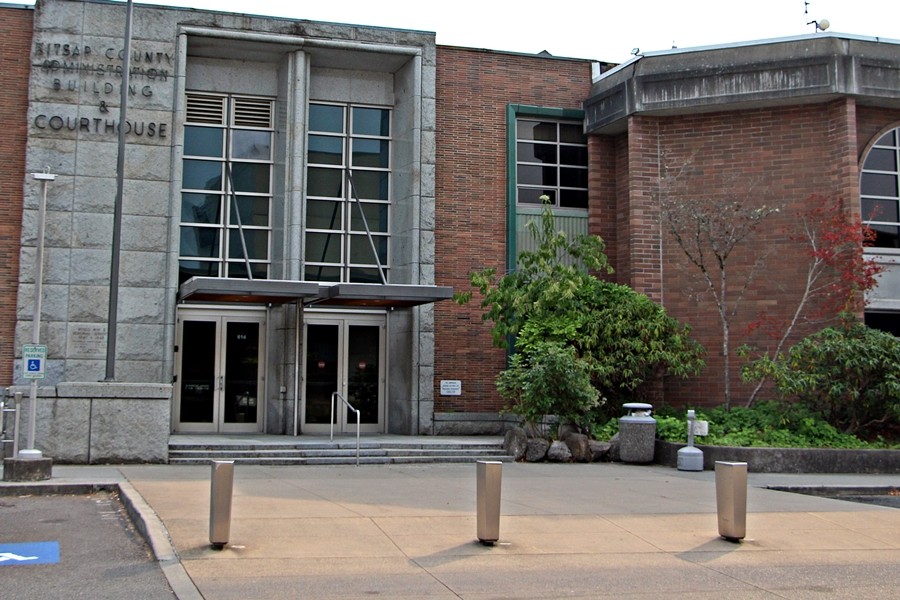
Kitsap County is a county of Washington state in the United States, occupying the northern end of the Kitsap Peninsula between Hood Canal and Admiralty Strait. It was founded in 1857 and named after a military leader of the Suquamish Tribe. The county spans 1,466 square kilometers and holds a population of 275,611. Its location on Puget Sound made it the site of a major naval shipyard that has shaped its economy for well over a century.
Key facts
- Country: United States
- Type: county of Washington
- Located in: Washington
- Coordinates: 47.6400, -122.6500
- Population: 275,611
- Area: 1,466 km²
- Founded: 1857
Geography
Kitsap County sits at coordinates 47.6400, -122.6500, on the peninsula that bears its name, bounded by Hood Canal to the west and Admiralty Strait to the north and east. In 1909, its area was recorded as 392 square miles, with a population of almost 15,000 at the time. The county was then heavily timbered with fir and hemlock on higher ground, and lumbering was its primary industry, feeding the mills that lined the shoreline before the naval economy took over.
Early history and governance
The county’s first county seat was Port Madison. The seat moved to Port Orchard, then known as Sidney, in January 1893, a change that reflected the shifting balance of population and trade around the peninsula. From the 1850s to the 1930s, the Mosquito Fleet of steamers served Puget Sound communities, connecting Kitsap County to the rest of Washington before road networks matured and giving isolated settlements their main link to markets and mail.
In 1938, the Klallam people received their own reserve in the north of the county, the Port Gamble Reservation. Until World War II, Kitsap County remained largely agricultural, aside from the shipyard and related military activity already underway in Bremerton, which stood apart from the farms and timber claims that otherwise defined the local economy.
The naval shipyard and its growth
In September 1891, 190 acres of land were purchased for $10,000 to establish the first Naval Station Puget Sound in Bremerton. In 1900, the station became a shipyard and was the only West Coast ship repair facility until 1941, giving it an outsized role in servicing the Pacific fleet long before the Second World War. By 1945, its wartime workforce had grown to more than 32,000 personnel, a scale that transformed Bremerton and the surrounding towns almost overnight.
Bangor became the homeport for the first squadron of Trident submarines in 1973 and was officially commissioned Naval Submarine Base Bangor in 1977. On June 4, 2004, Naval Base Kitsap was officially established, centralizing five geographically separate naval installations into one command. It is the largest naval installation in the Northwest and the third largest in the United States, a position built on decades of shipyard work, submarine basing, and steady expansion of facilities around the Sound.
Economic impact and population change
A Fiscal Year 2017 Economic Impact Assessment found that the Navy contributed $4.0 billion in total economic activity to the Kitsap County region and employed approximately 45,532 direct and indirect workers. That activity generated $129 million in local tax revenues, money that flowed into county and municipal budgets well beyond the base gates.
Between 1940 and 2005, Kitsap County’s population multiplied by more than five times, a shift driven largely by the growth of the naval base and its surrounding workforce. The county’s trajectory from a lumbering economy of under 15,000 residents in 1909 to a modern population of 275,611 traces directly back to that naval expansion, which drew workers, families, and supporting industries to the peninsula over successive decades.
Data sources
Data updated: 2026-11-13