The Name Everyone Pins on the Wrong Kidnapping
Ask someone where “Stockholm Syndrome” comes from and you’ll usually get the same answer: Patty Hearst, the kidnapped heiress who seemed to switch sides and join her captors. It’s a memorable story, and it’s the one that stuck in pop culture. But the term already existed a full year before Hearst’s case ever made the news, coined after a six-day bank standoff in central Stockholm in 1973, a case most people have never heard of. If Hearst wasn’t the origin, where did the name come from?
Six Days at Kreditbanken
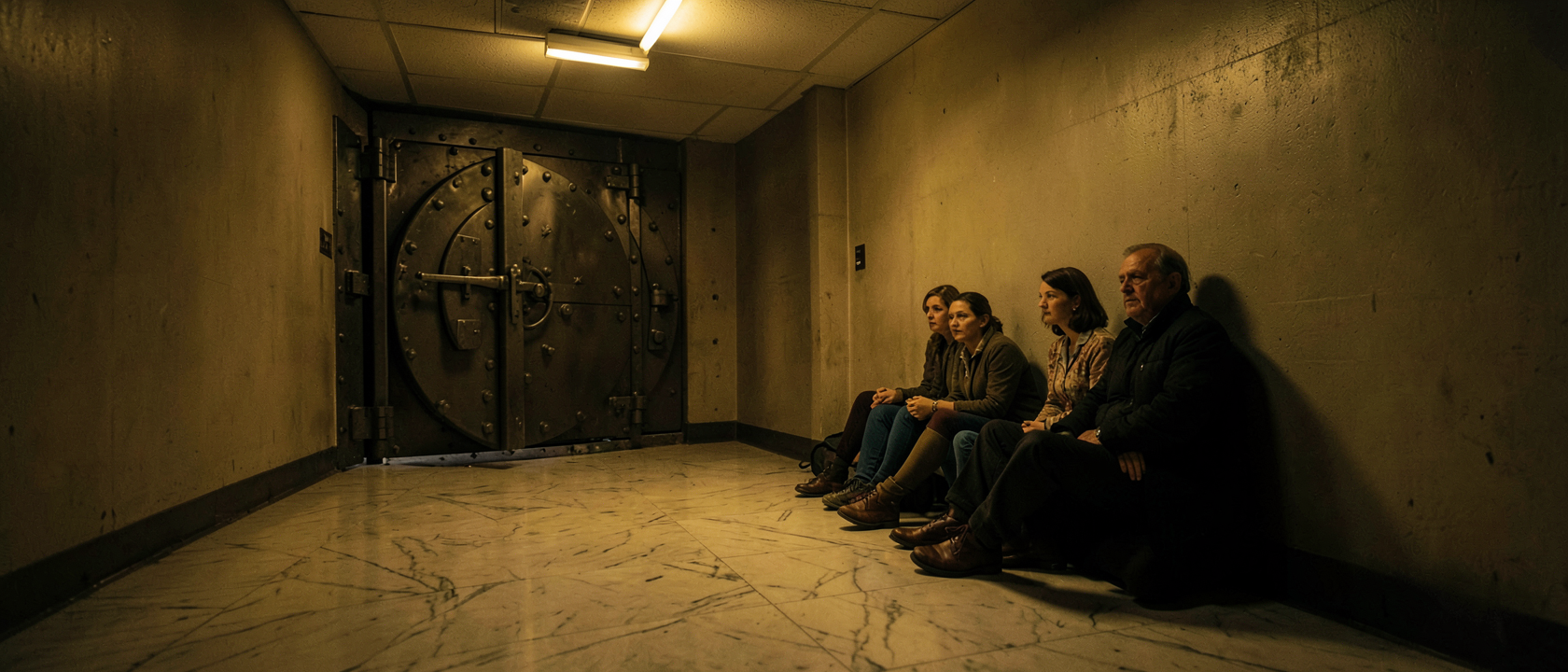
At 10:15 a.m. on August 23, 1973, a 32-year-old man named Jan-Erik Olsson walked into Kreditbanken on Norrmalmstorg Square in Stockholm, pulled a submachine gun from under a folded jacket, and fired into the ceiling. He’d disguised his voice to sound American and shouted, “The party has just begun!” Two police officers responded to the alarm; Olsson shot one in the hand, panicked, and dragged three bank employees into the vault, and made the uninjured officer sit down and sing a cowboy song, “Lonesome Cowboy,” right there on the bank floor. This wasn’t a clean, professional heist, it was chaotic from the first minute. Four hostages in total, Birgitta Lundblad, Elisabeth Oldgren, Kristin Enmark, and Sven Säfström, were about to spend six days locked in a vault with an armed stranger.
A Demand List Out of a Heist Movie
Olsson’s requests read like a checklist: his old prison friend Clark Olofsson, brought in from his cell, 3 million Swedish kronor (roughly $710,000 to $730,000 at the time; sources differ slightly), two guns, bulletproof vests, helmets, and a fast getaway car. Olofsson, a career criminal, was flown in and was later judged unlikely to have planned any of this with Olsson beforehand, he’d simply been pulled into someone else’s standoff. As the days dragged on inside that cramped vault, with cameras rolling outside (this was the first crime in Sweden ever covered by live television), something strange started happening to the hostages. Their fear stopped pointing where you’d expect.
The Trust That Ran Backward
By the time the siege ended on August 28, the four hostages reportedly trusted Olsson and Olofsson more than the police trying to rescue them. Kristin Enmark even told Prime Minister Olof Palme, who called in personally during negotiations, that she wasn’t afraid of the two men, that they were protecting her, and that he was the one letting her down. A doctor who later examined the hostages, Lennart Ljunggren, compared their state to wartime shock and said they felt emotionally indebted to their captors for being alive, not to the officers outside. Nils Bejerot, a Swedish psychiatrist and criminologist advising police during the standoff, gave the pattern a name: Norrmalmstorgssyndromet, the Norrmalmstorg syndrome. In English, it became Stockholm syndrome. The hostages walked away unharmed, and Olsson went into custody.
Patty Hearst Just Got There Louder
A year later, in 1974, Patty Hearst was kidnapped in the United States and appeared to side with her captors, and her case became the version the world remembers, better covered, easier to summarize, and attached to a famous name. But the term predates her kidnapping. American psychiatrist Frank Ochberg later helped define Stockholm syndrome more broadly, work that’s partly why the label stuck to cases like hers. Hearst didn’t start the phenomenon; she just made it famous, which is worth noticing on its own, the loudest example of something is rarely the first one.
What’s Still Fuzzy
Bejerot coined the term without ever personally interviewing the hostages, which has made some researchers cautious about how precisely it describes what happened in that vault. Accounts of exactly how police ended the standoff on August 28 don’t fully agree. Stockholm syndrome has also never been recognized as an official diagnosis; it doesn’t appear in the DSM-5. And historians have pointed out that several famous retellings of this very case, the one that gave the syndrome its name, contain details that are partly or entirely embellished. None of that undoes what happened at Kreditbanken. It just means the next time someone says “Stockholm syndrome” as if it’s self-explanatory, you’ll know there’s a six-day siege, a forced cowboy song, and a tense phone call to a prime minister sitting underneath it.