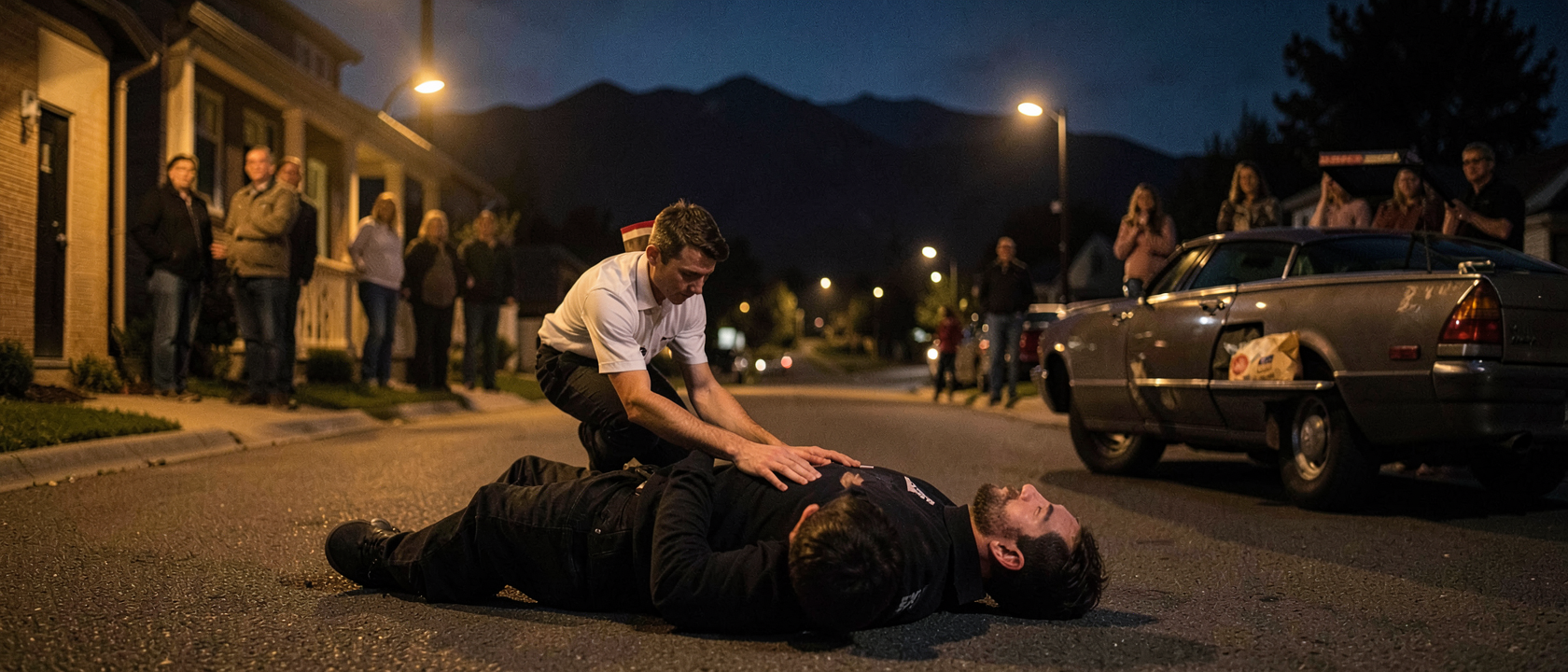
A Pizza Box Nobody Touched
On the night of June 15, 2015, a pizza sat on a porch on Valley View Road in Glenwood Springs, Colorado, and nobody came out to get it. Inside the box: two 20-inch Uncle Chrises, the restaurant’s version of a Hawaiian pizza, plus two 2-liter sodas, an order worth about $55. It was the last delivery of the night for Anson Lemmer, a 19-year-old driver who’d only recently started working for Uncle Pizza.
He pulled up expecting the usual: knock, hand off the box, collect payment, move on. Instead he found three men outside. One was on the ground, turning blue.
Why Would a Teenager Know What To Do?
The real question isn’t what happened next, it’s why a 19-year-old pizza driver knew how to respond to a man turning blue in a front yard.
Part of the answer goes back years: at 12, Lemmer took a Red Cross babysitting course that covered CPR. He later said it was a comfort just knowing he’d be ready, though years passed before he ever needed it, the kind of training picked up through a school program, a job, or a lifeguard cert, then filed away and forgotten.
He’d also trained more recently, about a year before that night. Most people who learn CPR never use it; that’s the point, insurance for a day you hope never comes, invisible until the exact second it isn’t.
Four Minutes, Three Strangers
When Lemmer got out of his car, two bystanders were already working on the man, one on the phone with 911, the other attempting mouth-to-mouth resuscitation. Someone asked him directly: did he know CPR?
He said yes, and got down to start chest compressions next to a stranger he’d never met before that moment.
Those minutes matter because when the heart stops pumping blood effectively, the brain starts losing oxygen within about four minutes. Compressions don’t restart a heart; they squeeze it enough to keep blood moving until paramedics arrive with equipment a bystander doesn’t have.
An officer arrived with a mask to help him breathe, and EMTs from the Glenwood Fire Department showed up a couple of minutes later. By Lemmer’s estimate, the rescue took 10 to 15 minutes, a pizza driver, a bystander, and a 911 caller acting as an improvised emergency team until professionals took over, by which time the man had started breathing again.
Meanwhile, the Pizza
According to one account, the two pizzas sat right where they’d been left, completely forgotten, nobody at the address ended up wanting them. Lemmer said that didn’t matter to him, he was just glad he’d shown up at all.
The pizza itself became almost incidental. Nobody remembers how it tasted, only that it never got eaten, a small, strange footnote to how fast an ordinary errand can turn into the most important thing that happens to someone all year.
Why a Small-Town Story Found a Big Audience
The story first ran in the Post Independent, the local paper covering Glenwood Springs, and could easily have stayed there. Instead it spread to Reddit, reaching people with no connection to Colorado at all. It traveled because it pokes at something a lot of adults carry quietly: most people have sat through a CPR class or a first-aid demo and wondered, would I actually remember this if it mattered? Lemmer’s story answers that. Yes, apparently, you can.
What This Says About the Rest of Us
Lemmer told his parents afterward it had been the craziest pizza delivery of his life. “I left a pizza boy and came back a pizza man,” he said. He later received the American Red Cross Lifesaver Award, and said support from people across the country and overseas restored his self-confidence. It wasn’t a one-time thing either: years later, on a hiking trip, he used the Heimlich maneuver on a choking friend.
Which raises a slightly uncomfortable question: what’s the skill you picked up once and half-forgot about? A CPR class from a summer job, a lifeguard cert, a first-aid weekend you only took because work required it. Somewhere, it might still be waiting for its own four minutes.