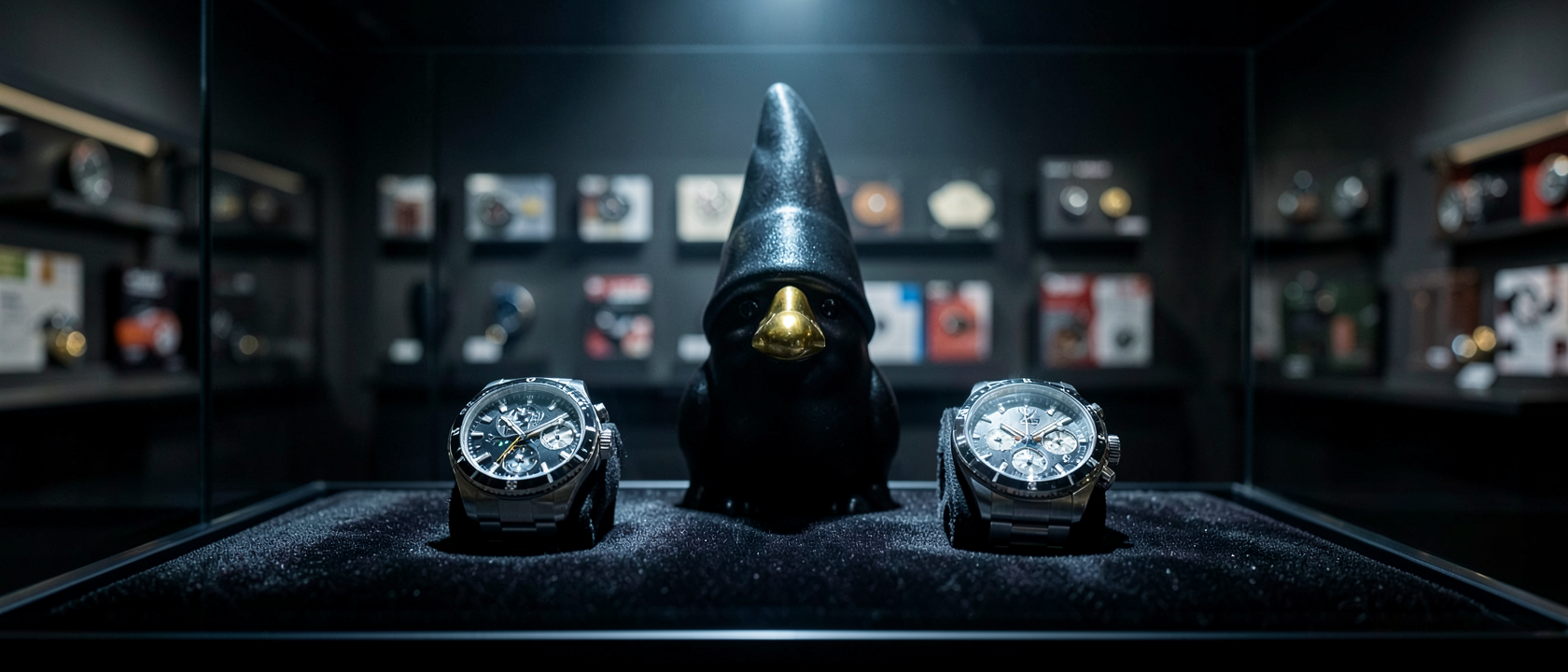
A Trophy for the World’s Best Fake
Picture an awards show: a stage, trophies, categories, someone walking up to applause. Except every “winner” in the room is a counterfeit product, and everyone watching already knows it. That’s the reality every year at Museum Plagiarius in Solingen, Germany, a museum built around celebrating fakes so well made they earn recognition.
The prize is called the Plagiarius Award, dating back to 1977, when German industrial designer Rido Busse got tired of watching his product ideas get copied and decided to publicly name the best copies on the market instead of staying quiet. His organization, Aktion Plagiarius e.V. still hands out the award, and in 2007 the museum in Solingen opened specifically to display the winning fakes next to the originals they imitate. The trophy is a small black gnome with a golden nose, a nod to the German phrase for earning a fortune.
This isn’t an internet gag. It’s a decades-old program with a real museum, an annual ceremony, and a permanent collection. One of its most talked-about winners was a fake so convincing that, side by side with the real thing, most visitors couldn’t have told you which was which.
Spot the Difference
In 2011, a Thai manufacturer’s replica of a Swiss Fortis watch earned a special prize at the award. The museum mounts the original and the copy side by side, unlabeled, so visitors have to figure it out themselves. With this watch, plenty of people didn’t.
So here’s the challenge: if someone set both watches on a table in front of you, no box, no price tag, no chance to zoom in on a logo, would you know which one cost a fraction of the price? The details that finally gave this fake away weren’t obvious, they were the kind you’d only catch if you already knew exactly where to look.
Where the Fake Actually Slipped Up
According to Christine Lacroix, the museum’s managing director, three things separated the copy from the genuine Fortis. The dial markers on the fake had no luminous paint, the glow-in-the-dark coating that lets you read the time in the dark. The crowns, the small knobs used to set the watch, were buffed to a shine instead of given the correct brushed finish. And the temperature scale on the dial used the wrong unit symbols entirely.
None of that shows up in a product photo or a glance across a counter. Luminous paint is invisible in daylight, a brushed-versus-buffed crown is a texture you’d need to touch to notice, and wrong unit symbols require reading the fine print. As Lacroix put it, “The expensive details are left out, but the first impression is the same.”
Why Counterfeiters Stop at 95 Percent
That’s not sloppiness, it’s strategy. Counterfeiters work with limited time and materials, so they spend it on whatever convinces the most people fastest: the silhouette, the logo placement, the packaging, the weight in your hand, whatever reads as “real” in the two seconds a casual buyer spends looking.
What gets skipped is exactly what’s slow and expensive to get right, and invisible unless someone is actively hunting for it: exact materials, manufacturing tolerances, the finishing techniques a real factory bakes into every unit without advertising them. A brushed crown instead of a buffed one might cost only a little more to produce correctly, but if nobody checks, why bother?
This pattern shows up well beyond watches. Once you start looking for the “last mile” details no marketing photo bothers with, you start noticing shortcuts everywhere, not because you’re an expert, but because you’ve trained your eye to ask what got skipped. Most people never think to look there, and that habit is worth more than it sounds.
Why a Museum Bothers With Any of This
None of this means the museum roots for counterfeiters. Aktion Plagiarius built it as a public, visible way to call out an industry that costs legitimate brands real research, tooling, and money every year. The collection, more than 350 original products displayed beside their copies, includes goods actually confiscated by customs: fake adidas gear, fake Louis Vuitton bags, fake Lacoste shirts, counterfeit Coca-Cola, Marlboro, and Davidoff products, even fake Viagra, alongside watches, motorcycles, toys, cutlery, and handheld electronics like Game Boys.
By putting a real Fortis watch next to the one that fooled a room full of visitors, then pointing out exactly three small details, the museum turns the whole con into a lesson: real craftsmanship is mostly invisible. It’s the research, the tooling, the quality control that never appears in a marketing photo, and it’s precisely what a good fake leaves out.
The award works as satire, mocking a business built on shortcuts, and as education, training people to notice what “close enough to fool you” quietly skips. If you’d have checked for the luminous paint or squinted at the temperature symbols, you already have the instinct the museum was built around: noticing what everyone else walks right past.