The Star Wars Special George Lucas Wanted Destroyed
George Lucas reportedly said that if he had a free afternoon and a sledgehammer, he would hunt down every surviving copy of one piece of Star Wars history and smash it himself.
This wasn’t a fan-made oddity. It was an official, two-hour broadcast made with Lucasfilm’s blessing, starring Mark Hamill, Harrison Ford, and Carrie Fisher. It aired once, on a major network, in front of millions.
At the exact moment Star Wars was becoming one of the biggest box office stories ever told, that same universe quietly produced something its own creator wished had never existed.
How Does the Biggest Movie on Earth Produce Its Most Hated Hour of TV?
By late 1977, Star Wars (released that May) wasn’t just a hit, it was a cultural reset. Lines wrapped around theaters, merchandise flew off shelves, and fans wanted more immediately, even though The Empire Strikes Back was still years away.
So why would anyone attached to that machine greenlight something fans would come to regard as a disaster, never officially aired again? Most failed TV specials fade into silence without a trace. This one didn’t.
Built to Fill a Gap, Made by the Wrong People
The practical reason is simple: Lucasfilm wanted something to keep Star Wars visible during the three-year gap before the sequel, and a holiday broadcast on CBS looked like an easy way to do it.
Making it fell to a production team built around Smith-Hemion Productions, with writers including Pat Proft, Leonard Ripps, Bruce Vilanch, Rod Warren, and Mitzie Welch, comedy-variety veterans, not space-opera writers. Steve Binder directed, with an uncredited David Acomba also involved.
By most accounts, Lucas was already deep into early planning for The Empire Strikes Back and wasn’t closely steering the broadcast’s tone. The result centered on Chewbacca returning home to Kashyyyk, the Wookiee homeworld, for a made-up holiday called Life Day. Structurally, it played less like a Star Wars adventure and more like a 1970s variety show wearing a Wookiee costume.
An Estimated 13 Million People Watched on November 17, 1978
The special ran on CBS from 8 to 10 p.m. Eastern, bumping Wonder Woman and The Incredible Hulk off the schedule. It opens with roughly ten minutes of Wookiees growling to each other, with no subtitles.
From there: Bea Arthur sings a number set in the cantina from the original film. Diahann Carroll appears inside a “virtual reality” gift sequence for Chewbacca’s father, Itchy. Harvey Korman plays a four-armed alien chef named Gormaanda, hosting a cooking lesson that spirals into chaos. Jefferson Starship performs “Light the Sky on Fire” as a holographic band. It closes with Carrie Fisher, as Princess Leia, singing a Life Day song set to John Williams’s Star Wars theme.
About 13 million people tuned in, making it the second-most-watched entertainment broadcast that week, behind only The Love Boat and the miniseries Pearl.
A Big Number That Measured Curiosity, Not Approval
In 1978 there was no streaming, no on-demand reruns, and only a handful of channels total. If something called itself Star Wars and showed up on CBS, curious fans tuned in almost automatically, even against Diff’rent Strokes, The Rockford Files, Hallmark Hall of Fame, and Pearl.
Reviews afterward were harsh, and the special was never aired in full again, the same gap that shows up whenever a movie posts a record opening weekend or a game logs huge day-one downloads. People show up out of curiosity long before anyone knows whether they actually liked what they saw.
He Tried to Erase It. The VCR Said No.
After its single airing, The Star Wars Holiday Special essentially vanished from official view, never rebroadcast, never released on video by Lucasfilm, never folded into the franchise’s canon. For years it sat closer to a buried secret than studio history, the kind of thing its own creator preferred people just forgot.
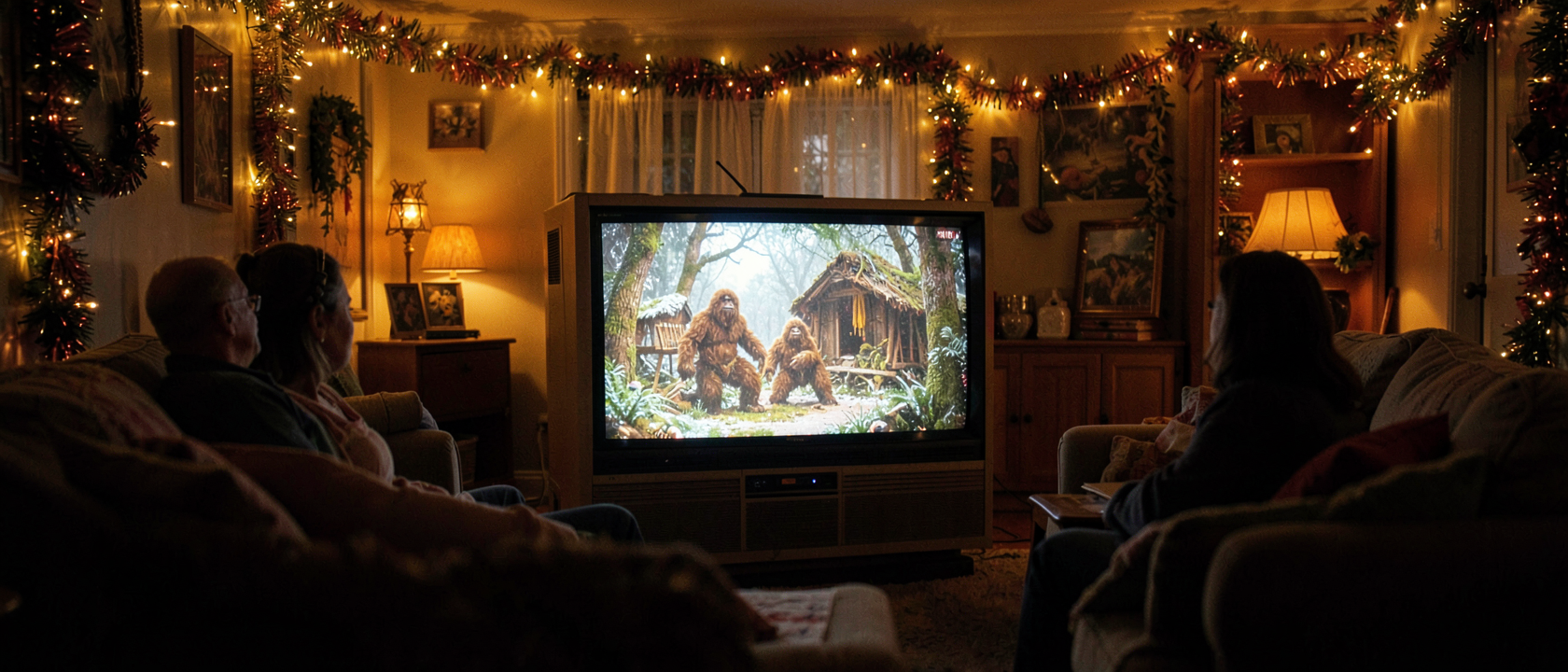
But 1978 was the wrong moment to try to make something disappear. Home video recorders were just becoming affordable, and some viewers that night taped the broadcast straight off the air. Those tapes got passed around and copied again and again. By the early-to-mid 1990s, people started coming forward with their original recordings, and the special spread through generation after generation of VHS dubs, each one grainier than the last.
This small episode foreshadows a larger pattern: once something exists in enough people’s hands, no studio, network, or executive can fully take it back. Lucas had the power to bury the master tapes. He never had the power to reach into everyone’s living room.