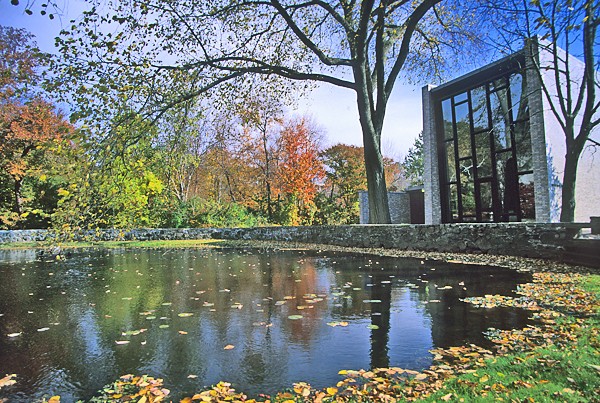
Brandeis University is a private research university in Waltham, Massachusetts, founded on October 20, 1948, by the American Jewish community. It holds a singular place in American higher education as the first Jewish-sponsored nonsectarian university in the United States, established at a moment when Jews, other ethnic and racial minorities, and women faced systematic discrimination at many institutions. The university opened with 107 students and 13 faculty members on the grounds of the former Middlesex University, and employs 1,985 people. Its Hebrew motto, “Emet,” translates in full as “Truth even unto its innermost parts.”
Key facts
- Country: United States
- Founded: 20 October 1948
- Headquarters: Waltham
- Founder: Israel Goldstein
- Type: university; private not-for-profit educational institution
- Employees: 1,985
- Website: https://www.brandeis.edu/
Origins and Early History
The university traces its founding to Israel Goldstein and the broader American Jewish community, who established Brandeis in response to the discrimination that restricted access to elite higher education for Jews and other minority groups in the mid-twentieth century. Its first president, Abram L. Sachar, led the institution from its opening day and shaped much of its early academic identity.
The campus was built on the grounds of the former Middlesex University in Waltham, Massachusetts. Thirteen years after its founding, in 1961, Brandeis received a Phi Beta Kappa chapter, earning the distinction of the quickest chapter chartering relative to an institution’s founding in the organization’s history.
Academic Structure
Brandeis organizes its degree programs through four schools: the School of Arts, Humanities and Culture; the School of Business and Economics; the School of Science, Engineering and Technology; and the School of Social Sciences and Social Policy. Graduate and professional continuing education sits within the Rabb School of Continuing Studies.
In September 2025, President Arthur Levine unveiled ‘The Brandeis Plan to Reinvent the Liberal Arts,’ backed by a $25 million commitment from the Board of Trustees. The plan introduces a career-competency second transcript, mandatory career counseling, and required internships or apprenticeships for all students.
Faculty and Research
Brandeis faculty include fellows of the American Association for the Advancement of Science and the American Academy of Arts and Sciences, members of the National Academies, Howard Hughes Medical Institute investigators, and MacArthur Fellows.
Among the most celebrated faculty achievements is the 2017 Nobel Prize in Physiology or Medicine, awarded to Brandeis professors Michael Rosbash and Jeffrey Hall, who arrived at the university in 1974, for their work on circadian rhythms. They shared the prize with Rockefeller University’s Michael Young.
Notable Alumni
Roderick MacKinnon (BA, 1978) won the Nobel Prize in Chemistry in 2003, becoming the first of two Brandeis alumni to receive a Nobel Prize. Drew Weissman, who earned his bachelor’s and master’s degrees in biochemistry and enzymology from Brandeis in 1981, received the 2023 Nobel Prize in Physiology or Medicine for discoveries that enabled the development of effective mRNA vaccines against COVID-19.
Athletics
Brandeis competes at the NCAA Division III level. The university has won team championships in men’s soccer (1976) and men’s cross country (1983), along with 24 individual NCAA titles.
Leadership and Institutional Direction
In July 2025, the Brandeis Board of Trustees extended Arthur Levine’s service as president through July 2027. A new presidential search was re-initiated in 2026, with search firm Heidrick and Struggles engaged to lead the process.
Did you know
- When Brandeis opened in 1948, annual tuition was $500, the campus comprised only eight buildings, and the course catalogue covered 20 academic majors. (brandeishoot.com)
Data sources
- Wikidata
- brandeis.edu
- thejustice.org
- jewishjournal.org
- nobelprize.org
- handwiki.org
- timeshighereducation.com
Data updated: 2026-10-29