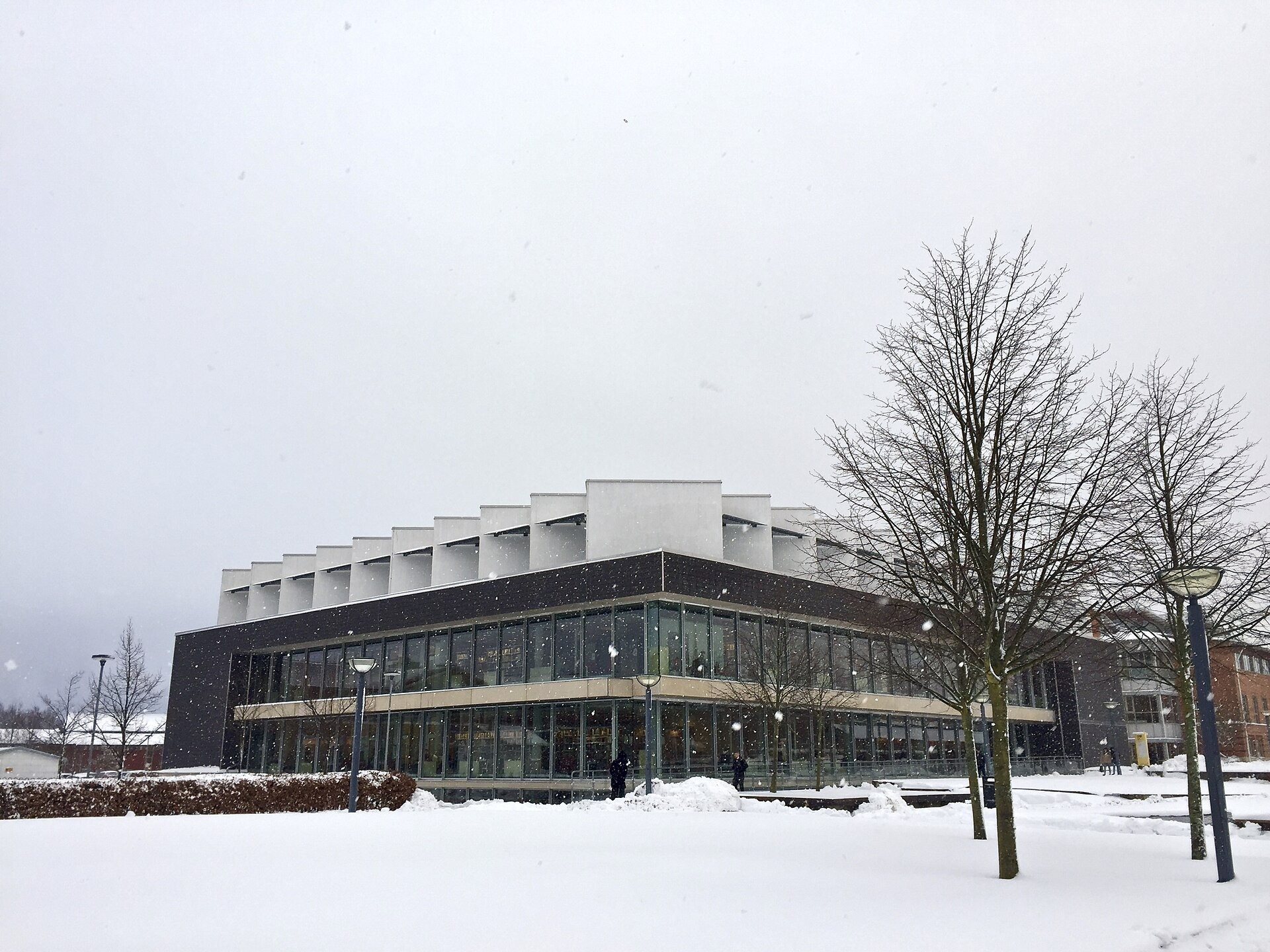
Linnaeus University (Swedish: Linnéuniversitetet, abbreviated LNU) is a public university in Sweden formed on 1 January 2010 through the merger of Växjö University and the University of Kalmar, two institutions both rooted in the historical province of Småland. Named in honour of Swedish botanist Carl Linnaeus, whose binomial nomenclature system transformed natural science classification, the university has grown to become Sweden’s sixth largest by student numbers. With around 2,000 employees, over 200 degree programmes, and roughly 600 partner universities spread across more than 80 countries, it operates on two main campuses — one in Växjö and one in Kalmar.
Key facts
- Country: Sweden
- Founded: 1 January 2010
- Headquarters: Växjö
- Type: public university; academic archive; organization; Swedish government agency
- Parent organisation: Ministry of Education and Research
- Employees: 2,000
- Website: http://lnu.se
Origins and founding
The two predecessor institutions each have separate histories stretching back decades before the 2010 merger. Växjö University began in 1967 as a branch of Lund University, became an independent university college in 1977, and received full university status from the Swedish Government in 1999. Kalmar University College was also founded in 1977 and was authorised to award doctoral degrees in the natural sciences from 1999, though it was never classified as a full university.
The merger that created Linnaeus University on 1 January 2010 brought both campuses under a single institution under the oversight of Sweden’s Ministry of Education and Research. The combined university took its name from Carl Linnaeus, connecting the new institution to one of the most consequential Swedish scientists in history, and one whose work shaped how humans categorise the natural world.
Structure and academic offering
Linnaeus University is organised into five faculties: Arts and Humanities, Social Sciences, Technology, Health and Life Sciences, and Business and Economics. A sixth body, the Board of Teacher Education, operates alongside the faculties. Together they deliver over 200 degree programmes and more than 1,500 individual courses.
The University Board is the institution’s highest decision-making body. It consists of 15 members, including three student representatives, and the Vice-Chancellor holds permanent membership on that board. Peter Aronsson serves as Vice-Chancellor and also sits on the Administrative Board of the International Association of Universities (IAU), where he chairs work on open science recommendations.
Each year, more than 1,600 students take part in exchange programmes through approximately 500 international partner agreements covering more than 80 countries.
Accreditation and research recognition
In October 2022, after six years of development, the School of Business and Economics received accreditation from AACSB (Association to Advance Collegiate Schools of Business). This places it among only 6% of the world’s business schools to hold that quality mark.
In 2021, Linnaeus University received the European Commission’s HR Excellence in Research award, which certifies that an institution provides researchers with good working conditions and meets EU quality objectives for researchers. A follow-up evaluation was approved in 2023.
The university has two designated exceptional research areas: ‘Forest Values’ and ‘The Core of Welfare.’ Three additional profile areas complement these: ‘Healthcare and Wellbeing,’ ‘New Human Perspectives,’ and ‘Living Waters.’ Linnaeus University is also a member of the European Open Science Cloud (EOSC) Association and of the International Association of Universities (IAU).
Industry partnerships: The Bridge
Between 2009 and 2020, Linnaeus University and IKEA ran a strategic partnership called ‘The Bridge,’ focused on multidisciplinary research and education in the areas of life at home and production processes. One concrete outcome was the creation of an IKEA professorship described as unique in the world, as well as a master programme in Innovation through Business, Engineering and Design, launched in 2013.
In 2020, The Bridge collaboration was expanded and renewed, bringing in Södra, a Swedish forest-owner cooperative, alongside IKEA. The renewed partnership focuses on a ten-year programme centred on forestry, innovation, and sustainability. The geographical connection is not incidental: IKEA was founded in the Småland region, the same area where both the Växjö and Kalmar campuses are located.
Inclusion and library leadership
In autumn 2018, the Linnaeus University Library became the first university library in Sweden to receive LGBTQ+-certification, a process that required all staff to undergo training aimed at enhancing inclusivity for people of all sexual orientations and gender identities. The university’s student union, Linnéstudenterna, subsequently became the first student union in Sweden to be LGBTQ-certified as well.
Did you know
- The university’s Kalmar campus, Universitetskajen, won the ‘Meeting Place of the Year’ award for Kalmar in 2023. The prize recognised the campus’s role as a city-integrated hub where students, the general public, and local industry share the same space. (en.tengbom.se)
- Completed in 2020, the Kalmar Universitetskajen campus contains six buildings and 56 lecture rooms housing all faculties, the university library, restaurants, a bicycle garage, and study spaces. The site sits within close walking distance of both the Baltic Sea and Kalmar Central Station. (lnu.se)
- The IKEA professorship hosted at Linnaeus University through The Bridge programme is described as unique in the world. The tie to IKEA reflects the university’s close geographical and cultural connection to the company, which was founded in the Småland region where the university’s campuses are situated. (lnu.se)
Data sources
Data updated: 2026-10-31