The Matchmaker Nobody Suspected
Morten Storm was a Danish former biker who converted to Islam, drifted into radical circles, and then, by his own account, spent years working his way into the trust of one of the most wanted men on earth. That man was Anwar al-Awlaki, an American-born al-Qaeda cleric whose sermons had made him one of the group’s most effective recruiters. They grew close enough that when al-Awlaki needed something deeply personal while hiding from the CIA, MI5, MI6, and Denmark’s PET, he turned to Storm for help.
The request had nothing to do with weapons, money, or safe passage. Al-Awlaki wanted a wife.
Why Would a Hunted Man Lower His Guard?
By 2008, al-Awlaki had stayed ahead of a global manhunt for years by trusting almost no one. So why risk something as personal, and therefore as exposed, as marriage?
His first two wives weren’t with him in hiding in Yemen, and Storm says al-Awlaki had grown dissatisfied with them, feeling they didn’t share his outlook. That’s a need no amount of discipline can plan around: even a man who’d built his survival on secrecy still wanted a partner who understood him. That small, human gap is where Storm saw his opening.
The Operation Inside a Proposal
Storm didn’t improvise. He went looking on Facebook and found Irena Horak, a Croatian convert to Islam known by her Muslim name, Aminah. She had no idea Storm was working with Western intelligence; as far as she knew, he was simply helping a fellow Muslim find a devoted wife.
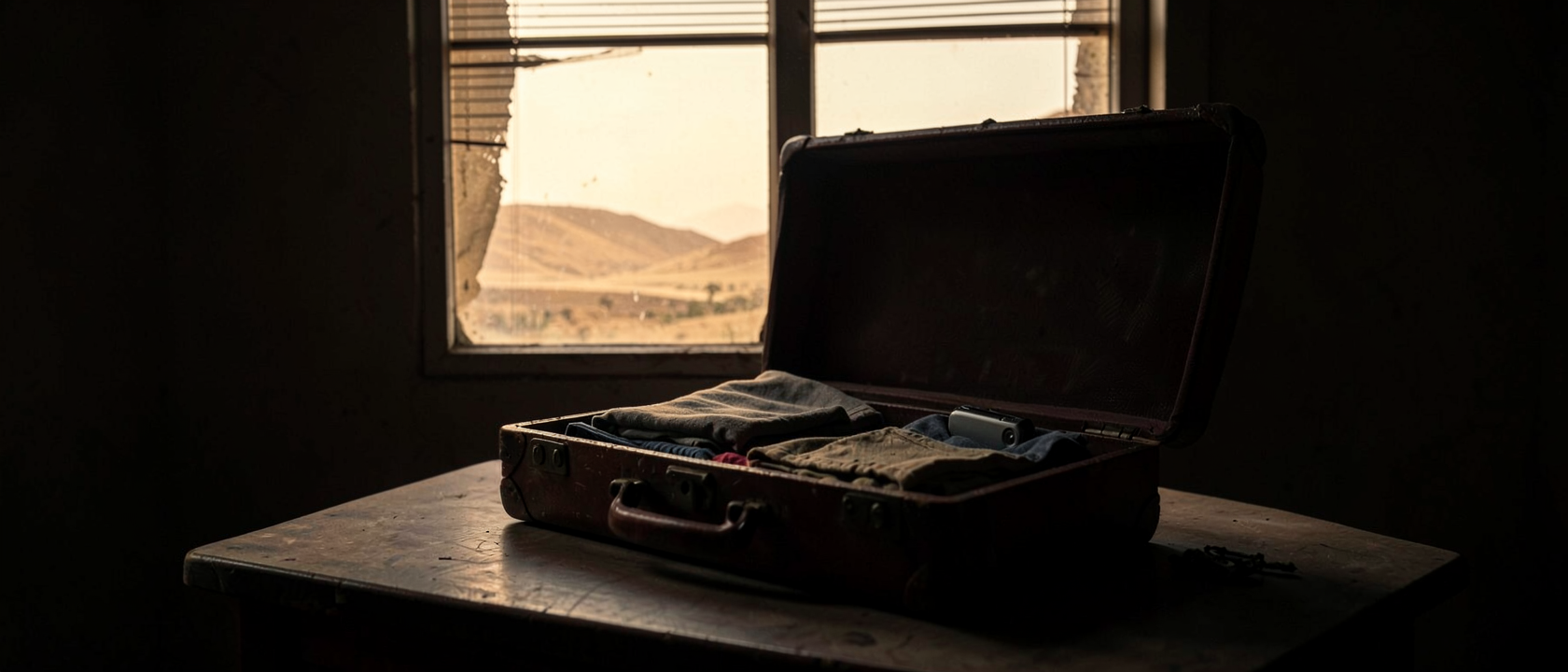
He says the CIA paid him $250,000 for arranging the match. The real operation, worked out between the CIA and Denmark’s PET, was to hide a tracking device inside Aminah’s suitcase so her location, and therefore al-Awlaki’s, could finally be pinned down. In June 2010, she traveled to Yemen to become his third wife, with that suitcase in tow.
Six years of patient trust-building, by Storm’s own telling, had come down to one piece of ordinary luggage.
Undone by a Suitcase Left Behind
The plan didn’t fall apart because of a leak or a double-cross. Before the final leg of her trip, from Sanaa to the southern tribal areas where al-Awlaki waited, his operatives told Aminah to repack her bags, a routine security precaution. The original suitcase, tracker and all, never made it there.
A years-long operation unraveled because of a simple luggage switch. Al-Awlaki, for what it’s worth, seemed pleased with the outcome anyway. In a message later reviewed by Jyllands-Posten, he wrote that his new wife had exceeded his expectations, calling her “much better” than he’d hoped.
Killed Anyway
The suitcase plan failed, but al-Awlaki didn’t escape for long. He was killed in a CIA drone strike on September 30, 2011, alongside Samir Khan, the American-born editor of al-Qaeda’s online magazine, Inspire.
Storm claims a separate effort sealed the deal: he says he later sent al-Awlaki a USB stick hiding another tracking device, one that helped guide the drone to its target. But in a hotel conversation Storm secretly recorded, an American official insisted a different stream of intelligence was what actually found al-Awlaki. The failed wedding plot and the strike that finally killed him may be two separate stories that only look connected in hindsight.
Whose Story Is This, Really?
Almost everything above comes from Storm himself. The CIA has never confirmed or denied working with him, and Denmark’s PET has stayed just as quiet. There’s no independent verification of the $250,000 payment, the USB stick, or how directly, if at all, Storm’s work fed into the strike that killed al-Awlaki.
Some threads do resolve. After al-Awlaki’s death, Aminah reportedly emailed Storm to say she’d volunteered to become a suicide bomber and been turned down. Whether she ever learned who engineered her marriage remains unknown. Storm told the full story in his 2014 memoir, Agent Storm: My Life Inside al Qaeda and the CIA. Critics have called using an unwitting bride as a tracking device a form of human trafficking, perhaps one reason Denmark’s own service, explicitly barred from carrying out assassinations, has kept its distance from the whole story.