A Pacific Outlier Thousands of Miles From Its Neighbors
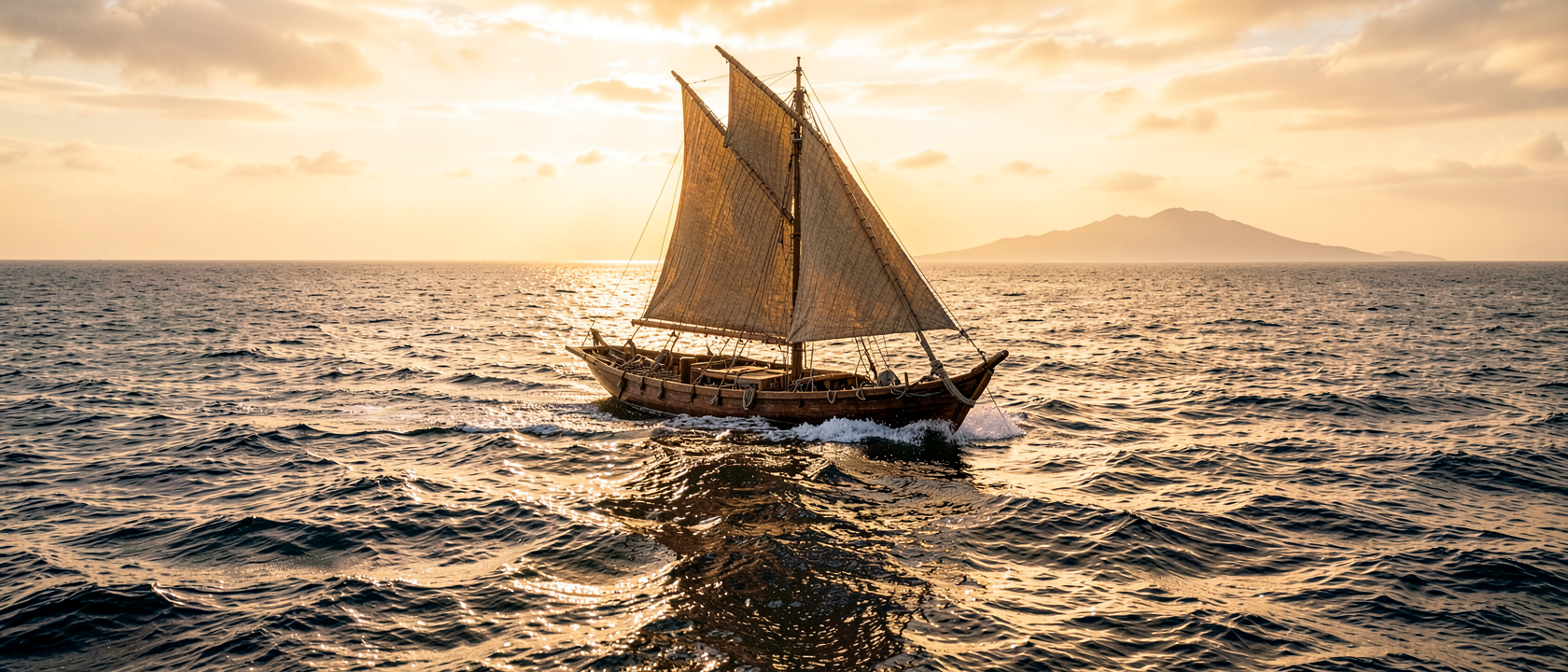
Every other Polynesian island lies somewhere in the South Pacific, clustered between New Zealand and French Polynesia. Hawaii sits alone north of the equator, cut off from that cluster by thousands of miles of open ocean. “Hawaii is the only Polynesian island in the Northern Hemisphere, so it’s a long way from everything,” says Alexander Ioannidis, a geneticist at Stanford University. For researchers piecing together who first settled these islands sometime within the 1200s, that isolation raised an obvious question: which Polynesian population were the first Hawaiians most closely related to? Genetic analysis traced the answer to Easter Island (Rapa Nui), a speck of land more than 4,400 miles (7,100 km) away and one of the most remote inhabited places on Earth, a crossing made in double-hulled sailing canoes.
A Gene Pool Narrower Than the Amish or the Finns
Ioannidis and co-senior author Keolu Fox of the University of California, San Diego, reported in the journal Science on October 8, 2026, that Native Hawaiians carry a gene pool more tightly concentrated than almost any other documented in humans, more than ten times stronger than the effect seen in the Finnish, the Amish, or Ashkenazi Jewish populations, the classic cases geneticists already study for how a small founding group reshapes what shows up generations later. The result struck the team as so extreme that Fox said they checked it four separate ways before trusting it.
Tracing the Canoe Route From Fiji to Easter Island
The team reconstructed the migration leg by leg using genetic data from 1,050 Polynesian individuals, including 317 Native Hawaiians and 12 residents of Easter Island. The route runs from Fiji and Tonga eastward to the Cook Islands, then Tahiti, then Mangareva, then Easter Island, settled by around 1210. A subset of that same lineage pushed on to Hawaii within roughly the same century. Each leg was not a mass exodus but a small number of people in a handful of canoes, carrying only a slice of the genetic variation that existed back home. Archaeologist Patrick Kirch of the University of Hawai’i at Mānoa, who had no part in the genetic study, said the pattern matches what archaeology has already shown about the timing and direction of these voyages.
How One Founder Effect Builds on the Last
A founder effect works like this: when a small group splits off to start a new population, it carries only a fraction of the genetic variation present back home. Some rare variants get left behind entirely, while others, carried by chance in just one or two founders, end up far more common than they were in the original group. Diluting that skew back toward average usually takes later settlers arriving from the source and mixing in. On these islands, population growth outran that process. Each founding group multiplied fast after landing, locking in its unusual gene frequencies before new arrivals could rebalance them. Repeat that across each of these six crossings, and the bottlenecks pile on top of one another instead of resetting, like photocopying a photocopy: every generation carries forward the distortions already there and never recovers the original sharpness.
Three Conditions With No Screening Program Behind Them
The founder effects documented in this study carry consequences beyond the DNA database. The research identified three harmful gene variants running at elevated frequencies of 2 to 4 percent in Native Hawaiians, linked to dislocated eye lenses, progressive vision loss, and kidney failure, conditions that are exceptionally rare in most of the world’s population. Population geneticist Cosimo Posth of the University of Tübingen, who was not involved in the study, noted that founder effects like this carry real consequences for the health of the people who inherit them. Yet according to Ioannidis, no formal testing guidelines or insurance coverage currently exist for these conditions in Native Hawaiian communities, even though that population is nearly twice the size of the Amish.
A More Tangled Picture Than One Straight Chain of Canoes
The study traces one dominant lineage running from Fiji through Mangareva to Easter Island and on to Hawaii, but it does not rule out other Pacific populations contributing genetically along the way. Hawaiians’ next-closest genetic relatives after Easter Islanders are the people of Mangareva, an island more than 1,500 miles (2,400 km) from Easter Island, a detail that complicates the idea of one straight island-hopping line. It is the kind of detail that only shows up once you start pulling on genetic threads most people never knew existed, which is exactly the point of studies like this one: they turn a single island’s gene pool into a record of a thousand years of ocean crossings.
Fox, who is Native Hawaiian himself, put it simply: the people behind these voyages were the greatest voyaging community in human history.