A Swelling Near His Left Eye
A 16-year-old boy in India noticed a small, painless lump near his left eye. For about a month it didn’t grow or change, so he left it alone. Then two hard, whitish points pushed through the skin, far more solid than any pimple or cyst would produce.
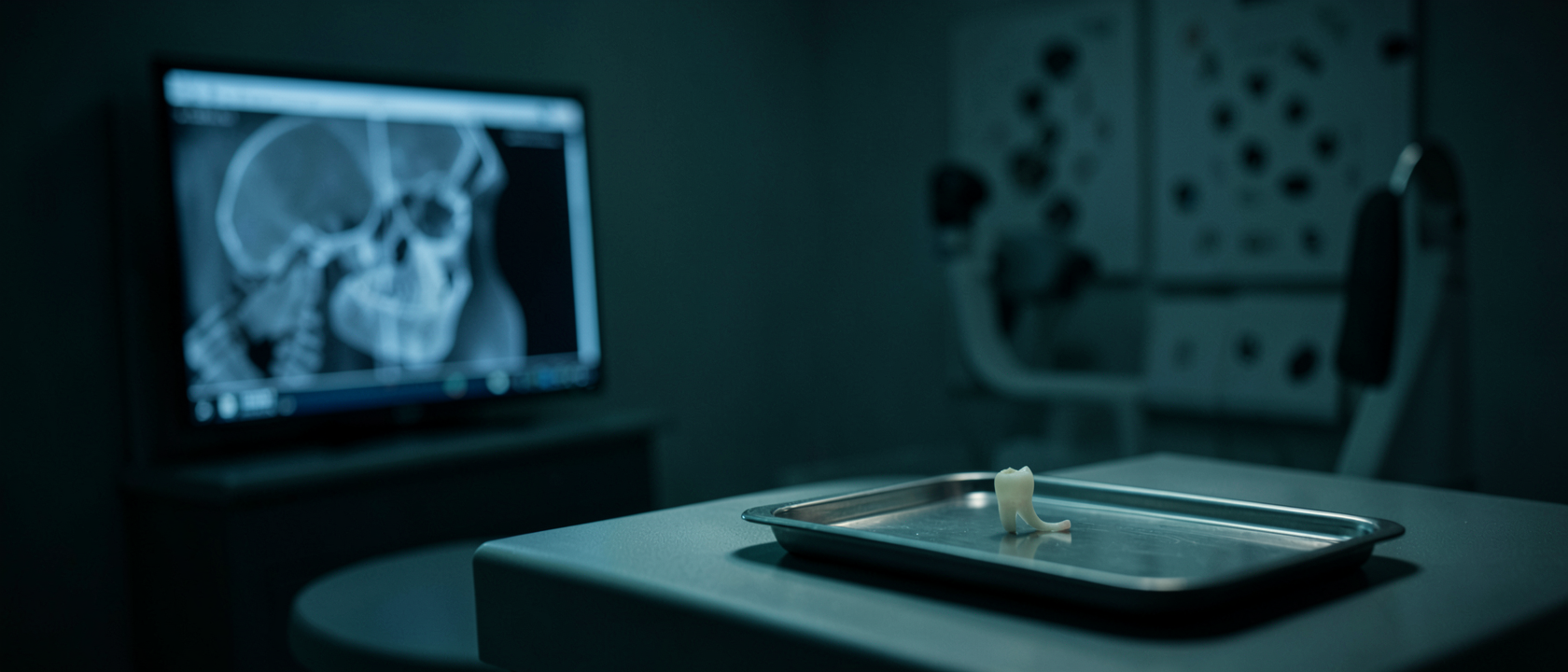
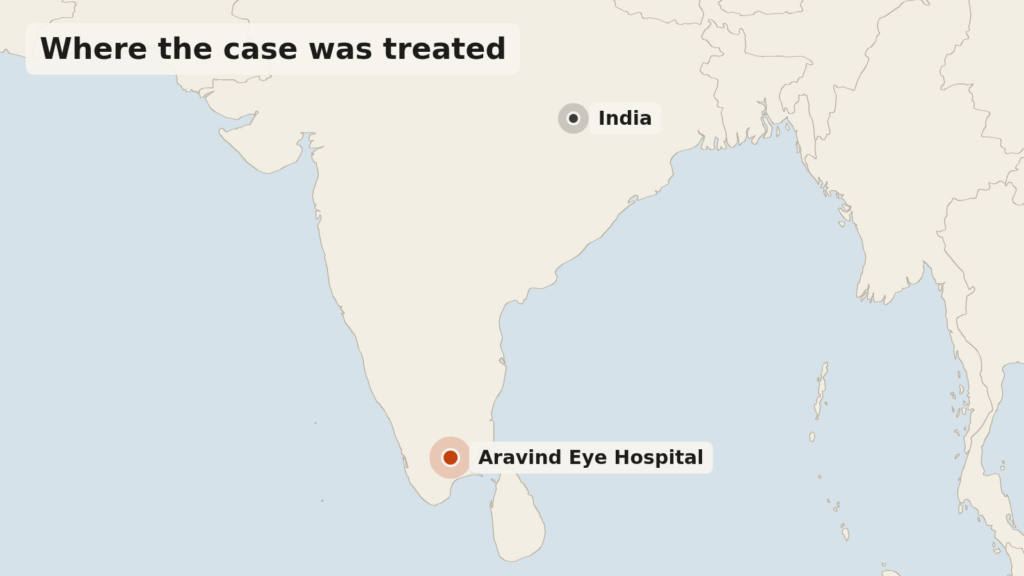
His family took him to Aravind Eye Hospital in Madurai, where a CT scan revealed a fully formed canine tooth, complete with a crown and root, sitting in the upper part of his eye socket, between his eyelid and eyebrow, a region doctors call the superior orbit. “The structure of a lone tooth in the superior orbit was quite obvious,” said Dr. Meghana Tanwar of Aravind Eye Hospital, one of the physicians who treated him. The boy had no gap in his teeth and no missing tooth anywhere in his mouth to account for it; this tooth had never been anywhere near his mouth at all.
How Does a Tooth End Up There?
Teeth are among the most location-locked parts of the human body, anchored into jaw bone and gum tissue built specifically for that purpose, and they normally stay put for life. A tooth erupting beside an eyeball breaks that rule outright. Doctors checked the obvious explanations first, no facial injury, no previous dental surgery, no diagnosed genetic condition. Doctors had to look elsewhere for an explanation.
How a Face Comes Together in the Womb
The answer starts before birth. A human face isn’t assembled as a single piece; it comes together from several separate groups of cells and tissue that migrate toward each other in the womb and fuse with precision, like a construction crew whose parts must all arrive at the right spot at the right time. Tooth formation depends on tight chemical signaling between these tissue groups, cues that tell cells where to build a tooth and where not to. When that migration or fusion drifts slightly off course, a tooth can start forming far from the mouth.
Doctors also check for other known triggers when an ectopic tooth turns up: old injuries, earlier dental work, or nearby growths such as cysts and tumors. When someone has several extra teeth rather than just one, it can point to a rare inherited disorder called cleidocranial dysplasia, which disrupts normal bone and tooth development. None of that fit this boy’s case. His scan showed only the single tooth, with no others and no sign of that disorder, which is why his doctors still can’t point to a specific cause.
Rogue Teeth Show Up All Over the Face
An eye socket is an unusual address, but far from the only one on record. Doctors use the term “ectopic tooth” for any tooth that forms outside its normal location, whether an ordinary baby or adult tooth or an extra “supernumerary” tooth that was never supposed to exist. The most common wrong location is the maxillary sinus, the air-filled space behind the cheekbone, followed by the nasal cavity, the roof of the mouth, the chin, and even the jaw joint.
A review of 61 published cases found symptoms spanning the full range, from nothing noticeable for years to pain, swelling, headaches, or difficulty opening the mouth. A tooth growing inside the nose tends to announce itself with a blocked nostril, discharge, or nosebleeds. The eye socket case gave almost no warning beyond that one quiet, painless swelling near the eyelid.
Getting It Out Without Drama
Finding the tooth wasn’t the end of the story, since removal depends entirely on where it sits. Doctors typically start with a CT scan to map how close the tooth is to the eyes, nerves, and blood vessels before deciding how to proceed. Teeth found in the nasal cavity, for instance, can sometimes be removed through the nostril with an endoscope, with no open incision needed.
In this case, surgeons removed the tooth from the boy’s eye socket under general anesthesia, after consulting a maxillofacial surgeon, and he recovered with no complications. Left in place, doctors noted, it could eventually have pressed against the eye’s muscles, nerves, or blood vessels had it migrated further. Scattered case reports mention that a new ectopic tooth can occasionally regrow in the same spot after removal, though that’s considered extremely rare.
The case was described in the journal Ophthalmology. According to Dr. Tanwar, ectopic teeth have turned up in the eye socket before, but almost always lower down, in what’s called the orbital floor. This boy’s tooth, growing in the upper socket between his eyelid and eyebrow, appears to be the first documented case in that exact spot.