The Nazis Who Rescued a Rabbi
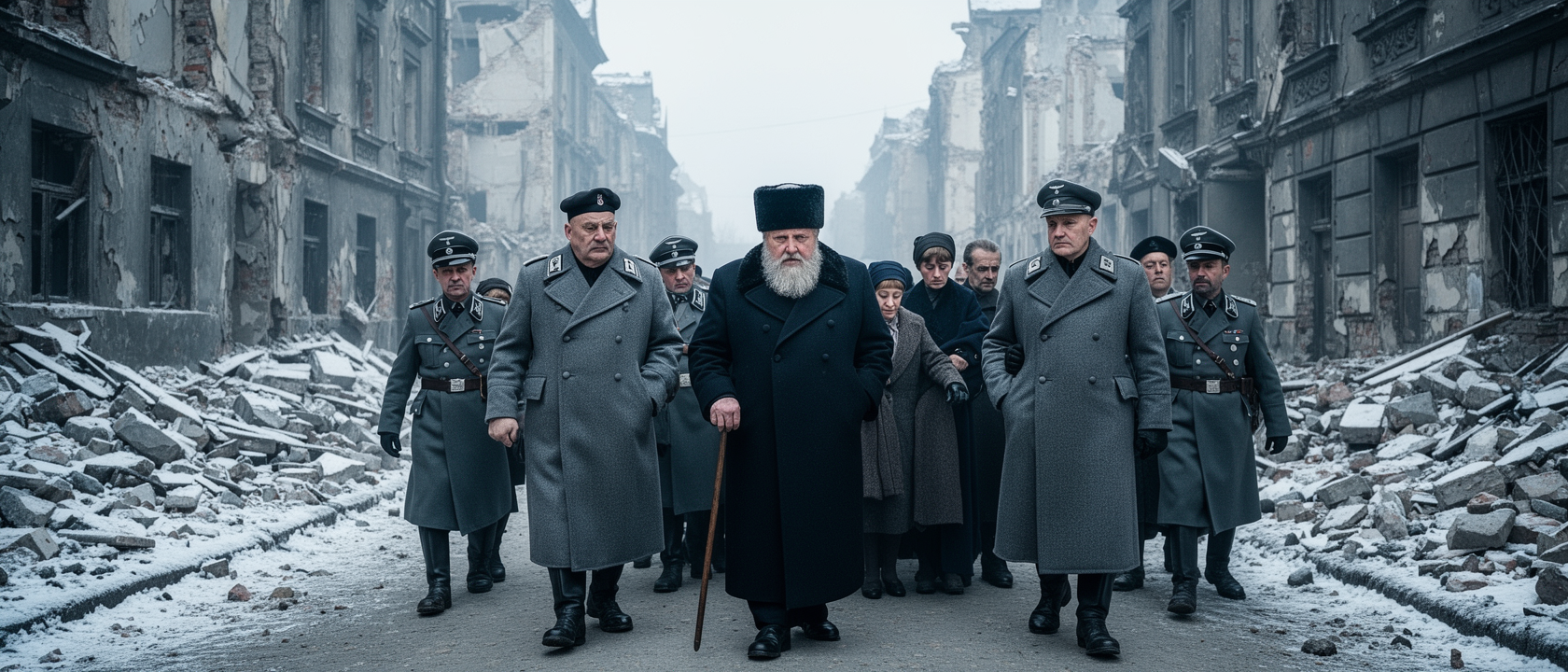
In the winter of 1939, a German military officer escorted a Jewish spiritual leader, his family, and a small group of followers onto a train in Warsaw. They traveled in a first-class cabin. The officer’s orders came from the chief of German military intelligence, a man who spent years quietly working against the regime he served. The rabbi had been found hiding in a bombed-out area that would become the Warsaw Ghetto. His exit from occupied Poland had been arranged at the top levels of the Third Reich.
The man being escorted out was Rabbi Yosef Yitzchak Schneersohn, the sixth Lubavitcher Rebbe and one of the most influential Jewish religious leaders of his era, in the same year Germany invaded Poland and set the Holocaust in motion.
Who He Was
Schneersohn was born on June 21, 1880, in Lyubavichi, in what is now Russia. He led Chabad-Lubavitch, a mystical Jewish movement founded in 1775. He spent years defying Soviet state atheism, maintaining underground Jewish schools across the USSR. In 1927, Soviet authorities arrested him in Leningrad, sentenced him to death, then, under pressure from Western governments and the International Red Cross, expelled him. He left for Riga in July 1927.
On July 10, 1929, he met President Herbert Hoover at the White House to discuss the plight of Jews under Soviet rule, cementing ties between the Rebbe and senior American officials at the highest level.
Trapped in Warsaw
By 1934, Schneersohn had settled in Otwock, roughly 60 kilometers outside Warsaw. He was still there on September 1, 1939, when Germany invaded Poland. Repeated Luftwaffe bombing prevented him from reaching Warsaw’s main train station, which he found destroyed anyway. He was stranded, in poor health from multiple sclerosis, hiding in the area that would become the Warsaw Ghetto.
In New York, American Chabad followers worked urgently on his behalf. On September 22, 1939, New York Senator Robert Wagner telegraphed Secretary of State Cordell Hull about the Rebbe’s condition. On September 29, Supreme Court Justice Louis Brandeis was contacted. Benjamin Cohen, an advisor in President Franklin Roosevelt’s inner circle, connected the effort to Robert Pell, a State Department official with working relationships among German diplomats.
The Calculation on the Other Side
The United States had not entered the war, and Germany had a real interest in keeping it that way. American isolationist sentiment was vocal and organized, and a visible affront to American Jewish community leaders could shift public opinion. Releasing one elderly rabbi was a negligible cost against the potential benefit of maintained American neutrality.
German diplomat Helmut Wohlthat received the request and agreed to cooperate. According to historian Winfried Meyer of Berlin Technical University, Hermann Göring was also aware, since Wohlthat was one of his closest associates. Because Warsaw was under military rather than civilian administration, the order was routed through the Abwehr, German military intelligence.
The Man Canaris Sent
The Abwehr was run by Admiral Wilhelm Canaris, born January 1, 1887, who spent years working against the regime from inside it, passing intelligence to the Allies and helping smuggle several hundred Jews out of Nazi-occupied territory. He was implicated in the July 20, 1944 assassination plot against Hitler and hanged at Flossenbürg on April 9, 1945.
The officer Canaris assigned was Major Ernst Bloch. His father was a Jewish physician who had converted to Christianity; under Nazi racial law Bloch was classified Mischling. Hitler had personally signed a document granting him “German Blood” status to remain in uniform. His team included Sergeant Klaus Schenk, also half-Jewish, and Private Johannes Hamburger, a quarter-Jew. Bloch searched the ghetto; the address he had been given, Bonifraterska 29, was destroyed. In mid-December 1939 he found Schneersohn at a new hiding place.
The Exit
On December 22, 1939, Schneersohn and roughly eighteen to twenty people in total left Warsaw by train under Abwehr protection, traveling to Berlin in a first-class cabin, then on to Latvia. From Riga they reached Stockholm, then Gothenburg, where they boarded the Swedish steamer Drottningholm. Rabbi Yosef Yitzchak Schneersohn arrived in New York on March 19, 1940.
Ernst Bloch was forced out of the Abwehr after the July 20, 1944 plot and killed during the Battle of Berlin. In 2010, two Israelis applied to Yad Vashem to have Canaris recognized as “Righteous Among the Nations.” The application was not granted.
Schneersohn’s youngest daughter, Shaina, and her husband Rabbi Mendel Horenshtein did not get out. They perished at Treblinka.