HEADLINE:
North Korea’s 2013 nuclear map listed Austin as a target, so it threw a party
ARTICLE:
A Dictator, a Desk, and a Very Strange Map
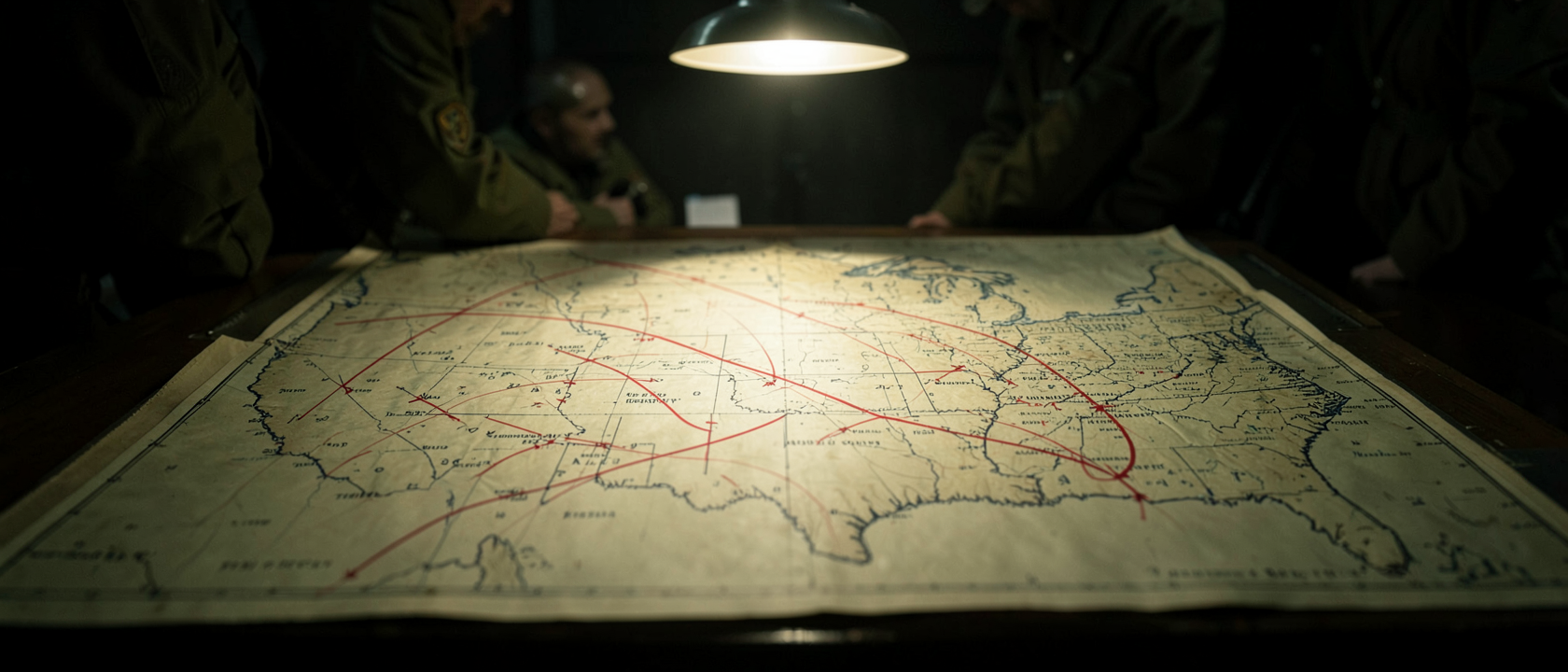
In late March 2013, North Korea’s state media released photographs meant to project strength. Kim Jong Un sat in a military command room, signing an order to keep strategic rockets on standby, ready to strike the U.S. mainland and American bases across the Pacific, including Hawaii, Guam, and South Korea.
Behind him, a wall map read “U.S. Mainland Strike Plan,” with lines pointing toward San Diego; Washington, D.C.; Hawaii; and what observers soon identified as the Austin, Texas, area. The images ran through the Rodong Sinmun newspaper and the state news agency KCNA: carefully staged propaganda, built to be seen.
No Pentagon, No Base, No Explanation
Three of those four targets make grim sense. Washington, D.C. is the capital, Hawaii hosts U.S. Pacific Command, and San Diego anchors the Pacific Fleet. Austin, in 2013, was known for tech startups, live music, and the University of Texas, not for federal power or military installations.
North Korea never explained the choice, and no U.S. agency ever confirmed a reason either. Guesses ranged from a mix-up with nearby San Antonio’s Air Force sites to Austin’s growing tech profile, home to a large Samsung chip plant. None of it was ever verified. The city simply sat there, unexplained.
Theater, Not Targeting Data
Even NK News, the outlet that first zoomed into the blurry map, later said on Twitter that it had never confirmed Austin as the precise target, only that the mark looked close. Other analysts studying the same photo read that fourth dot as Louisiana’s Barksdale Air Force Base, San Diego, or the Pentagon instead.
Rice University’s Richard Stoll noted that Austin sat roughly 6,800 miles (10,944 km) from North Korea, far beyond what its rockets could reach. University of Texas professor Jeremi Suri put it plainly: “They have no serious threatening capability to the United States’ mainland.” A labeled map photographed for state media is a message, not proof of capability. That’s the gap worth noticing.
#WhyAustin
Austin’s answer to a supposed nuclear threat was a hashtag: #whyaustin. Pamela Oldham guessed Kim Jong Un “couldn’t get in to see Grumpy Cat at SXSW,” Austin’s annual music, film, and tech festival. Omar L. Gallaga figured he was “taking Austin’s plastic bag ban pretty hard.” A user known as Texbob joked about satellite photos of Airstream trailers mistaken for nuclear bombs, and Dustin Blanchard helped keep the thread going with riffs on barbecue shortages.
Even political figures jumped in. Karl Rove tweeted, “Was it me, something at SXSW or did he go to OU?” Governor Rick Perry leaned into it too, crediting the attention to Austin’s business climate. Austin’s mayor, Lee Leffingwell, said officials were watching the situation closely but saw no credible threat.
From Tweet to Tumblr to Folklore
The joke didn’t end with the news cycle. Someone started a Tumblr blog called “Why Kim Jong Un Hates Austin,” inventing new, sillier reasons for the alleged grudge. A few days of geopolitical anxiety turned into a small, lasting piece of Austin trivia, the kind of story locals still bring up when someone asks what weird thing once happened to their city.
The Real Lesson Wasn’t About Missiles
Leaked target maps and staged military photos are standard tools of authoritarian messaging, and outside media often treats them as hard evidence when they’re really unverifiable images built for effect. The more interesting finding here was never North Korea’s missile range, since government analysts agreed the country lacked the means to carry out such an attack in 2013.
It was what people did with a vague, low-credibility threat: they didn’t panic, they joked, a documented way humans process fear that doesn’t add up. Noticing that gap, between what a scary image implies and what it can actually prove, is the same instinct that makes someone hard to fool by any headline, not just a North Korean one.