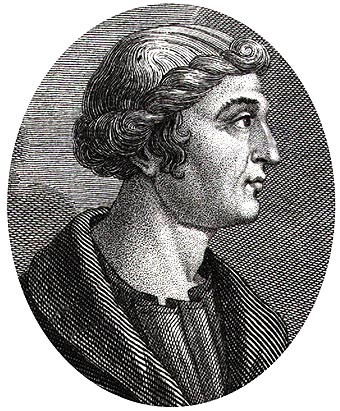
150–c. 235) was a Roman senator and historian born in Nicaea, in the province of Bithynia, who wrote an 80-book history of Rome spanning from the city’s legendary origins to his own lifetime. He held two consulships, governed several provinces, and sat in the Senate through some of the most turbulent reigns of the second and third centuries, giving his account of those years the weight of direct observation. His Roman History remains the most important ancient source for the reign of Commodus, and it is the fullest surviving narrative of many events across several centuries of imperial rule. Only roughly one-third of the original 80 books survives.
Key facts
- Born: 150
- Birthplace: Nicaea
- Died: 235
- Place of death: Nicaea
- Country: Ancient Rome
- Occupation: historian; politician; military personnel
- Field: history; politics; ancient literature; official
Origins and family
Dio’s family, the Cassii, had been prominent in Nicaea since at least the reign of Emperor Nero. One tradition holds that an ancestor received Roman citizenship from Brutus and Cassius before the Battle of Philippi, which would explain both the family name and its long-standing position in Roman provincial society.
His father, Cassius Apronianus, was a Roman senator and a member of the Cassia gens who served as governor of Dalmatia and Cilicia under Marcus Aurelius. As a young man, Dio accompanied his father during the Cilician governorship. After his father’s death, he moved to Rome around 180 AD.
Political career
Arriving in Rome around 180 AD, Dio entered the cursus honorum and was admitted to the Senate under Emperor Commodus. His career stretched across more than a dozen reigns, and he rose steadily through the imperial administrative hierarchy.
Under Emperor Caracalla, in 216 AD, he was taken along as part of the imperial retinue on an eastern military expedition, though he did not follow Caracalla into the Parthian war itself. From 217 AD onward, he served as curator of Pergamum and Smyrna under Emperor Macrinus, a posting he held for more than six years.
Under Emperor Alexander Severus, Dio served successively as proconsul of Africa and then as legate of Dalmatia and Upper Pannonia, making him one of the few Greeks to have governed military provinces in central Europe. He held his first suffect consulship around 220 AD and his second, an ordinary consulship, in 229 AD, with Severus Alexander himself as his colleague.
His time governing Pannonia ended under difficult circumstances. The disciplinary measures he imposed made him deeply unpopular with the Praetorian Guard, whose soldiers threatened his life. He was forced to keep away from Rome and eventually obtained permission to retire to Nicaea, citing an ailment of the foot.
Relationship with the Severan emperors
Dio was a close friend of Emperor Septimius Severus and sat on his advisory council. He admired Severus’s intelligence and thrift while remaining openly critical of the emperor’s treatment of the Senate. The relationship with Severus had a direct effect on Dio’s literary output: around 193 AD, he wrote a short pamphlet describing the dreams and portents that had foretold Severus’s rise to power. Severus responded with a letter of appreciation, and Dio later recorded that a dream after this exchange inspired him to begin writing history in earnest.
The Roman History
The Roman History originally comprised 80 books, covering Roman affairs from the city’s legendary origins down to Dio’s own lifetime. Dio modeled his style and diction on the classical Greek historian Thucydides and adopted a similar historical perspective, placing him consciously within the tradition of analytical Greek historiography even as he wrote about a Latin-speaking empire.
From the reign of Commodus onward, Dio signals repeatedly in the text that he is writing from personal observation. This firsthand dimension gives his coverage of the Severan period a different character from the earlier, source-dependent books.
Dio is considered the most important ancient source for the reign of Commodus (177–192 AD). He attended the Senate throughout those years and was present for many of the events he describes, including Commodus’s public appearances in the arena.
Scholars have long recognized a documented limitation in his work: Dio’s conservative, pro-Senate outlook colored his portrayals of emperors he found objectionable. His negative accounts of Commodus, Caracalla, and Elagabalus reflect a senatorial perspective as much as they reflect historical fact, a bias that modern readers are advised to weigh when using him as a source.
Transmission and survival
The survival of the Roman History owes much to copying activity during the Middle Byzantine period, roughly the 10th to 12th centuries. Manuscripts preserving Books 36 to 60 were reproduced during this era, and Emperor Constantine VII Porphyrogenitus commissioned a large-scale excerpting project, the Constantinian Excerpts, which preserved fragments of the earlier books that would otherwise be lost entirely.
The Loeb Classical Library edition of the Roman History, translated by Earnest Cary and Herbert Baldwin Foster, was published in nine volumes by Harvard University Press beginning in 1914.
Did you know
- Dio personally witnessed Emperor Commodus’s performances in the arena from the senators’ seats. He records that when Commodus brandished the severed head of an ostrich at the seated senators, Dio quietly chewed laurel leaves from his own wreath to keep from laughing. (romanmythology.com)
- Dio’s account of the revolt of Boudica in Britain, which appears in Book 62, survives only through an epitome made by the Byzantine monk John Xiphilinus. Xiphilinus is the sole preserver of this detailed ancient narrative. (tertullian.org)
- The original Roman History ran to 80 books, but only roughly one-third of the text survives, either in complete form or as fragments. The Loeb Classical Library edition fits that surviving portion into 9 volumes. (sevenswords.uk)
- The survival of Dio’s history owes a great deal to the Middle Byzantine period, spanning roughly the 10th to 12th centuries, when manuscripts of Books 36 to 60 were copied and the Constantinian Excerpts, compiled by order of Emperor Constantine VII Porphyrogenitus, preserved fragments from the earlier, otherwise lost books. (cambridge.org)
Data sources
- Wikidata
- unrv.com
- penelope.uchicago.edu
- worldhistory.org
- ebsco.com
- romanempiretimes.com
- medievalhollywood.ace.fordham.edu
- cambridge.org
- loebclassics.com
- limentinus.co.uk
Data updated: 2026-10-27