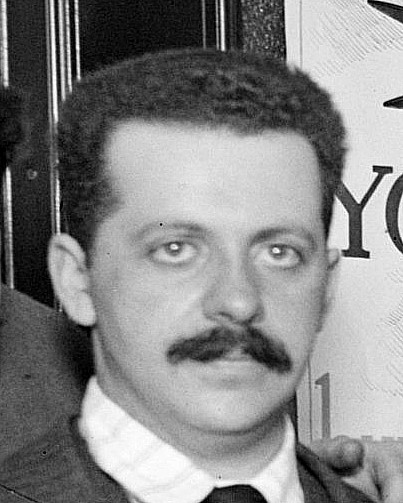
Edward Bernays, born in Vienna on 22 November 1891, was an American psychologist, journalist, and public relations scholar whose methods for shaping mass opinion transformed advertising, politics, and corporate communications throughout the twentieth century. Educated at Cornell University, he drew on the psychoanalytic ideas of his uncle Sigmund Freud to frame the management of public perception as a coherent discipline, not a bag of tricks. His 1923 book Crystallizing Public Opinion was the first full-length treatment of public relations as a systematic field, and he died on 9 March 1995 in Cambridge, Massachusetts, at the age of 103, having outlived nearly everyone who debated whether his methods were genius or manipulation.
Key facts
- Born: 22 November 1891
- Birthplace: Vienna
- Died: 9 March 1995
- Place of death: Cambridge
- Country: United States; Cisleithania
- Occupation: psychologist; journalist; non-fiction writer; public relations scholar
- Field: public relations research
- Education: Cornell University; DeWitt Clinton High School; Cornell University College of Agriculture and Life Sciences
Early Life and Family
Bernays was born in Vienna on 22 November 1891 and emigrated to the United States, where he attended DeWitt Clinton High School before going on to Cornell University’s College of Agriculture and Life Sciences. His family connections placed him at an unusual intersection of European intellectual life and American ambition. His mother Anna was Sigmund Freud’s sister, and his father Eli was the brother of Freud’s wife, Martha Bernays, making Bernays what he himself described as a ‘double nephew’ of the founder of psychoanalysis.
That connection was not merely a biographical curiosity. Freud sent Bernays a copy of General Introduction to Psychoanalysis in exchange for Havana cigars, and reading it gave Bernays a framework he would apply to his professional work: that human behavior is driven by unconscious desires that can be identified and engaged. This reading became a formative influence on his public relations theories.
World War I and the Creel Committee
When the United States entered World War I, Bernays volunteered for the government’s Committee on Public Information, known also as the Creel Committee. Its mission was to generate public support at home and abroad for America’s war effort, and the experience gave Bernays a direct education in how coordinated messaging could move large populations. He would spend the following decades applying those lessons in commercial and political contexts.
Building a Discipline
In 1923, Bernays published Crystallizing Public Opinion, the first book-length treatment of public relations as a systematic discipline. In the same year, he taught the first university-level course on the subject at New York University, establishing what he argued was a profession with its own body of theory, not merely a craft of persuasion.
Bernays married Doris E. Fleischman in 1922. She had joined his firm in 1919 as his first hire and became an equal partner, ghost-writing memos and speeches for clients who, in most cases, never knew of her involvement. Their working relationship remained as close as their personal one across the following decades.
In 1935, Time magazine proclaimed Bernays ‘America’s Number One Publicist,’ a title that became closely associated with his public reputation for the remainder of his active career.
Notable Campaigns
Among his most studied campaigns was the work he did for the Beech-Nut Packing Company in the 1920s to boost bacon sales. Rather than simply placing advertisements, Bernays commissioned a doctor to survey 4,500 fellow physicians on whether a heavier breakfast was healthier, then publicized the physicians’ endorsement alongside the specific suggestion that bacon and eggs represented the ideal hearty breakfast. The campaign embedded those two foods together in American breakfast culture in a way that outlasted the client relationship.
His campaign for United Fruit involved flying journalists from outlets including the New York Times, Time Magazine, and the Miami Herald to Central America at the company’s expense to shape their reporting on Guatemala. The arrangement illustrated his method of manufacturing what appeared to be independent editorial opinion.
Not all assessments of his work were admiring. United States Supreme Court Justice Felix Frankfurter, in a letter to President Franklin D. Roosevelt, described Bernays and fellow publicist Ivy Lee as ‘professional poisoners of the public mind, exploiters of foolishness, fanaticism and self-interest.’ Bernays also wrote in his memoirs that he was shocked to learn that Nazi Germany’s Minister of Propaganda Joseph Goebbels kept some of Bernays’s work in his personal library.
Later Years
On June 17, 1989, Bernays received an Honorary Doctorate in Public Service from Northeastern University and delivered the commencement address.
He died on March 9, 1995, at his home on Lowell Street in Cambridge, Massachusetts, at the age of 103.
Did you know
- Bernays was an observant Jew who did not eat bacon himself, yet he successfully orchestrated the campaign in the 1920s that embedded bacon and eggs as a staple of the American breakfast for generations. (everyday-justice.com)
- Bernays read Freud’s General Introduction to Psychoanalysis after his uncle sent it to him in exchange for Havana cigars, and the text became a formative influence on his public relations theories. (theremnantnetwork.com)
- After marrying Bernays in 1922, Doris Fleischman signed the hotel register at the Waldorf-Astoria with her maiden name rather than taking his surname, and the gesture made front-page news the following day. (jwa.org)
- Doris Fleischman became the first married woman in the United States to hold a passport issued under her own name, receiving it as ‘Doris Fleischman’ in 1925, three years after marrying Bernays. (jwa.org)
Data sources
- Wikidata
- sk.sagepub.com
- newworldencyclopedia.org
- jwa.org
- gobraithwaite.com
- retrospectjournal.com
- historycambridge.org
- archivesspace.library.northeastern.edu
- grokipedia.com
Data updated: 2026-10-31