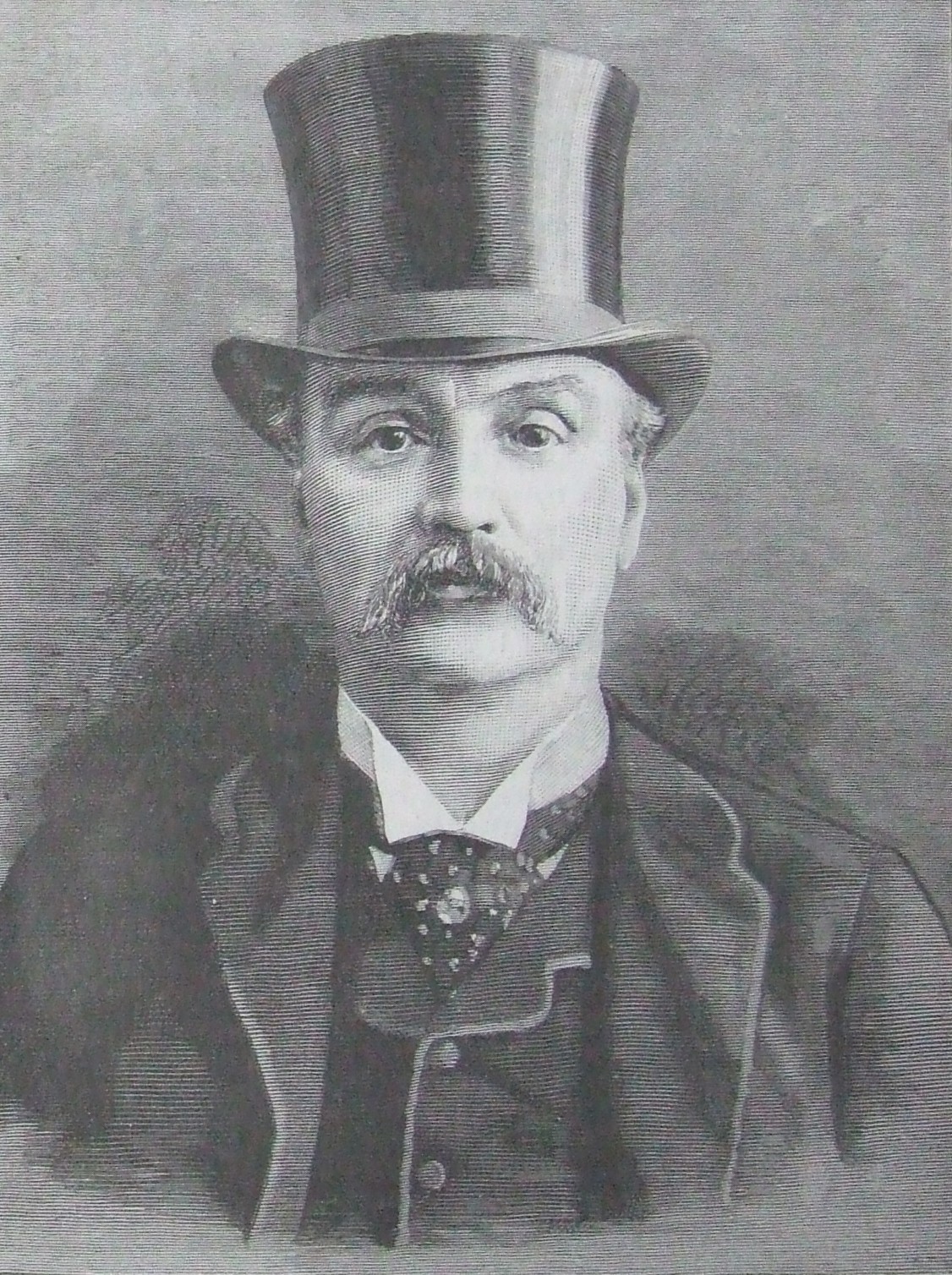
James Maybrick was a Liverpool cotton merchant born on 25 October 1838 who died on 11 May 1889 under circumstances that gripped the press on both sides of the Atlantic. His death at Battlecrease House in Aigburth, the subsequent trial of his American wife Florence, and the commutation of her death sentence made his name a byword for Victorian judicial controversy. Years after his burial, his name was drawn further into dispute by the emergence of a diary purportedly linking him to the Jack the Ripper murders.
Key facts
- Born: 25 October 1838
- Birthplace: Liverpool
- Died: 11 May 1889
- Place of death: Liverpool
- Country: United Kingdom of Great Britain and Ireland
- Occupation: entrepreneur; merchant
- Field: merchant
Early life and career
Maybrick was born in Liverpool on 25 October 1838. By the time of the 1871 census he was living with his mother at 77 Mount Pleasant, Liverpool, and was recorded as a commercial clerk. The following year he became a founding member of the Royal Liverpool Golf Club in 1872, listed as member number 232, with his works address given as Knowsley Buildings, Tithebarn Street, Liverpool.
Within a few years his ambitions had taken him considerably further: in 1874 he travelled to Norfolk, Virginia, to establish a branch office of Maybrick and Company, working at the Norfolk Cotton Exchange.
The Virginia posting marked his life in a way he could not have anticipated. While in Norfolk in 1874 he contracted malaria, which was treated with a medication containing arsenic. He became addicted to arsenic for the rest of his life, a habit that would later loom over the entire investigation into his death.
Marriage and family
Maybrick and his wife Florence settled at Battlecrease House, 7 Riversdale Road, Aigburth, a suburb of Liverpool. They had two children: a son, James Chandler Maybrick, born 24 March 1882, and a daughter, Gladys Evelyn Maybrick, born 16 June 1886.
The household that Florence inherited on her husband’s death was, by any measure, a heavily medicated one.
Death and the Aigburth Poisoning case
Maybrick’s health deteriorated suddenly on 27 April 1889. He died fifteen days later, at 8:40 p.m. on 11 May 1889, at Battlecrease House in Aigburth. A post-mortem examination found slight traces of arsenic in his body, but medical experts disagreed about the cause of death. All medical testimony agreed he died of gastro-enteritis; the dispute centred on whether that condition had been brought on by a chill, by arsenic, or by bad food.
The case was widely reported as the Aigburth Poisoning. On 30 May 1889, Maybrick’s body was exhumed from Anfield Cemetery and examined for arsenic as part of the criminal investigation.
Florence Maybrick was convicted of her husband’s murder on 7 August 1889 at Liverpool Assizes, held at St George’s Hall, and was sentenced to death. The sentence was commuted to life imprisonment on 22 August 1889. The Home Secretary acknowledged that while the evidence suggested Florence may have intended to administer arsenic, it was not conclusive that arsenic poisoning had in fact caused James Maybrick’s death. Florence served 15 years and was released on 25 January 1904. Many contemporaries regarded her conviction as one of the greatest miscarriages of 19th-century justice.
Burial
Maybrick was buried at Anfield Cemetery, Liverpool, in a family plot that also contains his parents, William and Susannah, and his brother Edwin. The grave became a point of physical reference for subsequent investigations, particularly after the exhumation order of 30 May 1889.
The Jack the Ripper connection
A disputed diary, purportedly written by James Maybrick and claiming authorship of the Jack the Ripper murders, has been the subject of argument among researchers. In 2015, writer and director Bruce Robinson argued in his book They All Love Jack that it was James Maybrick’s brother Michael, not James, who was Jack the Ripper and who had also poisoned James. In 2017, author Robert Smith published new evidence in 25 Years of the Diary of Jack the Ripper, including timesheets showing that electrical contractors were working at Battlecrease House on 9 March 1992, the same day that a man named Michael Barrett contacted a London literary agent about the diary. The question of the diary’s authenticity has not been resolved.
Did you know
- Maybrick joined the Royal Liverpool Golf Club in 1872 as member number 232, out of a total membership of just over 250. The only recorded mention of him actually playing there is in a tournament in August 1872, and he had resigned from the club by the end of that same year. (forum.casebook.org)
- The judge who presided over Florence Maybrick’s 1889 trial, Justice James Fitzjames Stephen, was later declared incompetent and died in 1894 in an insane asylum. His conduct during the trial drew criticism from many quarters, including from the prosecution itself. (virginiaclub.com)
- A search of Battlecrease House after Maybrick’s death found over 120 bottles of his own remedies containing toxins including arsenic, strychnine, and belladonna, giving a concrete picture of how extensively he had been self-medicating. (grokipedia.com)
- Evidence published in 2017 by author Robert Smith in 25 Years of the Diary of Jack the Ripper included timesheets showing electrical contractors were working at Battlecrease House on 9 March 1992, the very same day that Michael Barrett contacted a London literary agent about the diary whose origins remain disputed. (foxnews.com)
Data sources
- Wikidata
- magazine.royal-liverpool-golf.com
- casebook.org
- crimesthroughtime.co.uk
- grokipedia.com
- forum.casebook.org
- murderpedia.org
- roydenhistory.co.uk
- old-merseytimes.co.uk
- artofcrimepodcast.com
Data updated: 2026-10-26