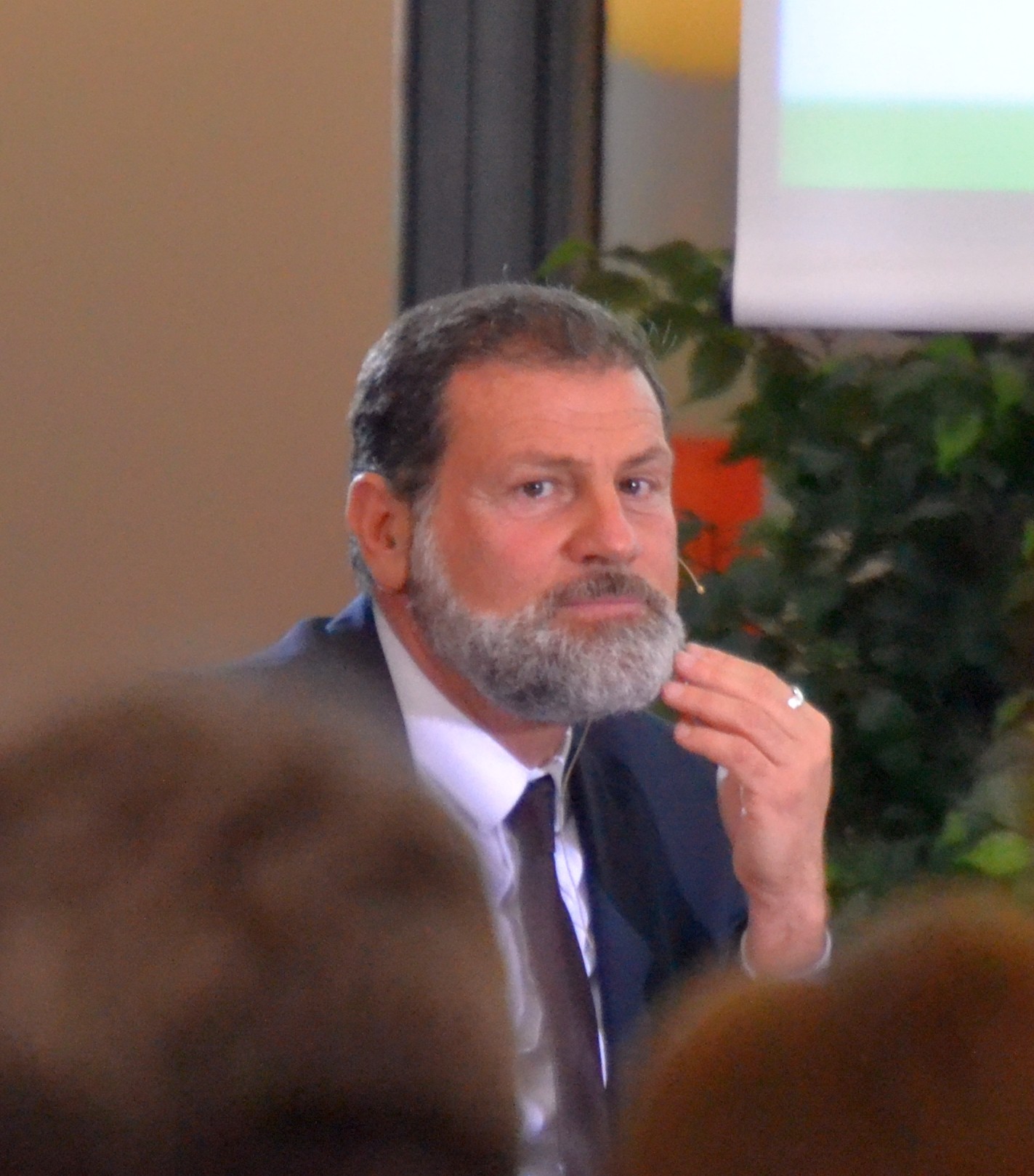
Massimo Osanna, born on 24 May 1963 in Venosa, Italy, is an Italian classical archaeologist, art historian, and university teacher whose career spans academic research, international fieldwork, and the institutional leadership of some of Italy’s most significant cultural heritage sites. He is best known for directing the Archaeological Park of Pompeii between 2016 and 2020, a period in which annual visitor numbers rose from approximately 2 million to 4 million, and during which a European restoration programme worth 105 million euros reshaped the site. As Director General of Museums, he oversees nearly 500 state museums, monuments, complexes, and archaeological sites across Italy.
Key facts
- Born: 24 May 1963
- Birthplace: Venosa; Italy
- Country: Italy
- Occupation: archaeologist; university teacher; art historian
- Field: classical archaeology; archaeology; art history
- Employer: University of Basilicata; University of Rennes 2 – Upper Brittany; archaeological excavations of Pompeii
- Education: University of Perugia; Italian School of Archaeology at Athens; Italian School of Archaeology at Athens
Formation and early academic career
Osanna studied at the University of Perugia, where he became a student of Mario Torelli, an Italian archaeologist whose influence shaped the intellectual direction of Osanna’s subsequent work. He also trained at the Italian School of Archaeology at Athens, building the grounding in classical archaeology that would define his research focus.
In 1993 and 1994 he held a scholarship from the Alexander von Humboldt Foundation, conducting research at the University of Heidelberg under Tonio Holscher.
He joined the University of Basilicata as a researcher in classical archaeology in 1994, rose to associate professor in 2000, and from 2002 to 2014 directed the School of Specialisation in Archaeological Heritage in Matera. In 2007 he was appointed Directeur d’etude at the Ecole Pratique des Hautes Etudes in Paris. He returned to Heidelberg in 2010 as a visiting professor of classical archaeology, then spent 2011 as a research fellow at the Humboldt-Universitat Berlin.
Fieldwork and excavations
Osanna supervised field excavations at multiple Italian sites: Torre di Satriano, Ascoli Satriano, Pantelleria, Taureana di Palmi, and Gabii. Beyond Italy, he directed international fieldwork at Alesia in France.
As of 2026, he conducts ongoing research on the island of Rheneia in collaboration with the Ephoria in the Cyclades and the Ecole francaise d’Athenes, extending his fieldwork into the Aegean.
Direction of the Pompeii Archaeological Park
Osanna was appointed special superintendent of the Archaeological Park of Pompeii, Herculaneum and Stabiae in 2014. Two years later he became General Director of the Pompeii Archaeological Park, a post he held until 2020. The period saw the Great Pompeii Project deploy a European Union fund of 105 million euros for restoration and safety works, with 75 percent contributed by the EU and the remainder by the Italian government.
Visitor numbers illustrate the scale of change: from roughly 2 million arrivals in 2014, the park reached 4 million in 2019.
In February 2021, under Osanna’s final months of oversight, excavators at the Civita Giuliana villa announced the discovery of an intact four-wheeled ceremonial chariot made of iron, bronze, and tin. It was described as the first such find without parallel in Italy.
Publications and exhibitions
In 2019 Rizzoli published his book ‘Pompei. Il tempo ritrovato. Le nuove scoperte’, a 416-page account combining scientific rigour with popular storytelling to bring recent discoveries at Pompeii to a general audience.
He co-curated the exhibition ‘Gli dei ritornano – I bronzi di San Casciano’ on the San Casciano bronzes alongside archaeologist Jacopo Tabolli. The exhibition toured the Palazzo del Quirinale, the National Archaeological Museum of Naples, and the National Archaeological Museum of Reggio Calabria.
Honours and institutional roles
In 2016 Osanna was elected a member of the Academia Europaea in the section for Classics and Oriental Studies.
As Director General of Museums, he holds responsibility for nearly 500 state museums, monuments, complexes, and archaeological sites across Italy, one of the broadest mandates in European cultural heritage management.
Did you know
- Osanna grew up in Venosa, the ancient Roman birthplace of the Latin poet Horace (Quintus Horatius Flaccus). He has recalled cycling as a child through the local unfenced archaeological park that preserves the remains of the Roman colony. (issimoissimo.com)
- In October 2017 the Nicholson Museum of the University of Sydney commissioned a personalised LEGO minifigure of Osanna as part of the Lego Classicists project run by Australian archivist Liam D. Jensen. The figure was delivered to him in person at Pompeii. (castprojectpompeii.org)
- The 2021 ceremonial chariot discovered at the Civita Giuliana villa, whose excavation Osanna oversaw, was described by a University of Massachusetts Amherst specialist as “a Lamborghini”: a one-of-a-kind ornate vehicle with no known parallel among Italian archaeological finds. (smithsonianmag.com)
- As Director General of Museums, Osanna oversees nearly 500 state museums, monuments, complexes, and archaeological sites across Italy, making his office one of the broadest mandates in European cultural heritage management. (issimoissimo.com)
Data sources
- Wikidata
- finestresullarte.info
- ae-info.org
- romemuseumexhibition.com
- wantedinrome.com
- alainelkanninterviews.com
- biblicalarchaeology.org
- en.lerma.it
- taobuk.it
- museoarcheologicoreggiocalabria.cultura.gov.it
- books.google.com
Data updated: 2026-10-27