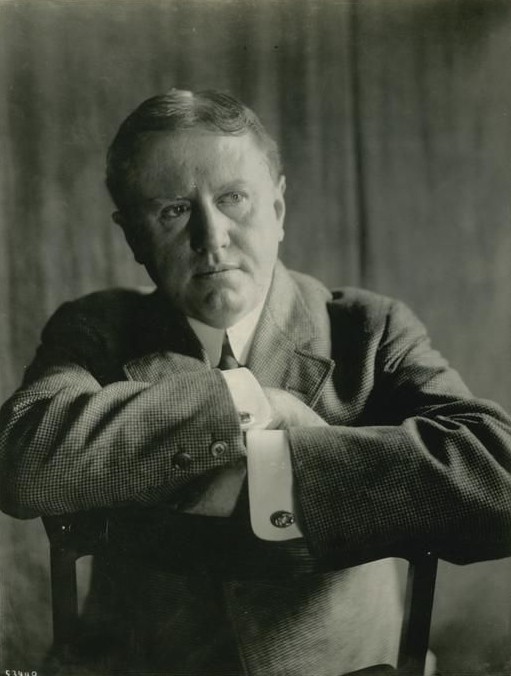
William Sydney Porter, known to readers everywhere as O. Henry, was an American short story writer born in Greensboro, North Carolina, on September 11, 1862. His career produced some of the most recognizable short fiction in the English language, built on economical prose and endings that upended the reader’s expectations at the last moment. What makes his story stranger than most literary biographies is that his best-known pen name first appeared in print while he was in prison, and the reading public had no idea. He died on June 5, 1910, in New York City, leaving behind a body of work whose influence is still measured annually through the prize that bears his name.
Key facts
- Born: 11 September 1862
- Birthplace: Greensboro
- Died: 5 June 1910
- Place of death: New York City
- Country: United States
- Occupation: writer; journalist; short story writer
Early Life and Family
Porter was born in Greensboro and later settled in Texas, where he worked as a bank teller at the First National Bank of Austin. He and his wife Athol had a son in 1888 who died within hours of birth. Their daughter, Margaret Worth Porter, was born on September 30, 1889.
Indictment, Flight, and Imprisonment
In February 1896, while writing a column for the Houston Post, Porter was indicted on charges of embezzling funds from the First National Bank of Austin during his time there as a teller. Rather than face trial, he fled first to New Orleans, then on July 6, 1896, to Honduras, which had no extradition treaty with the United States.
He returned to the United States to be with his dying wife and was convicted. On March 25, 1898, he entered the Ohio Penitentiary as federal prisoner number 30664. Because he held a pharmacist’s license, prison administrators assigned him as night druggist and gave him a room in the hospital wing. By all accounts he never spent time in the general cell block.
The Birth of O. Henry
The pen name O. Henry first appeared in print with the story “Whistling Dick’s Christmas Stocking” in the December 1899 issue of McClure’s Magazine, published while Porter was still imprisoned. A friend in New Orleans forwarded his manuscripts to publishers so that his incarceration would remain unknown to the reading public.
Where the name came from is still disputed. Proposed explanations include a French pharmacist named Etienne-Ossian Henry, a prison warden named Orrin Henry, and the household habit of calling out “Oh, Henry!” to the family cat. None of these origins has been confirmed.
Career in New York and Final Years
After his release, Porter settled in New York City and built a prolific career as a short story writer.
Porter died on June 5, 1910, at the New York Polyclinic Hospital. The causes recorded were cirrhosis of the liver, complications of diabetes, and an enlarged heart. His funeral was held in New York City, and he was buried at Riverside Cemetery in Asheville, North Carolina.
Legacy and the O. Henry Award
In 1919 the Society of Arts and Sciences established the O. Henry Award, described as the oldest major prize for short fiction in America, to honor his legacy. The award has been given annually since that year, with a single break in 2020.
Porter’s hometown of Greensboro also commemorates him with a three-piece bronze sculpture at the corner of North Elm and Bellemeade streets. The sculpture depicts him alongside his small dog and a large stone book, whose open pages show scenes from two of his most enduring stories, “The Gift of the Magi” and “The Ransom of Red Chief.”
Did you know
- Porter entered the Ohio Penitentiary on March 25, 1898, as federal prisoner number 30664. His pharmacist’s license earned him an assignment as night druggist, which came with a room in the hospital wing. He reportedly never set foot in the general cell block at all. (answers.com)
- The Rolling Stone, Porter’s weekly newspaper, launched with its first two issues printed in runs of 1,000 copies each. By the third issue the print run jumped to 6,000 copies, which were distributed free to Austin businessmen as a pitch for advertising. (gutenberg.org)
- Greensboro honors its most famous writer with a three-piece bronze sculpture at the corner of North Elm and Bellemeade streets. The group shows O. Henry, his small dog, and a large stone book whose open pages illustrate scenes from “The Gift of the Magi” and “The Ransom of Red Chief.” (thisismysouth.com)
Data sources
Data updated: 2026-10-26