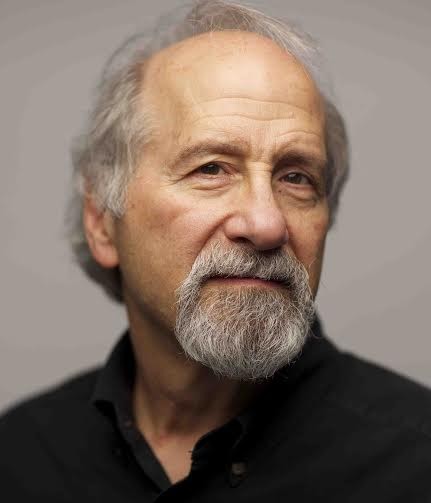
Theodore Wells Pietsch III, born on March 6, 1945, in Royal Oak, is an American zoologist and ichthyologist whose career has centered on the systematics and biology of some of the ocean’s most unusual fishes, from the grotesque deep-sea anglerfishes to the camouflaged frogfishes. A longtime professor and curator at the University of Washington, he has combined field collection, museum taxonomy, and the history of science across more than four decades of scholarship. Among his most cited contributions is a 1975 paper in Nature documenting sexual parasitism in a ceratioid anglerfish, a finding that helped define how the group reproduces. His 2022 biographical dictionary of ichthyologists contains approximately 1,500 individual sketches, spanning the full recorded history of fish science.
Key facts
- Born: 6 March 1945
- Birthplace: Royal Oak
- Country: United States
- Occupation: zoologist; ichthyologist; researcher; historian of science
- Education: University of Michigan College of Literature, Science, and the Arts; University of Southern California
Early Life and Education
Pietsch grew up in South Bend, Indiana, where he attended John Adams High School and graduated in 1963. His high-school mentor, Ernest Litweiler, shaped his early scientific outlook. For undergraduate study he enrolled at the University of Michigan College of Literature, Science, and the Arts, then moved to the University of Southern California for graduate work, earning his M.S. in biology in 1969 and his Ph.D. in biology in 1973. His doctoral advisors were Basil G. Nafpaktitis and Karel F. Liem.
Academic Career
After completing his doctorate, Pietsch held a postdoctoral position at the Museum of Comparative Zoology, Harvard University, from 1973 to 1975. He then served as Assistant Professor at California State University, Long Beach, from 1975 to 1978.
In the fall of 1978, Pietsch was appointed Assistant Professor and Curator of Fishes at the School of Fisheries, University of Washington. He advanced to associate professor in 1981 and to full professor in 1984, a position he has held through his mature career at that institution.
In 1989, together with Douglas F. Markle of Oregon State University, Pietsch co-founded the Gilbert Ichthyological Society, a regional professional organization for Pacific Northwest ichthyologists. The society takes its name from the ichthyologist Charles Henry Gilbert (1859–1928).
Research on Anglerfishes and Sexual Parasitism
In July 1975, Pietsch published a paper in the journal Nature titled ‘Precocious sexual parasitism in the deep-sea ceratioid anglerfish Cryptopsaras couesi Gill.’ The paper documented a reproductive strategy in which a dwarf male attaches permanently to a much larger female, fusing with her tissues and depending on her bloodstream for nutrients. That work became a landmark reference in deep-sea biology.
Pietsch’s interest in anglerfish biology extended to the question of size extremes. In a 2006 University of Washington news feature, he reported that a parasitic male of the species Photocorynus spiniceps, measuring just 6.2 mm in length, is the smallest known sexually mature vertebrate on Earth. That individual was fused to the back of a 46 mm female.
Published Works
In 1987, Pietsch and co-author David B. Grobecker published Frogfishes of the World: Systematics, Zoogeography, and Behavioral Ecology with Stanford University Press. The 420-page illustrated monograph drew on 15 years of original research on the family Antennariidae and covered the systematics, global distribution, and behavioral ecology of the group.
In November 2022, Pietsch and co-author William D. Anderson, Jr. published Ichthyopedia: A Biographical Dictionary of Ichthyologists through the American Philosophical Society Press. The volume contains approximately 1,500 biographical sketches and 254 black-and-white portraits.
The International Kuril Island Project
Pietsch first conceived the International Kuril Island Project (IKIP) in September 1991, while he was on a Japan Society for the Promotion of Science fellowship at Hokkaido University. The project brought together American, Russian, and Japanese scientists to survey the biota of the Kuril Archipelago, a remote island chain in the North Pacific. Seven annual summer expeditions ran from 1994 to 2000.
Awards and Recognition
In 2005, the American Society of Ichthyologists and Herpetologists awarded Pietsch the Robert H. Gibbs Jr. Memorial Award for Excellence in Systematic Ichthyology, given in recognition of an outstanding body of published work in the field.
In 2022, the Society for the History of Natural History awarded him its Founders’ Medal, which is given to persons who have made a substantial contribution to the study of the history or bibliography of natural history through a sustained record of high-quality publications.
Did you know
- Pietsch had unknowingly stored two specimens of the Psychedelic Frogfish in the University of Washington fish collection for 17 years before he recognized them as an undescribed species. (aquaticcommunity.com)
- In a 2006 University of Washington news feature, Pietsch reported that a parasitic male anglerfish of the species Photocorynus spiniceps, measuring just 6.2 mm, is the smallest known sexually mature vertebrate on Earth. That male was fused to the back of a 46 mm female. (washington.edu)
- The first annual meeting of the Gilbert Ichthyological Society, which Pietsch co-founded, was held on October 7, 1989, on the University of Washington campus and was attended by just 24 founding members from the states of Washington and Oregon. (gilbertsociety.org)
Data sources
Data updated: 2026-10-26