Dinner at 20,000 Riel a Kilo
In 2008, a kilogram of beef in Cambodia cost 20,000 riel, roughly $4.88 at the time. In Koh Thom district, near the border with Vietnam, many families didn’t cut meat from the table, they swapped it. Spicy, garlic-fried field rat became the dish of the moment, sold openly at local markets and served for dinner without much fuss. It wasn’t a hidden workaround. It was just what people were eating.
Two Bad Pieces of News, One Dinner
Cambodia’s central bank put consumer price inflation at 37 percent that year, close to the official record of a 35.57 percent peak reached that May, among the sharpest price jumps the country had seen in decades. At the same time, the lower Mekong Delta was flooding, as it does seasonally, swallowing rice paddies and low-lying farmland. Normally a flood and a price spike landing in the same year just stack up and make things worse. So how did villagers near the Vietnamese border end up with an easier, cheaper dinner out of it?
Where the Rats Came From
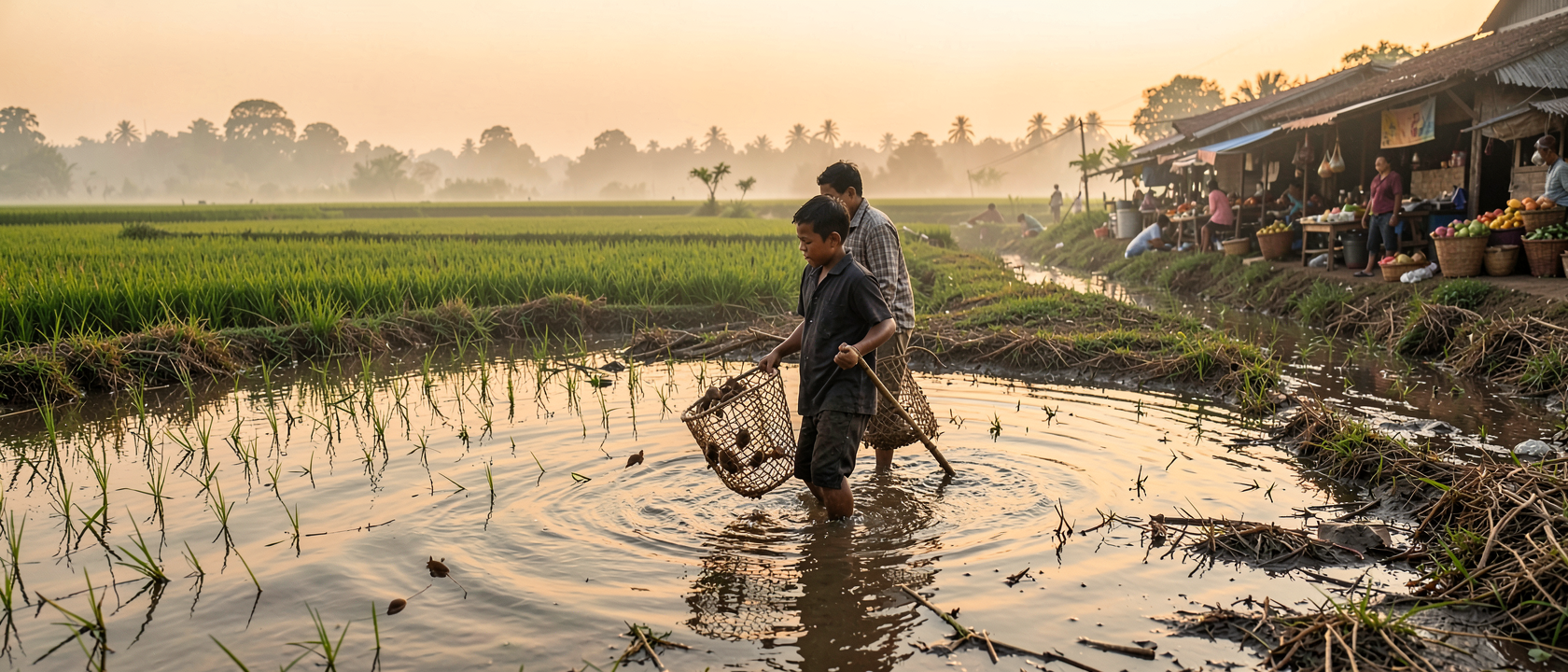
Field rats, the kind that live in paddies and open farmland, not sewer rats, usually keep their distance from people, scattered thin across the fields. But when the Mekong’s floodwaters rose, they ran out of dry ground and moved to roadsides, footpaths, and raised fields, exactly where people were living and working. At the same moment, beef had priced itself out of reach for many households. The flood didn’t just ruin farmland, it also pushed a whole protein source within arm’s reach right when people needed one most. The same garlic-fried dish was reportedly catching on just across the border in Vietnam, too.
Demand pushed rat prices up too, from 1,200 riel the year before to around 5,000 riel (about $1.28) a kilogram, a fourfold jump. Even so, that was still about a quarter of what beef cost, the math still favored the rats.
Kids, Markets, and Pocket Money
Ly Marong, an agriculture official reached by phone in Koh Thom, described children catching rats and carrying them to market, not just to feed their own families but to sell. “Many children are happy making some money from selling the animals to the markets, but they keep some for their family,” he said, a single catch doing double duty as dinner and income. The trade reached beyond one district, too: Cambodia was reportedly exporting more than 2,200 pounds (1 tonne) of live rats a day into Vietnam, lucrative enough that some people risked imprisonment, even their own safety, smuggling them across the border, chasing earnings better than the roughly $3 a day many Cambodians could expect to make that year.
What We Don’t Know
This account rests on one official describing one district over the phone. There’s no count of how many households actually switched to rat meat, no district-by-district breakdown, and no way to know if Koh Thom was typical. Eating field rats wasn’t new to the region, either; it has a longer history across parts of Southeast Asia. The real story isn’t that people discovered rat meat in 2008, but that the economics that year suddenly made it the obvious choice. It didn’t hold steady afterward, either: rat eating reportedly lost its appeal among Khmer households in the years that followed, even as it kept growing in Vietnamese cities, a reminder that one news cycle rarely tells you where a habit ends up.
Reading Two Headlines Together
Inflation and flooding usually get filed under different sections of the news, one business, one weather. Households don’t experience them separately. A flood that ruins a rice field can also push a rodent population into a family’s hands. A price spike that puts beef out of reach can make that same rodent worth catching. Neither system was built to interact with the other, yet in Koh Thom in 2008, they did, and the result was dinner. The next time two “unrelated” headlines show up together, it’s worth asking who, somewhere, is quietly living in the overlap.