A Device Implanted in Your Chest, Controlled by Someone Outside the Room
A pacemaker sits under the skin, wired into a person’s heart, quietly keeping the rhythm steady. The natural assumption is that something stitched that deep into the body is sealed off from the outside world, reachable only during a doctor’s visit.
In 2008, two researchers showed that assumption was wrong. Kevin Fu, an associate professor at the University of Massachusetts Amherst, and Daniel Halperin, a graduate student at the University of Washington, found that a cardiac implant could be reached, read, and even commanded from outside the patient’s body. The equipment to do it cost less than $1,000, built from parts anyone could order. Nothing classified, nothing military-grade, just patience, electronics, and a working knowledge of radio.
How a Sealed Implant Can Be Reached From Outside the Body
A pacemaker isn’t plugged into Wi-Fi or sitting near a router. It’s buried under muscle and skin, with no obvious entry point short of surgery. So how do you interact with something like that from across a room?
The answer hinges on something the device was never meant to hide: a feature built to help, not to expose.
The Feature That Was Supposed to Help Doctors
Pacemakers and implantable cardioverter-defibrillators (ICDs, devices that can also shock a failing heart back into rhythm) are built to talk wirelessly on purpose. A doctor holds an external “programmer” near the patient’s chest, and the implant reports its battery life, accepts new therapy settings, and runs diagnostics without another surgery.
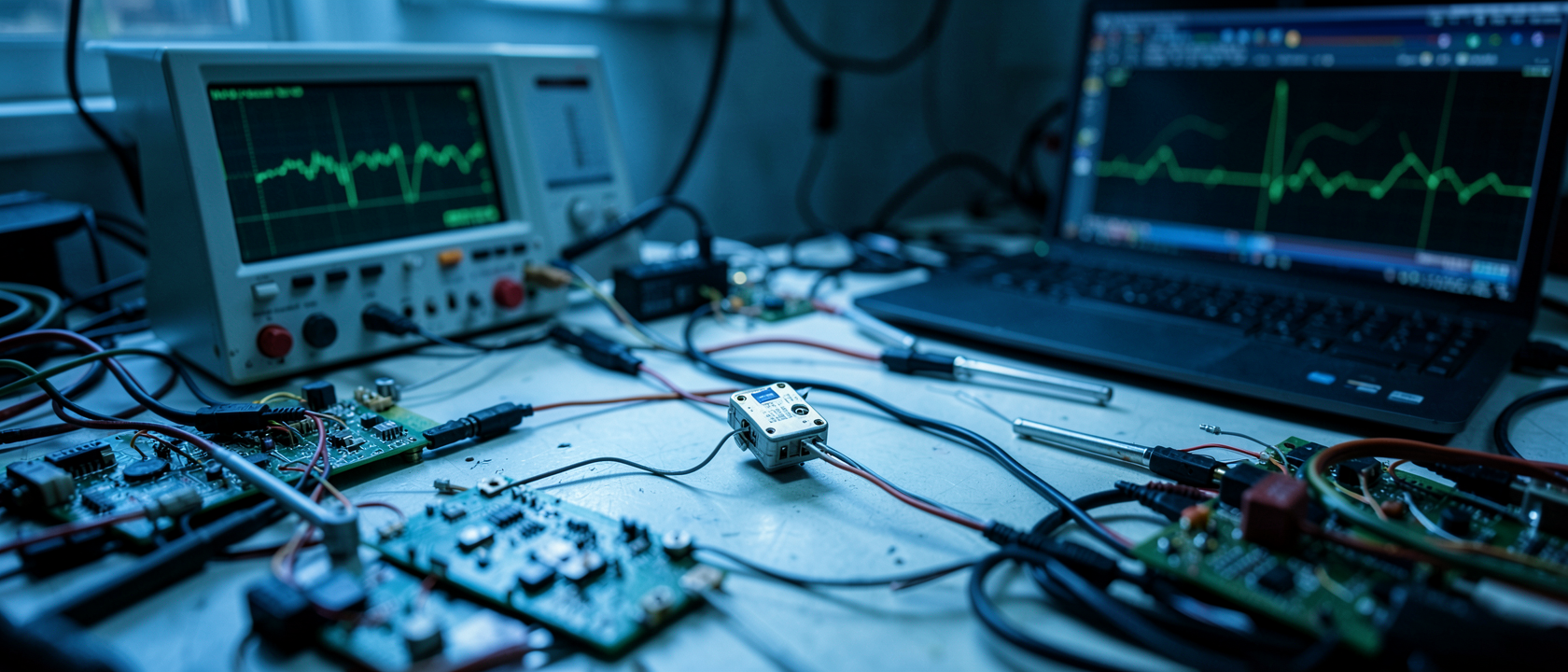
Fu and Halperin studied a Medtronic Maximo DR, an ICD introduced in the US in 2003 that also carries pacemaker functions and talks to its programmer at 175 kHz. There was no cryptographic key, no digital lock, protecting that conversation. After reverse engineering it with an oscilloscope and a software-defined radio, the team built their own transmitter using the free tool GNU Radio and under $1,000 in parts, a figure that covers only the compact device, not the two years of earlier lab work behind it, which reportedly ran past $30,000 at points.
Their transmitter copied the programmer’s signal closely enough that the implant had no way to tell the difference. They did not break in. They learned to speak the device’s own language, and it answered.
Eavesdropping and Worse
With that fake programmer running, the researchers found two layers of access. The first was passive: just listening. The wireless traffic carried the patient’s identity, the treating doctor’s name, the diagnosis, and the exact instructions programmed into the device.
The second was active. Halperin described being able to induce the device’s test mode, drain its battery, and shut off the therapies that keep a damaged heart on rhythm. This was not theory on paper; it worked against real hardware on their bench. Imagine tuning into a private radio channel and finding it carries someone’s medical chart, and a control panel for a machine inside their chest.
One Device, Not Every Pacemaker
Here’s the caveat worth holding onto. The ICD tested wasn’t implanted in a patient; an earlier phase of the work held the device within about 2 inches (5 cm) of the test gear on a bench. Fu tested exactly one model and later said he never tried the attack on other pacemaker brands, since the goal was to prove the point possible, not to survey the market.
One proven case tells you a category of risk is real, it doesn’t tell you every pacemaker from every company shares the same flaw. Some outside commentary at the time called the threat proof-of-concept rather than something an average person could pull off easily, while still agreeing the underlying flaw was serious.
If a Grad Student Can Do It…
None of this came together overnight. Fu and his University of Washington collaborators spent roughly two years reverse engineering the implant’s wireless behavior before building a device capable of issuing it commands for under $1,000.
That timeline is the real source of urgency. Software-defined radios and free tools like GNU Radio were getting cheaper and easier to use every year, lowering the barrier to repeating this work. Halperin put it directly: “This is something that academics can do now. We have to do something before the ability to mount attacks becomes easier.” The point was never to show off a clever trick but to get manufacturers moving before someone with worse intentions picked up the same tools.
The Birth of a Field Nobody Had Named Yet
The research, carried out through the Medical Device Security Center with contributors from Beth Israel Deaconess Medical Center, Harvard Medical School, UMass Amherst, and the University of Washington, was presented at the Black Hat and Defcon security conferences in Las Vegas in early August 2008, then published in full at the IEEE Symposium on Security and Privacy that same year. The findings also raised product liability questions for device makers.
Before that, “medical device security” barely existed as a phrase. Implants were engineered to be reliable, not to resist someone impersonating their control signal. This case is widely credited with pushing manufacturers and regulators to start treating wireless implants as something that needs defending, not just something that needs to work.
The idea travels well beyond pacemakers. The most interesting security stories rarely start with a computer. They start with an ordinary object nobody thought to ask a simple question about: can this be hacked?