Leave the Mask On. Seriously.
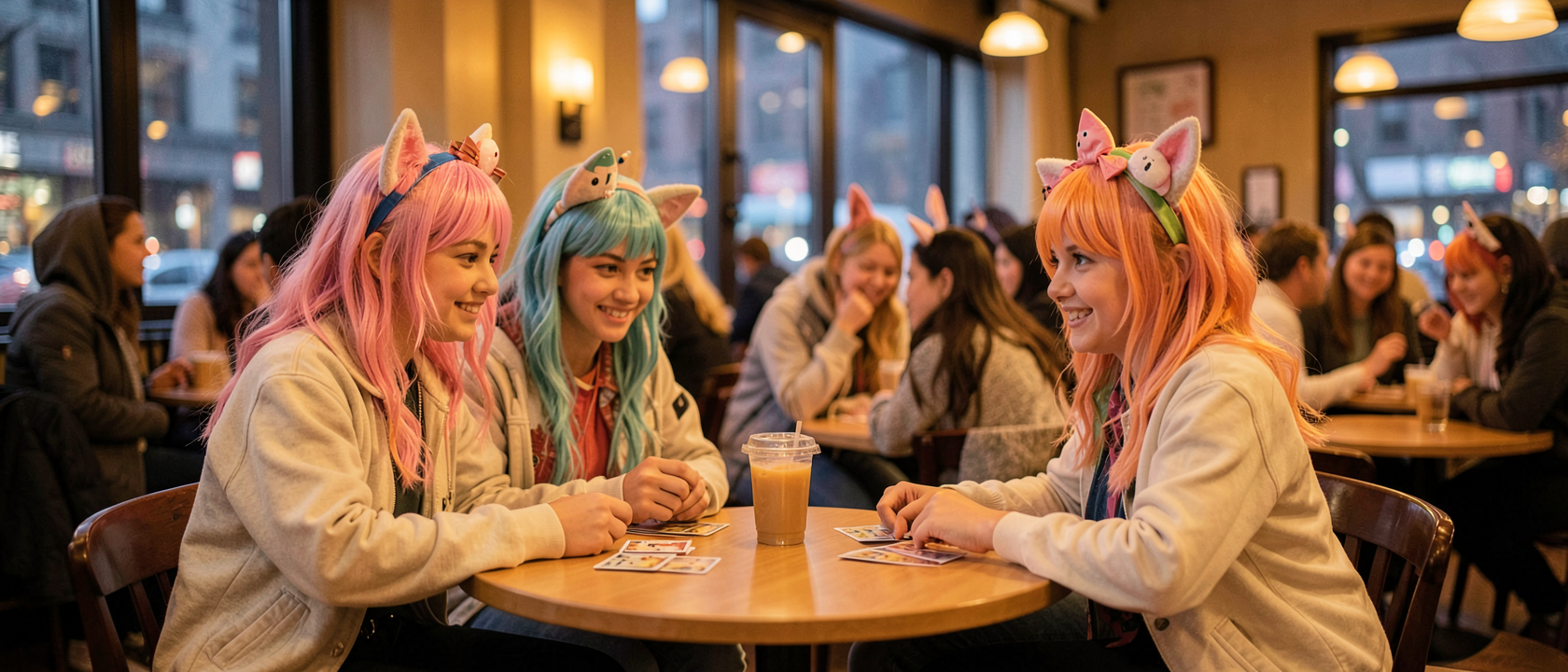
Picture a speed-dating event in New York City where the person across from you might be dressed as a character from Attack on Titan, and nobody considers that strange. That is the exact premise of Otaku Speed Dating. The only formal requirements are being at least 18 and being an anime fan. Light cosplay is not merely tolerated, it is genuinely encouraged.
The setup sounds like a punchline, but there is no joke underneath it. This is a real matchmaking event, run with standard rotating-encounter mechanics at New York City venues, with snacks and soft drinks laid out while participants work through a structured sequence of brief conversations. The costume simply stays on.
Which raises an obvious question: how does that actually function as a way to find a romantic partner?
The Gamble in Narrowing Things Down
Conventional speed-dating wisdom leans on breadth, keep eligibility loose and let as many people through the door as possible. Otaku Speed Dating cuts against that logic sharply. The matchmaking criterion is a single cultural identity: you are an anime fan, or you are not invited. That excludes the vast majority of any city’s single population before the event starts.
A smaller pool sounds like it should reduce your chances. But whether it does depends on what you think a match actually requires to form.
The Format Is Standard. The Framing Changes Everything.
The mechanics are orthodox. Each event runs about an hour, with participants cycling through roughly 10 conversations of three minutes each. Male participants rotate right after each round; female participants stay seated. Everyone then fills out an evaluation card, and if two people independently noted each other, the service contacts both. No match is announced unless interest was mutual, the same double-opt-in structure speed-dating services have used for decades.
What the anime framing adds is a different social starting condition. Shared fandom gives every pair of strangers an immediate opening: a favorite series, a genre debate, a costume to notice. The conversation scaffold is already there, replacing the nervous small talk that typically burns a three-minute window. Beyond that, the event’s premise removes a calculation most enthusiasts are used to making, how much of this interest to reveal, and when. Everyone in the room is there precisely because of that interest, and that changes how those conversations actually feel.
A Word With a Complicated Passport
The word “otaku” carries different weight depending on where you encounter it. In Japan it began as a second-person term meaning roughly “your household,” then drifted by the early 1980s into slang for people with an all-consuming hobby, typically anime, manga, or video games. The humorist and journalist Akio Nakamori is credited with popularizing the term in its modern sense in 1983, writing in the magazine Manga Burikko. There, the label had a sharp edge: not just intense interest but social withdrawal. It was not a compliment.
Western fan communities picked it up and reframed it as a badge of belonging. By naming their service Otaku Speed Dating, the organizers borrow the word’s intensity while leaving its stigma behind. The obsessive interest is still there; it has simply been reclassified from a social liability into the reason you are in the room.
Fan-Friendly Does Not Mean Anything Goes
Light costumes are welcome; bulky outfits that block walkways are not. Any prop resembling a weapon, even an obviously decorative one, is prohibited outright. Tickets are sold online only, must be purchased in advance, and carry a no-refund policy; cancellations made at least 72 hours in advance may receive a credit. A documented early event, held on July 8, 2016 at Cafe Victoria in New York City, charged around $35 per person.
The three-minute rotations still happen, the evaluation cards still go out, and the costume is simply allowed to come along, one more thing two strangers might have in common before either of them says a word.