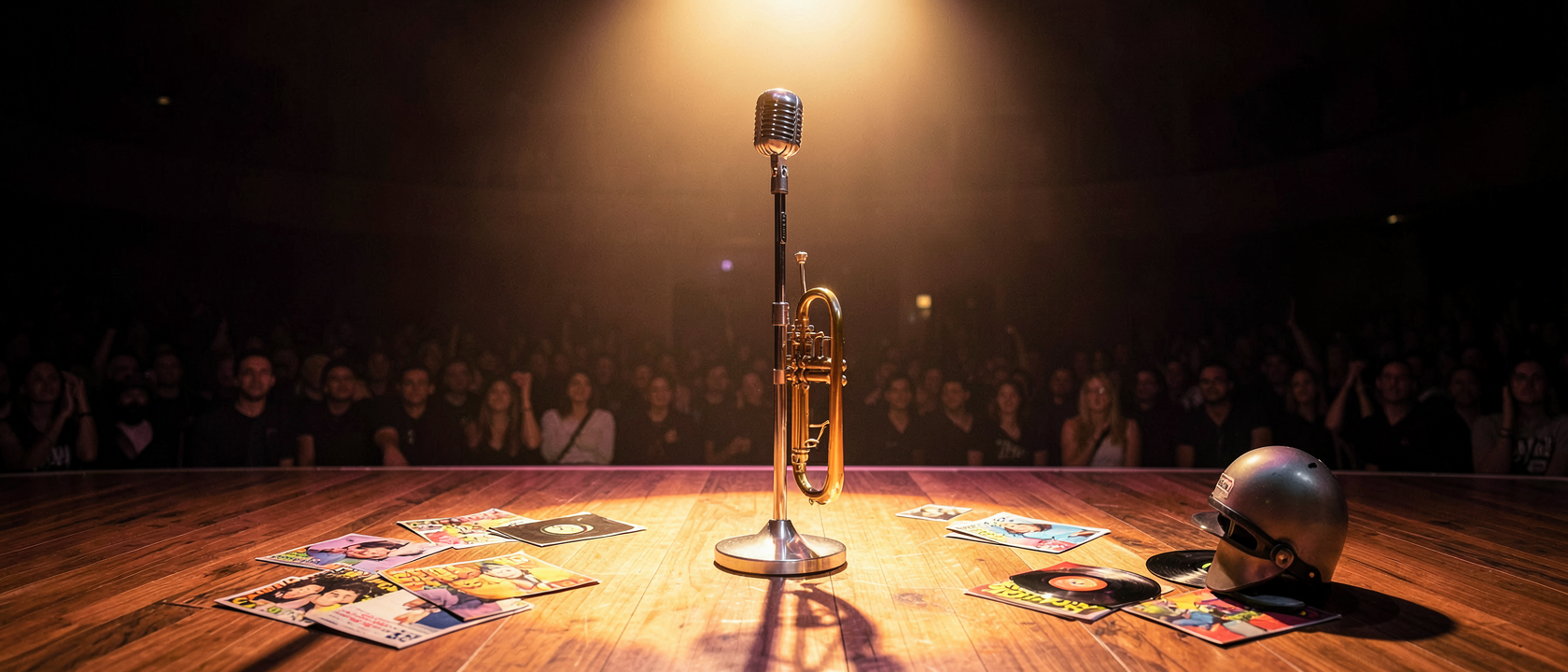
From Gold Records to Police Recruits
In 1969, Bobby Sherman had four Top 10 singles, including “Little Woman,” which reached No. 3 on the Billboard Hot 100. His breakthrough on ABC’s Here Come the Brides had made him one of the network’s most recognizable faces. Less than twenty years later, he was teaching police recruits in Los Angeles how to do chest compressions.
That career pivot is striking enough on its own. Fabian’s trajectory offers something harder to categorize: after filling arenas as a teenager, his most-discussed public reappearance was a centerfold in Playgirl in September 1973. These are not stories of gradual decline. They are something closer to a cliff edge.
Why Did It Vanish So Completely?
The explanation sits inside the product itself. Teen idol appeal was built around a very specific listener: roughly 12 to 17 years old, looking for someone to project onto. Once that listener aged out of that phase, they moved on. The next wave of 14-year-olds had no particular reason to care about last decade’s idol. There was no equivalent of the rock audience that tends to age alongside its acts, building a relationship with a catalog over years. The fan base did not grow up with the artist. It just grew up.
It is a bit like a relay race where the baton only moves forward. The screaming followed each new runner. It never came back to the one who started.
The Machine That Made Them, and Why It Couldn’t Last
Fabian’s case shows the manufacturing process at its most explicit. In 1957, record promoter Bob Marcucci spotted 14-year-old Fabiano Forte on a Philadelphia doorstep while Forte’s father was being taken away by ambulance. Marcucci offered him a music career. Fabian had no singing experience. Chancellor Records built the act around image management and studio processing, and commercially it worked: “Turn Me Loose” reached No. 9 on the charts.
The infrastructure holding this up was fragile, though. The payola investigations of the late 1950s and early 1960s exposed the system of paid radio promotion that had been pushing manufactured acts onto the charts. When Congress started asking questions, Fabian was among those who testified that his recordings had been electronically altered to significantly improve his voice. He bought out his Chancellor Records contract for $65,000 in July 1963. The scaffolding had come down, and so had the careers it had been propping up.
The Two Exits
For the performers who found the most stable footing afterward, two distinct paths emerged.
Peter Noone, who fronted Herman’s Hermits during a run that produced over 60 million recordings sold and 14 gold singles, chose to stay entirely inside his own legacy. He still tours as “Herman’s Hermits Starring Peter Noone,” and his fan base has remained loyal for decades. The identity that might have seemed like a trap became the foundation of a sustainable career.
Davy Jones went the other direction, and his second act was genuinely surprising. Before The Monkees existed, he had been a teenager with serious theatrical ambitions: he played the Artful Dodger in the Broadway production of Oliver! in 1963 and received a Tony Award nomination that year at age 17. After The Monkees ran its course, he returned to Broadway and pursued something even further from the pop spotlight. Jones had wanted to be a jockey as a child and had trained under trainer Basil Foster before entertainment intervened. He eventually earned an amateur riding license in the late 1970s and in 1996 rode his first competitive winner, a horse called Digpast, at Lingfield in England.
Reinvention Is Not the Consolation Prize
There is a reflex to read these post-idol careers as evidence of failure, as though the only real story ended with the screaming crowds. That reading misses something.
Bobby Sherman pursued EMT certification with clear purpose, joined the LAPD as a Reserve Police officer in 1988, was named LAPD Reserve Officer of the Year in 1999, and served as a reserve deputy sheriff for San Bernardino County before retiring from that department in 2010. That is a 22-year commitment to public safety work. Davy Jones’s involvement with horses lasted decades and included riding in actual competitive events at real tracks, not watching from the owners’ box.
The teen idol machine was always built to last a few years, not a lifetime. For the people who understood that clearly enough, leaving it behind was a practical decision. Digpast crossing the line at Lingfield in 1996, with a former Monkee on his back, is a more honest ending than most farewell tours manage.