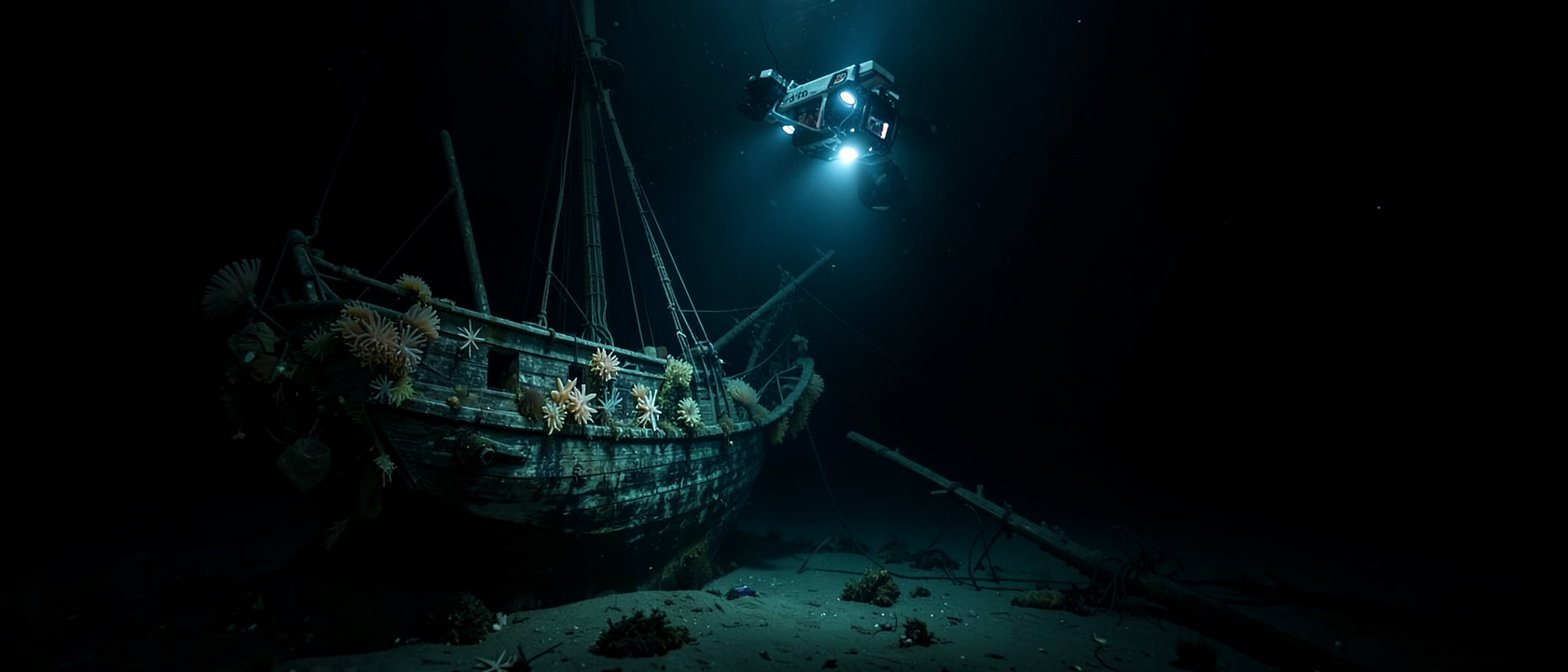
The Fourth Expedition
Ask someone what they know about Ernest Shackleton, and the answer is almost always the same story: the Endurance, the ice, the impossible survival. In 1914, his ship became trapped off Antarctica and was eventually crushed. Twenty-eight men survived nearly two years stranded on the ice. It is a complete, almost cinematic story, and it has absorbed most of the public’s attention ever since.
What most people don’t know is that Shackleton went back. In 1921, he set out on a fourth Antarctic expedition aboard a smaller vessel called the Quest. He never really got started. On January 5, 1922, while anchored at South Georgia Island, Shackleton died of a heart attack. He was 47. Because the Endurance story is so self-contained, the Quest chapter has largely disappeared from popular memory.
Quest Had Its Own Life After That
After Shackleton died aboard her, the Quest went back to work. Built in 1917 in Risør, Norway, she started life as a sealing vessel named Foca I. Shackleton had bought her for £11,000, had her refitted, and renamed her Quest, reportedly at his wife Emily’s suggestion. After his death she was sold to a Norwegian family, participated in the 1930–31 British Arctic Air Route Expedition, served in the Royal Canadian Navy during the Second World War, then returned to sealing. She finally sank on May 5, 1962, in the Labrador Sea off Newfoundland and Labrador after sea ice crushed her hull. All crew survived. She had outlived Shackleton by 40 years.
How Does a Famous Ship Stay Missing?
The general area of the sinking was known, but a confirmed position on the ocean floor is another matter entirely in the cold, difficult waters off Labrador. For 62 years, no discovery was made. The Endurance itself wasn’t located until March 2022, when searchers found her approximately 10,000 feet (3,000 meters) down beneath the Weddell Sea. The Quest, whose story ends for most people when Shackleton dies, attracted far less attention and far less money.
Five Days, 1,280 Feet Down
On June 9, 2024, an expedition led by the Royal Canadian Geographical Society found the wreck, five days after the search began. Sonar equipment operated by experts from Memorial University’s Marine Institute located the ship sitting upright on its keel at 1,280 feet (390 meters) in the Hawke Channel off Newfoundland and Labrador, a stretch of water closed to fishing since 2002. The Quest‘s mast lies broken alongside the hull, likely snapped off as the vessel was pulled under. The discovery came in the 150th year since Shackleton’s birth, though that wasn’t planned for.
The Family Connection That Closes a Century
Two co-patrons supported the expedition: Traditional Chief Mi’sel Joe of the Miawpukek First Nation, and the Hon. Alexandra Shackleton, Ernest Shackleton’s granddaughter. She never met him, he died in 1922, decades before she was born. She had planned to make the voyage but wasn’t fit enough for the journey, so her involvement remained formal rather than physical. Still, when the sonar return showed a ship on the seafloor, someone from Shackleton’s own family line was part of the team that made it happen. More than a century after he died on that vessel’s deck, a granddaughter helped find it at the bottom of the sea.
What Comes Next
A follow-up expedition, led by the Royal Canadian Geographical Society in partnership with the Woods Hole Oceanographic Institution, sent researchers to the site aboard a submersible called Alvin and deployed a remotely operated vehicle called Falcon to photograph the wreck in detail. The images showed the ship in worse condition than sonar had suggested, fishing nets cover much of the starboard side, and anemones, sponges, sea stars, and a rare deep-sea squat lobster now inhabit the hull. The team’s aim was to build detailed digital models without removing anything from the seafloor. The full accounting of what the Quest‘s record adds to polar exploration history is still being pieced together from that depth of cold water.