The Impossible Snack
Picture the assignment: take a liquid, wrap it in dough, and drop it into oil at 375°F (190°C), hot enough to turn raw chicken golden in minutes. Then expect that liquid to survive the trip. That was the challenge Mark Zable set for himself, a Texas corporate recruiter who also ran a fair-food stand inherited from his father. The rule was simple and a little absurd: fry beer, and keep it beer.
Zable wasn’t new to fairground cooking. His father opened a Belgian waffle stand at the Texas State Fair in the 1960s, and Zable had run it himself since the mid-1990s. But the idea he brought to the fair’s Big Tex Choice Awards in 2010 was a real engineering problem: seal a hot liquid inside fried dough without turning the fryer into a hazard.
Why Oil and Beer Don’t Want to Meet
Beer is mostly water with dissolved carbon dioxide, the gas behind its fizz. Water turns to steam at a much lower temperature than the 375°F (190°C) oil ever reaches. The instant beer touches oil that hot, the water inside tries to flash into steam, taking up far more room than liquid does. Add carbonation already pushing to escape, and a sealed dough pocket of beer becomes a small pressurized container heated from the outside in.
Zable learned this the hard way. “Putting a liquid into a fryer is a really bad idea,” he admitted. “As soon as liquid hits the fryer, it causes it to spit and boil hot oil everywhere.” His early batches exploded on contact with the oil, and he was burned more than once chasing a working version, the same reaction behind a wet piece of chicken crackling in a skillet, pushed to its most volatile extreme.
A Secret Nobody Will Explain
Getting from exploding to working took somewhere between two and three years, depending on the account. Zable consulted a food scientist along the way, hoping for a fix, though it didn’t fully solve things. The breakthrough finally came earlier in 2010, and part of the idea reportedly clicked after he watched his 4-year-old son, who pointed him toward a new way of thinking about the design.
What actually changed between failure and success, Zable has never said. Temperature, the batter’s makeup, chilling the beer first, a different sealing method, these are reasonable guesses, not confirmed facts. That gap is worth sitting with for a second: most food trends get picked apart online within days, yet this one has kept its core secret for well over a decade.
Treating a Fair Snack Like a Trade Secret
Instead of publishing the fix, Zable filed for a patent and trademarked the name “Fried Beer” in 2010. That’s not a small gesture for a fairground snack, it’s the same move a tech company makes to own an invention rather than sell it just once. In novelty food, a genuine first, like frying a liquid and having it come out intact, counts as intellectual property worth defending on paper.
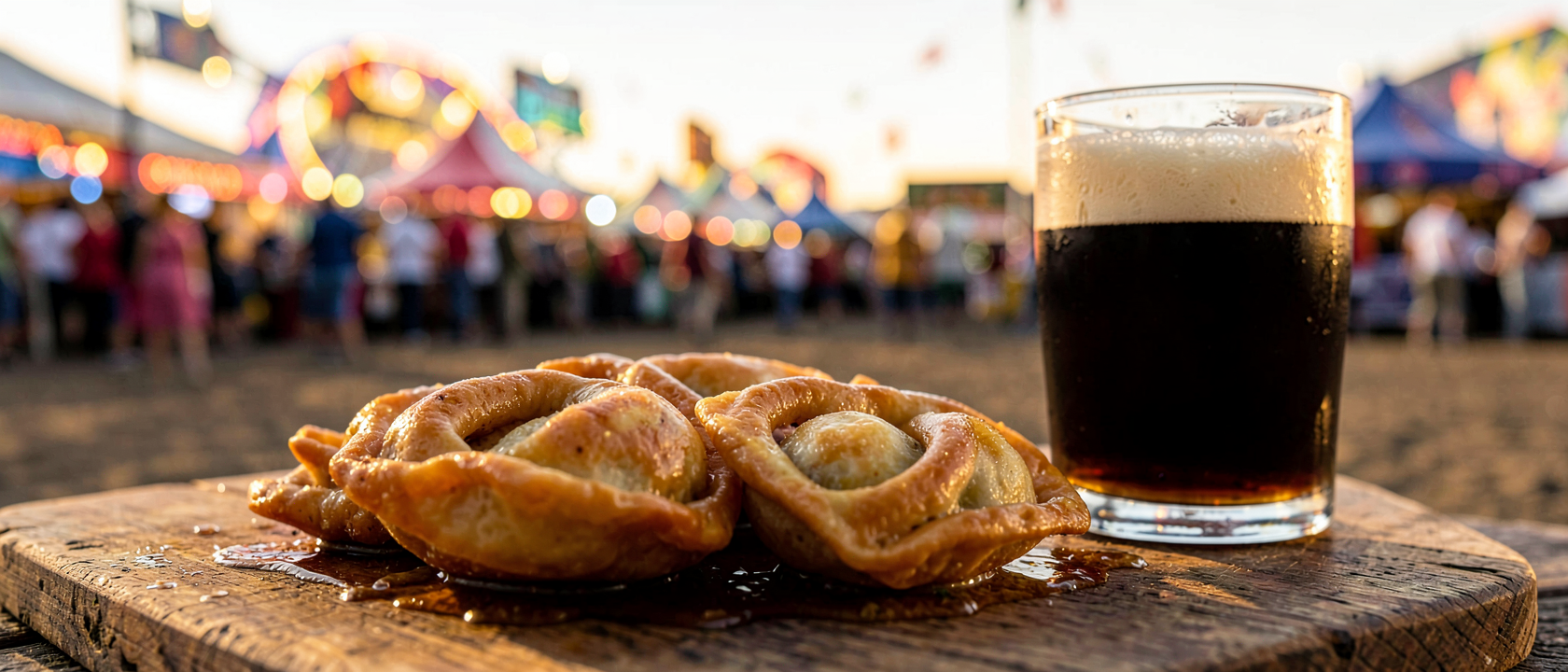
The snack debuted at the 2010 Texas State Fair for $5 for five pieces, made with Guinness that first year, with pretzel dough rolled and shaped like ravioli, fried for 15 to 20 seconds. It won the Most Creative category, beating entries like fried club salad, fried frozen margarita, and fried lemonade. Because the alcohol survives frying intact, the same as pouring it straight from a can, you had to be at least 21 to try one. Zable’s own verdict: “Tastes just like eating a pretzel with a beer.”
What We Still Don’t Know
Zable filed for that patent in 2010, but there’s no confirmed record of it ever being granted. The exact method, whatever turned a kitchen hazard into a fair-food winner, has never gone public. Even the development timeline is fuzzy: some accounts put it at three years, others at just over two.
None of that is a hole in the story. It’s just the honest shape of it: a real invention, a real patent filing, and a real gap where the explanation should be. What happened to that patent filing is the detail still worth wondering about.