A Packed House That Refused to Clap
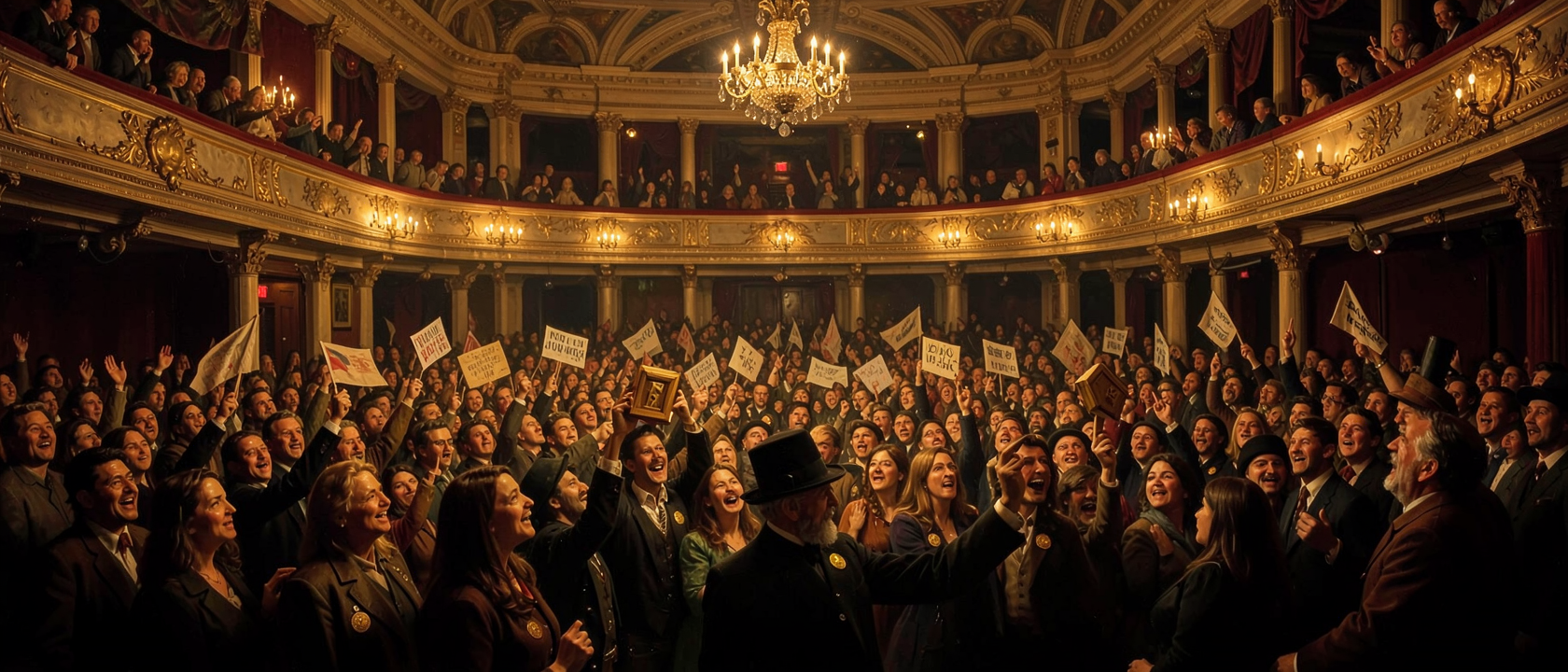
On September 18, 1809, Covent Garden Theatre reopened in London with manager John Philip Kemble playing the title role in Macbeth, alongside his sister Sarah Siddons, one of the era’s most celebrated tragic actors. Instead of applause, the audience chanted “Old prices!” straight through the performance, refused to leave once it ended, and didn’t clear out until around 2 a.m., after police got involved and things only got worse.
That night turned out to be the opening move, not a one-off. The disruptions kept going for somewhere between 62 and 67 nights, depending on the account, close to three months of organized chaos inside one of London’s most important theaters. The real question is why anyone would pay for a ticket just to sabotage the show they’d come to see.
Why the Theater Needed the Money
The previous Covent Garden Theatre had burned down in the early hours of September 20, 1808, killing as many as 20 people (one account says 30). Insurance covered only £50,000 of the damage, far short of what rebuilding required; one source puts the real losses closer to £150,000. Kemble received a £10,000 bond from the Duke of Northumberland, reportedly as thanks for elocution lessons once given to the Duke’s son, though accounts disagree on whether Kemble initially turned the gift down.
Rebuilding, designed by architect Robert Smirke, began right around the turn of the year, either on December 31, 1808, or a few days into January 1809. London had only two theaters licensed to stage full spoken plays, Covent Garden and Drury Lane, and Drury Lane burned down too, in February 1809. For a stretch, Covent Garden was carrying serious London theater almost alone, and it needed the cash.
A Price Hike That Doesn’t Sound Like Much
When the rebuilt theater opened, standard tickets rose from 3 shillings sixpence to 4 shillings, an increase of about 14 percent. The gallery, the cheapest seats, kept its old price, but the new galleries were built so high and far back that patrons joked they could only see the actors’ legs. People started calling them “pigeon holes.”
Imagine organizing two months of nightly protest these days over a 14-percent ticket price hike. Most people would leave an angry review and move on. Londoners in 1809 treated it as worth showing up for, night after night, for the better part of a season.
Audiences Who Thought They Owned the Room
Part of the explanation is cultural. Georgian theatergoers didn’t sit quietly and watch. Jeering, talking back, singing along, even disrupting a scene outright, were all normal parts of a night out. Nobody expected silence as a baseline, so when patrons felt cheated, they simply turned the volume up on behavior they already used constantly.
There’s also a genuinely open question buried in the history: whether police at the time had any clear legal authority to remove a paying customer from a theater at all. If the crowd sensed that gray area, it would explain some of their nerve.
Sixty-Some Nights, One Running Joke
Protesters called themselves OPs, for Old Pricers. Night after night inside the theater, they ran banners and placards, broke into organized singing and dancing, staged mock races and fake fights mid-performance, and circulated fake currency and OP medals. One stunt became famous: protesters carried a mock coffin through the crowd, inscribed with news that the new prices had “died of the cough” on September 23, 1809, aged just six days. Despite the theatrics, the unrest stayed largely peaceful, with little violence or property damage.
Kemble’s countermove backfired. He hired a well-known boxer, former champion Daniel Mendoza, along with associates, to intimidate the crowd into quitting. Instead, it increased the violence and kept the unrest going.
The Climbdown, and What It Says About Us
On December 15, 1809, Kemble gave in. He apologized publicly and restored the old prices, closing out roughly three months of nightly disorder inside the theater. Afterward, people had medals struck commemorating the whole affair, some depicting Kemble satirically, which tells you this wasn’t remembered as an embarrassment. It was remembered as a win.
What’s easy to miss from more than two centuries later is how differently that crowd thought about who a theater belonged to. They weren’t quiet customers consuming a show in the dark. They were part of what happened in the room, and they acted like it. The hush we now treat as basic manners at a performance isn’t instinct, it’s a habit audiences learned later. In 1809, nobody had learned it yet.