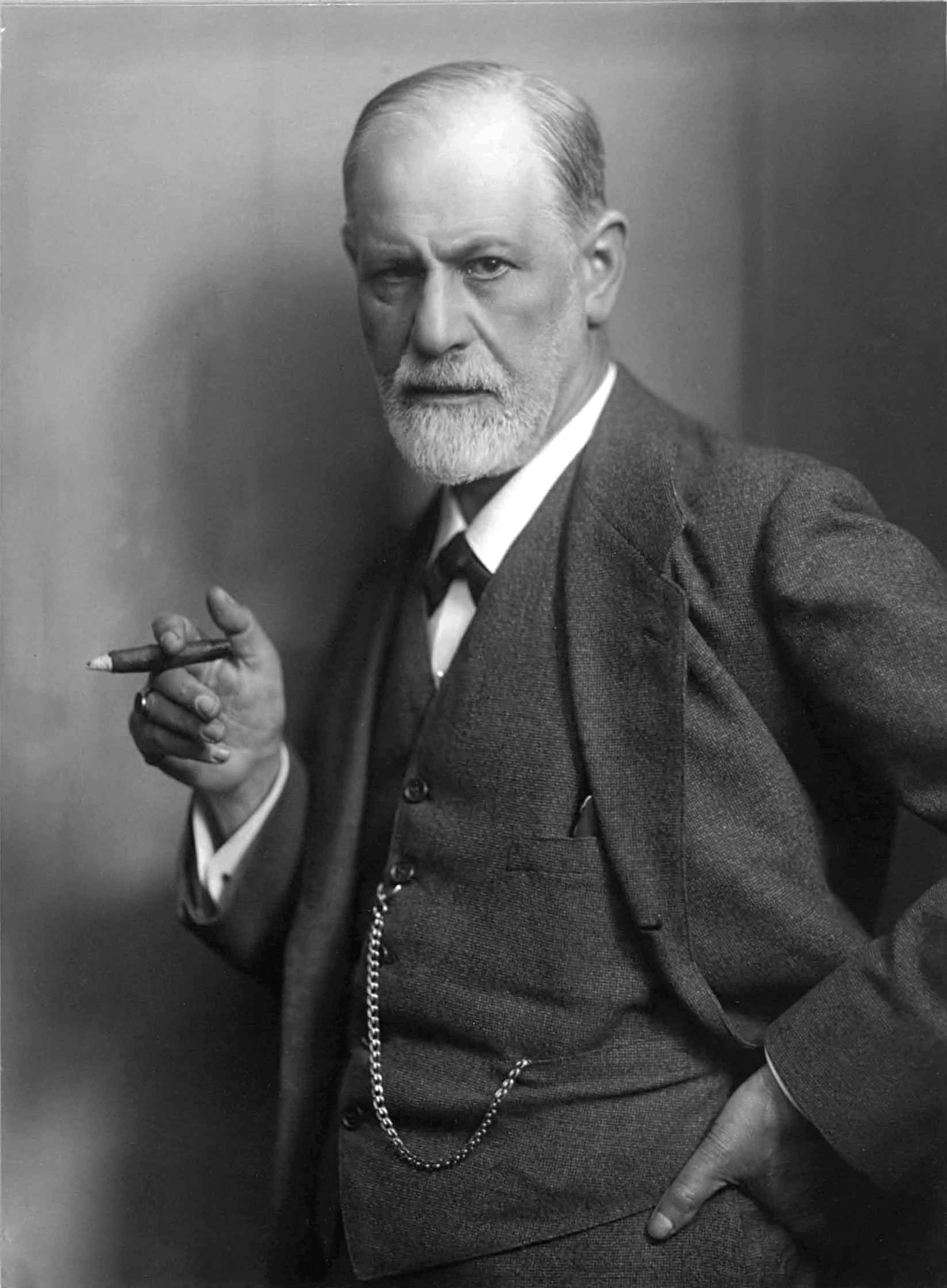
Trained first as a physiologist and then as a physician at the University of Vienna, he moved from laboratory research on nerve tissue to the consulting room, where he developed concepts around the unconscious, repression, and the interpretation of dreams that still provoke argument and application. He first put the word “psychoanalysis” into print in 1896, and across the following four decades he produced a body of work spanning clinical case studies, metapsychology, and cultural essays. He died in London on 23 September 1939, having endured more than thirty surgical procedures for oral cancer in the years following his 1923 diagnosis.
Key facts
- Born: 6 May 1856
- Birthplace: Příbor
- Died: 23 September 1939
- Place of death: London
- Country: Austrian Empire; Cisleithania; Austria; Nazi Germany
- Occupation: psychoanalyst; neurologist; essayist
- Field: psychoanalysis; neurology
- Employer: University of Vienna
- Education: University of Vienna
- Awards: Goethe Prize of the City of Frankfurt; Foreign Member of the Royal Society
Early life and education
Freud was born in Příbor, then part of the Austrian Empire, on 6 May 1856. His birth name was Sigismund Schlomo Freud; he changed his first name to Sigmund during his university years. He studied medicine at the University of Vienna, where he received his Doctor of Medicine degree in March 1881.
Before completing that degree, Freud spent six years, from 1876 to 1882, in the physiological laboratory of Ernst Wilhelm von Brücke, conducting detailed research on the histology of the nervous system. The discipline he absorbed there shaped his later insistence on grounding psychological claims in a biological framework, even when the biology itself remained speculative.
From neurology to the study of the mind
In 1885 Freud qualified as a lecturer in neuropathology at the University of Vienna Medical School. That same year he traveled to Paris on a fellowship to study under Jean-Martin Charcot at the Salpêtrière Hospital. Charcot’s demonstrations of hysteria and hypnosis convinced Freud that some mental disorders had psychological rather than purely physical origins, and that conviction redirected the entire course of his career.
Back in Vienna, Freud collaborated with the physician Josef Breuer on what became Studies on Hysteria, published in 1895 and now considered the first major psychoanalytic work. The collaboration ended thereafter due to theoretical disagreements, principally over the role of sexual aetiology in neurotic illness. The following year, 1896, Freud used the word ‘psychoanalysis’ in print for the first time, in a French paper published in the Revue neurologique.
An earlier neurological monograph, On Aphasia: A Critical Study, published in 1891, had already demonstrated the originality of Freud’s thinking. That work introduced the term ‘agnosia’ into medical literature, a contribution that has outlasted several of his more contested psychological concepts.
Building the psychoanalytic movement
In 1902 the University of Vienna awarded Freud the title of associate professor, a recognition that had been delayed for years. That same year he founded the Wednesday Psychological Society, which met at his apartment on Berggasse. By 1908 the group had been reconstituted as the Vienna Psychoanalytic Society, with Freud as its president.
Among the figures drawn into Freud’s circle during this period were Carl Jung and Alfred Adler, both of whom became prominent early collaborators before breaking away to develop independent schools of psychology. Freud was not granted a full professorship at Vienna until 1919.
In 1884 Freud had published a paper, Über Coca, on cocaine after experimenting on himself with the substance. He promoted cocaine as a potential treatment for morphine addiction, a position he later faced serious criticism for when his friend Ernst von Fleischl-Marxow developed a cocaine addiction as a result.
Cancer, exile, and death
In 1923 Freud received a diagnosis of squamous cell carcinoma of the palate. He subsequently endured more than thirty surgical procedures related to the oral cancer.
Following Nazi Germany’s annexation of Austria in March 1938, the situation in Vienna became untenable. Freud later described that day as the most anxious of his life and the event that finally convinced him to leave Vienna. Freud and his family departed Vienna by train on 4 June 1938, aided by Ernest Jones and Princess Marie Bonaparte, and settled in London.
The fate of those left behind was catastrophic. Four of Freud’s five sisters, Adolfine, Rosa, Maria, and Pauline, were deported from a Vienna retirement home in 1942 and murdered. Adolfine died in the Theresienstadt concentration camp; the other three were killed at the Treblinka extermination camp.
On 23 September 1939, as his jaw cancer had progressed beyond any possibility of further treatment, Freud asked his personal physician Max Schur to administer a lethal dose of morphine. His ashes were placed in a Greek urn at the Golders Green Crematorium in London.
Family
Freud married Martha Bernays on 30 September 1886. They had six children. The youngest, Anna Freud, went on to become a distinguished psychoanalyst, extending and developing her father’s work.
Awards and posthumous recognition
Among the honors Freud received during his lifetime were the Goethe Prize of the City of Frankfurt and election as a Foreign Member of the Royal Society. The University of Vienna honored him in 1955 with a monument in the arcaded courtyard of its main building. In 1998 the university named one of its campus gates the ‘Freud Gate’ after him and his daughter Anna Freud.
Did you know
- Freud was a heavy cigar smoker, typically consuming around 20 cigars a day. He began smoking cigarettes at age twenty-four, then switched to cigars, and kept the habit even after his 1923 oral cancer diagnosis, reportedly smoking every day until near the end of his life. (pubmed.ncbi.nlm.nih.gov)
- Although Freud had admired England since his first visit in 1875, he visited the country only three times in his life: in 1875, again in 1908, and finally in 1938 when the Nazi occupation of Austria forced him to settle there permanently. (sparknotes.com)
- When the Nazi-appointed administrator Anton Sauerwald was tasked with seizing Freud’s assets in 1938, he concealed evidence of the Freud family’s foreign holdings from his superiors and quietly signed their exit visas, enabling the family’s escape. (melbourneblogger.blogspot.com)
Data sources
- Wikidata
- baike.baidu.com
- famouspsychologists.org
- confinity.com
- pmc.ncbi.nlm.nih.gov
- victorianweb.org
- geschichte.univie.ac.at
- ipa.world
- libraryofphilosophy.com
- pubmed.ncbi.nlm.nih.gov
- oskardiethelm.omeka.net
- freud-museum.at
- hekint.org
Data updated: 2026-10-31