Who Is This Toy Really For?
A cat chasing a $2 sock toy puts on exactly the same show as one chasing a $20 plush mouse: same pounce, same batting, same few seconds of total focus before it wanders off. A cat has no idea what a price tag, a brand, or fancy packaging even means. Neither does a dog.
So here’s the question worth asking: if the animal can’t tell the difference, who is the pricier version actually for? A set of hacks from video creator HouseholdHacker gives a clear answer, built around a mismatched sock, an old muffin tin, and a few pantry staples.
Why We Spend Anyway
Pets judge a toy by texture, sound, smell, and movement. Owners judge it by price, design, and what the purchase says about them, too. That mismatch, between what the animal experiences and what the owner is buying, is the real product here.
Premium pet gear often functions less like something for the animal and more like guilt relief or affection for the person holding the leash. Wanting to give a dog “the best” is a human feeling the dog itself never has. Pet marketing knows this, which is why branding targets guilt and love rather than anything an animal could actually perceive.
Once you spot that gap, the fix is simple: spend only on what an animal’s senses actually respond to.
The Sock That Becomes Two Different Toys
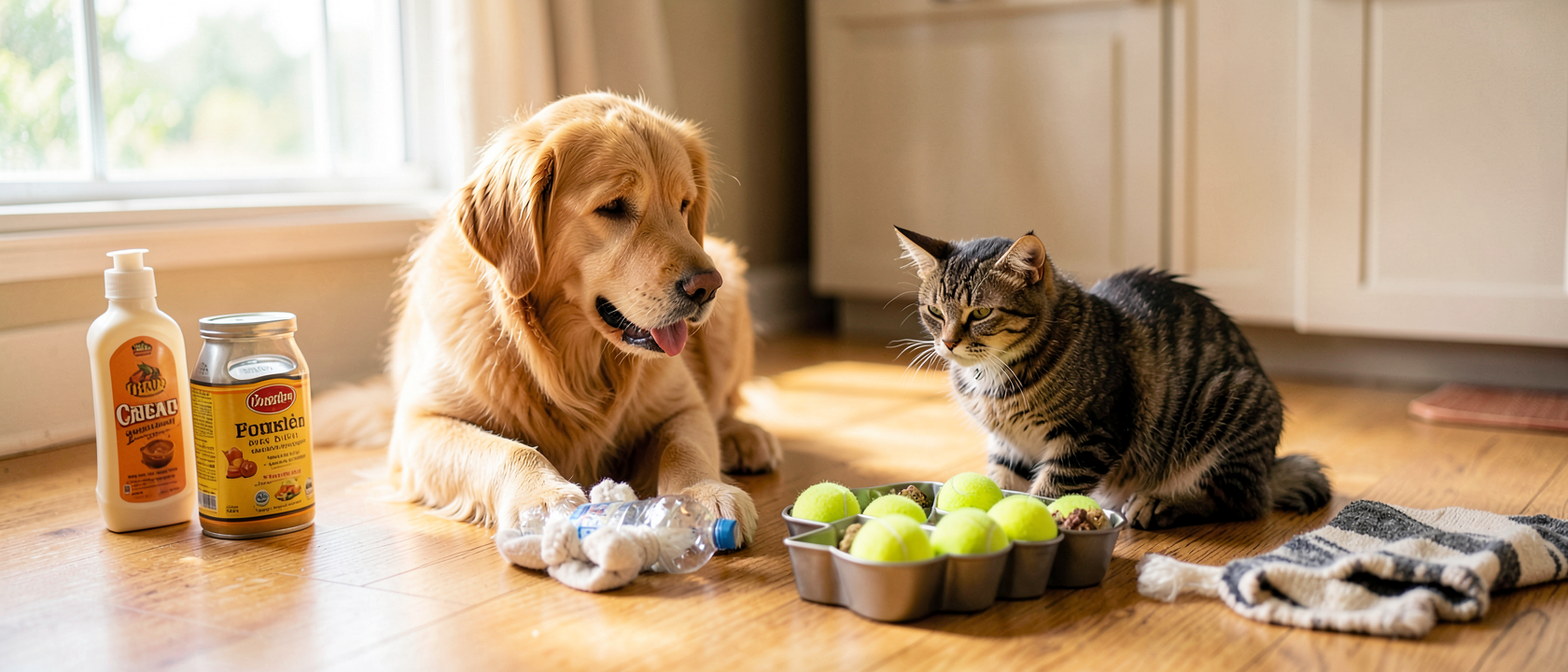
Take one mismatched sock. Stuff it with crumpled paper and knot the open end, and you’ve got a soft cat toy with the give and tumble of real prey.
Swap the paper for an empty plastic water bottle, knot it the same way, and the sock becomes a dog toy instead. The crinkle under a dog’s jaw taps into the instinct that drives shaking and “killing” a squeaky toy: it sounds like something alive putting up a fight. None of that depends on a brand name, just on sound and texture, both of which a sock supplies for free.
The Muffin Tin Slow-Feeder
A dog that eats too fast isn’t just messy, it’s gulping air along with the food, which can cause discomfort and, in some dogs, raise the risk of bloat. A regular bowl lets a fast eater empty it in seconds.
A muffin tin splits the same meal into a dozen small portions, forcing the dog to work cup by cup instead of gulping one big pile. Cover each cup with half a tennis ball, and the dog has to nose it aside before reaching the food, turning dinner into a short obstacle course instead of a sprint. It does the same job as a store-bought slow-feeder bowl, using a pan already in the kitchen drawer.
Pantry-Staple Grooming and Health Hacks
The same logic stretches into grooming. A homemade flea rinse made from water, Dawn dish soap, and white vinegar is a cheaper stand-in for commercial flea shampoo, the soap’s degreasing power doing the work a bottled product would otherwise charge for.
Stirring a spoonful of plain pumpkin into a cat’s food is a long-standing home remedy for hairballs. Pumpkin is high in fiber, thought to help hair move through a cat’s gut instead of getting coughed back up. In smaller amounts, it’s also used to help a cat feel full on fewer calories.
Household Hack, Not Veterinary Science
These tips come from a HouseholdHacker video, shared via Laughing Squid and featured on Neatorama starting March 27, 2018. They are household tricks, not the product of veterinary research or clinical testing.
Neither hack came with exact ratios or amounts in the original source, and skin sensitivity, allergies, and underlying conditions vary from animal to animal. Plain pumpkin is generally fine in small amounts, but pumpkin pie filling is not, since its added spices and sugar can harm cats, and too much pumpkin can cause diarrhea. Check with a vet before trying any grooming or dietary hack, especially with puppies, kittens, seniors, or sensitive-skinned pets.
Redirecting the Guilt-Spend
A cat or dog will never register that a toy was expensive. The money saved by trading a premium gadget for a sock or a muffin tin isn’t money the animal will ever miss, because it was never theirs to miss in the first place.
That freed-up cash has somewhere better to go: a pet charity or shelter, toward animals that don’t already have a full bowl and a stuffed sock waiting at home. Most people never pause to notice how much of their pet spending is really spending on themselves, not on the cat already content with a knotted-up sock.