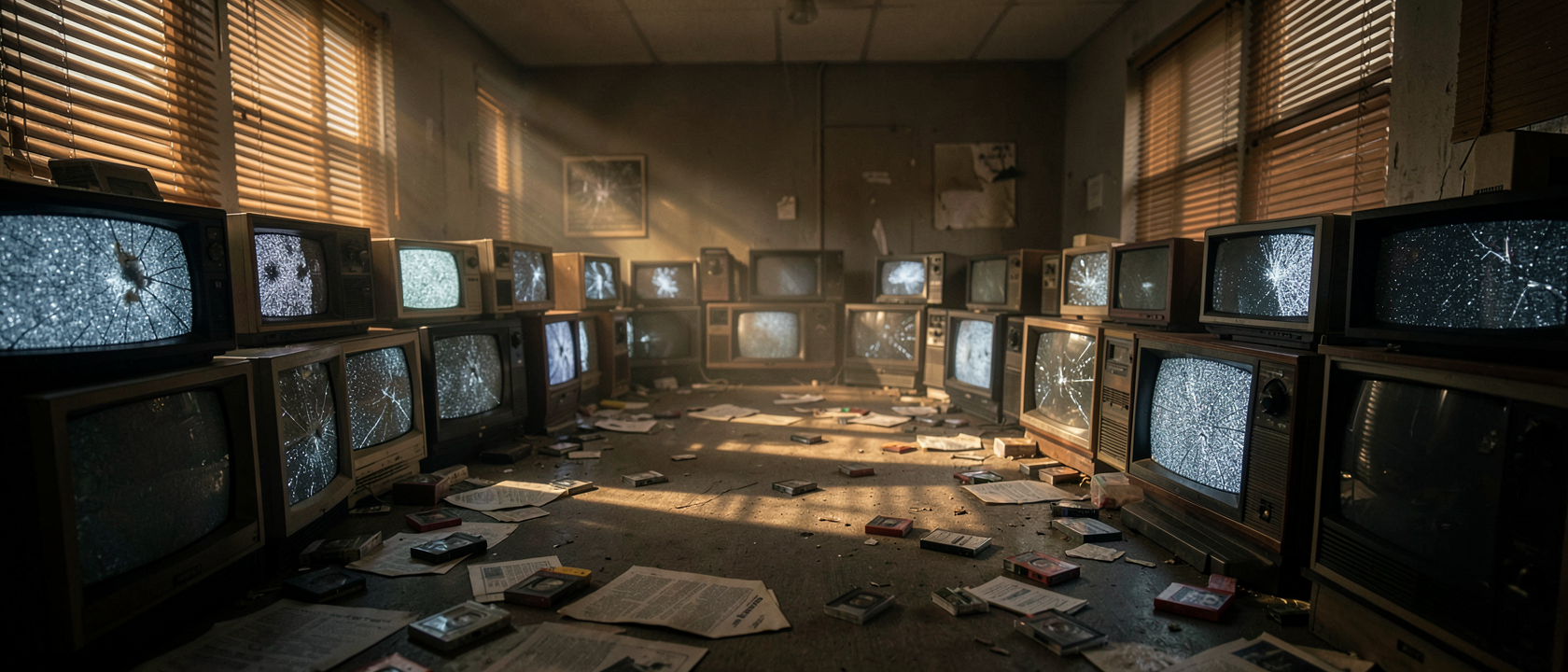
The Episodes Every Fan Agreed to Forget
In 2014, io9 writers Diana Biller and Charlie Jane Anders published a list on November 12 titled “10 TV Episodes That Everybody Pretends Never Happened.” Neatorama later picked it up, with its writer singling out Star Trek: The Next Generation’s “Force of Nature” as an especially sharp, short-sighted pick.
Calling these ten episodes “bad” undersells the idea. Every show has a clunker fans roll their eyes at. This list is after something odder: installments so damaging to a show’s internal rules that nobody even argues about them anymore, because everyone silently agreed to skip past them. One entry doesn’t just bend a detail, it floats the idea that an entire series happened inside one character’s head.
Who Actually Gets to Cancel an Episode?
No network issues a memo declaring an episode out of canon. No disclaimer runs under the credits. Yet fandoms and the people who made the show tend to land on the same quiet verdict about what “counts.” Sometimes the proof is absence: a twist that should reshape everything never comes up again. Sometimes fan wikis tag an episode non-canon while nobody official says so out loud. Sometimes a showrunner, walking through a series’ history, just steps over one entry everybody already knows about. There’s no announcement, just a pattern of silence loud enough to function as one.
Continuity Is a Promise the Writers Made You
Serialized shows run on an internal rulebook: who knows which secret, who’s supposed to be dead, how the magic or technology behaves. Writers guard that rulebook closely, because breaking it even once trains an audience to stop trusting everything that follows. So when an episode breaks it badly enough, fixing it on screen often costs more than letting it fade.
Take Stargate SG-1’s “Hathor,” which loaded the alien Goa’uld with complicated new rules the writers later dropped entirely. The show eventually poked fun at itself, having a character mention “the whole Hathor incident, which we were never supposed to speak of again.” That’s silent erasure at work: no retcon, no explanation, just repeated omission until the show’s own memory moves on without it. The original list notes two of its ten picks were genuinely good episodes, shelved only because of what they implied for everything built afterward. The audience plays a part too, once enough viewers stop bringing an episode up, they’ve effectively voted it out of existence.
The Buffy Episode That Said None of It Was Real
Nothing on the list goes further than “Normal Again,” a season 6 Buffy the Vampire Slayer episode that aired on UPN on March 12, 2002. A demon’s venom convinces Buffy that her life as a slayer is a hallucination, that she’s a patient in a psychiatric hospital, and that six years of Sunnydale, vampires, and her friends unfolded only in her mind.
Most twist episodes threaten one detail; this one threatens the premise. Read a certain way, the ending suggests everything the audience watched for years might never have happened outside Buffy’s head. Creator Joss Whedon has said he left the ending open on purpose, even joking that the whole series could be read as taking place in the mind of a hospitalized patient, and that he himself is that patient. He’s also said his own belief is simpler: the events really happened. Either way, the series never revisits the question, and that silence is exactly why fans quietly filed “Normal Again” away as apocryphal. A show can survive a bad hour; it can’t keep functioning if it keeps asking whether the whole thing was real.
A Few of the Other Nine
Buffy wasn’t alone. Red Dwarf’s season 2 finale sent its crew into a parallel universe where their alternate selves were female, leaving one male lead pregnant since men carried children there; the planned follow-up was scrapped for not being funny enough, and the plot got wrapped up in a few summary lines. Angel’s “Eternity” had its hero drugged with a so-called euphoric and briefly turned back into his murderous alter ego. Star Trek: The Next Generation’s “Force of Nature,” aired November 15, 1993, had the Federation impose a fleet-wide warp speed limit, referenced twice more that season and then dropped so completely that actor Marina Sirtis later called it “not one of my finer moments.” Game of Thrones made the list for a scene in “Breaker of Chains” where Jaime Lannister assaults his sister Cersei beside their dead son’s tomb, a moment the show itself seemed to quietly step around afterward.
Different decades, different genres, same reflex. If you’ve followed a show long enough, it probably has one of these buried somewhere.
Canon Is Whatever Enough People Keep Believing
This isn’t an official retcon, where a show rewrites its history on screen and tells you so. What’s happening here is quieter: no studio memo, no credited decision, just an unspoken agreement between creators and viewers about what actually happened in a story.
Canon was never only what got filmed and aired, it’s also whatever enough people decide, together, to keep believing afterward. Once you notice that, it’s hard to stop spotting it, starting with the one episode of your own favorite show that nobody ever brings up.