The Lifesaver’s Other Project
Frederick Banting’s name appears in the 1923 Nobel Prize records, awarded alongside John Macleod for co-discovering insulin. Banting was 32 at the time, the youngest person ever to win the Nobel Prize in Physiology or Medicine. He divided his share of the prize money with his research partner Charles Best. The discovery defined him publicly: a Canadian physician who had handed the world a treatment for a disease that, until then, was almost always fatal.
What most people never encounter is what Banting was focused on in the years leading up to his death on February 21, 1941, 85 years ago. He was not working on new treatments. He was working on ways to kill.
An Island Built to Keep Disease Out
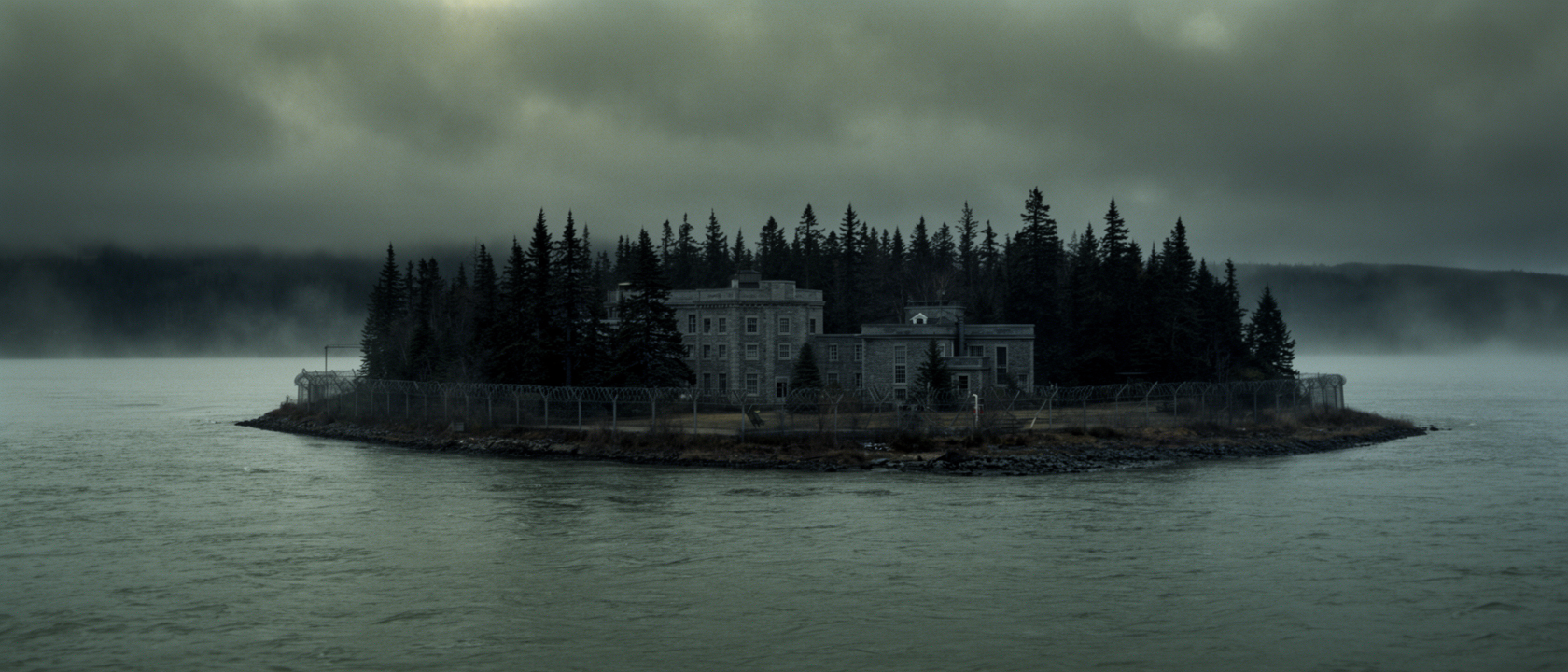
About 46 kilometers downstream from Quebec City, sitting in the St. Lawrence River, is a narrow strip of land roughly 2.9 kilometers long and 1 kilometer wide. Grosse Île spent more than a century as a quarantine checkpoint for immigrants arriving by ship, operating in that capacity from 1832 to 1937. More than 4 million people passed through during those years. At least 5,424 of them are buried there, many from the epidemic year of 1847, when nearly 90,000 immigrants arrived and the station was overwhelmed.
The entire purpose of the place was to stop infectious disease from reaching the Canadian mainland.
In 1942, the Canadian government reopened the island under the name “War Disease Control Station.” The work was not about controlling disease. It was about producing it.
The Logic of the Laboratory
According to period accounts, the facility was split into two research programs. One focused on rinderpest, a viral plague capable of wiping out cattle herds. The other, code-named Project N, focused on anthrax. The reasoning behind anthrax had a cold internal logic: its spores survive extreme heat, which means they could theoretically be delivered by bomb without being destroyed on impact. The Allies also had access to penicillin, which offered at least partial protection for their own personnel in the event of exposure.
The island’s existing infrastructure made it useful. The large steam sterilization ovens that had once been used to decontaminate the clothing of arriving immigrants were repurposed for the opposite function. Equipment built to kill bacteria was converted into equipment to grow it.
Why It Felt Necessary
The fear driving this program was not invented. Japan’s Unit 731, operating in occupied Manchuria from 1936 onward under microbiologist Shiro Ishii, was deliberately infecting prisoners with plague, anthrax, cholera, and other diseases. Scholarly estimates put the death toll from Unit 731’s activities somewhere between 200,000 and 300,000 people. When Allied intelligence pieced together what was happening, the argument for a biological deterrent became harder to dismiss.
There was also the recent memory of the First World War. Chlorine gas was first used on April 22, 1915, against French and Algerian troops along the Allied line. Two days later, on April 24, the First Canadian Division was targeted. Across the entire war, roughly 1.3 million soldiers suffered gas exposure, and around 90,000 died from it. The lesson military planners absorbed was blunt: a side without a counter-capability was a side at a catastrophic disadvantage.
Banting, knighted in 1934, had moved into military medical research in the earliest days of the war. His specific role in shaping the Grosse Île program is documented in secondary sources, though the full details of his involvement remain difficult to pin down precisely, in part because he died in a plane crash in Newfoundland in February 1941, during a liaison mission between British and North American medical services, before the laboratory was fully operational.
What the Program Produced
By the end of the war, anthrax was the only agent the program had brought close to anything resembling deployment readiness. Canada never developed the actual capability to deliver biological weapons. The Grosse Île facility was shut down when the war ended.
The island was declared a National Historic Site in 1974 and became a national park in 1993. The memorial there records the names of the 5,424 people buried on the island, most of them immigrants who arrived seeking a better life and were stopped by the very diseases that, in a different chapter of his career, Banting had devoted himself to fighting.
—
**Change made:**, “the first Canadian Division” → “the First Canadian Division” (proper noun, a specific military formation requires capitalization).