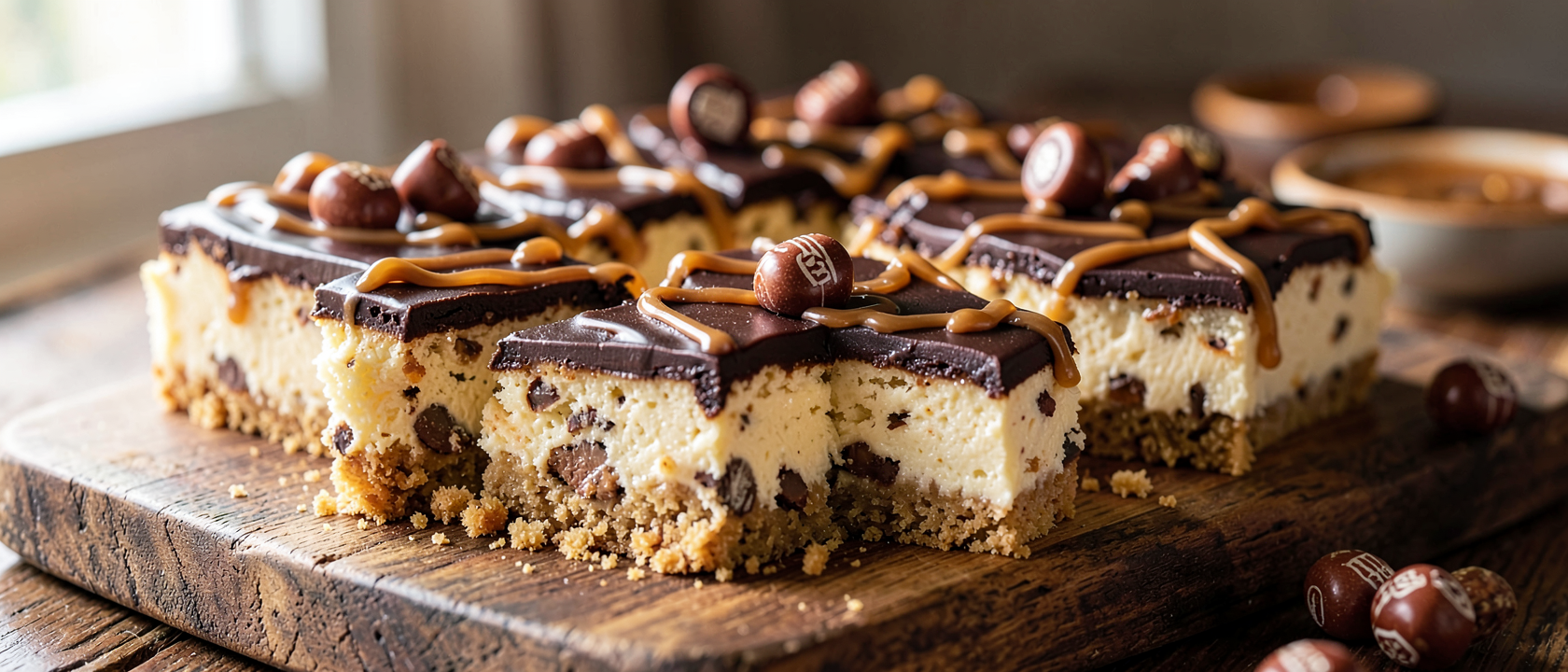
The Candy Bar That Became a Cheesecake
At some point, a home baker named Danielle unwrapped a bag of Rolo candies and decided to fold them, whole, into cheesecake filling. Not crushed into a topping, not melted into a ganache, just dropped in as-is. She pressed graham cracker crumbs into the bottom of an 8×8-inch (20×20-centimeter) pan, layered the cream cheese mixture on top, and finished everything with melted chocolate and halved Rolos placed cut-side up so you could see the caramel inside.
The recipe came from Bakers Royale and was picked up by Neatorama on June 30, 2014. It drew attention not because it required unusual skill, but because the idea felt slightly improbable. A bag of Rolos. A block of cream cheese. A structured, layered bar with real visual appeal. The more interesting question is why it actually works.
Two Very Different Flavors Walking Into the Same Pan
Cream cheese has a tang to it, that slight acidity is what stops sweetness from going flat. Rolo candies are, by design, intensely sweet: a caramel center wrapped in a milk chocolate shell. The British slogan that followed them for decades, “Do you love anyone enough to give them your last Rolo?”, tells you something about how people relate to them.
Put those two things together and the obvious concern is a muddy collision: too sweet, too heavy, caramel and cream cheese fighting into undifferentiated richness. What keeps the bars from tasting like a dessert that tried to do too much?
Each Layer Has an Assigned Job
The bar format is the answer. Each layer is assigned a distinct job.
The base is graham cracker crumbs mixed with sugar and melted butter, pressed into the pan and baked at 350°F (177°C) for 7 to 10 minutes. It acts as a buffer, neutral enough not to compete with the filling, firm enough to hold everything above it.
The filling is where the Rolos go. Mini Rolos, or regular ones cut in half, get folded into the cream cheese mixture along with egg, sugar, and vanilla, then baked at 350°F for 30 to 35 minutes. Smaller pieces distribute more evenly and melt at the edges into the surrounding cream cheese, creating pockets of caramel and chocolate that punctuate the tangy filling rather than flooding it.
The topping is melted dark or bittersweet chocolate poured over the cooled cheesecake, with a caramel drizzle and Rolo halves set cut-side up. By the time you reach it, you have moved through the neutral crust and the tangy, candy-flecked filling, so the chocolate-caramel hit on top feels earned rather than excessive.
One Candy, Two Flavor Agents
Rolos are a particularly efficient choice because a single piece contains two distinct flavor components. Caramel’s mild bitterness, the result of sugar heated past simple melting, is compatible with the acid edge of cream cheese, creating contrast rather than collision. The chocolate shell adds another layer of bitterness, reinforced by the dark or bittersweet topping. The sweetness is present, but it has something to push against.
Rolos have carried this combination since Mackintosh’s first produced them in December 1937. Nestlé acquired the brand in 1988 when it bought Rowntree-Mackintosh; in the United States, Hershey has manufactured them under license since 1969.
What Remains Unclear
The Neatorama post from June 30, 2014 included no measurements or full method, essentially a photograph and an enthusiastic caption. The structural details here come from the original Bakers Royale recipe. Quantities of cream cheese, sugar, and Rolos were not part of what Neatorama shared, and “Mini Rolos” refers to a real separate product: smaller, unwrapped pieces sold in bags, distinct from standard Rolos.
None of that uncertainty undermines the concept. The flavor logic is coherent, tangy dairy, caramelized sugar, chocolate, crumbly crust, organized in layers, and the 8×8-inch pan and 350°F temperature give any home baker enough footing to experiment. The halved Rolo on top, caramel interior facing up: that detail came through intact from every version of the story.