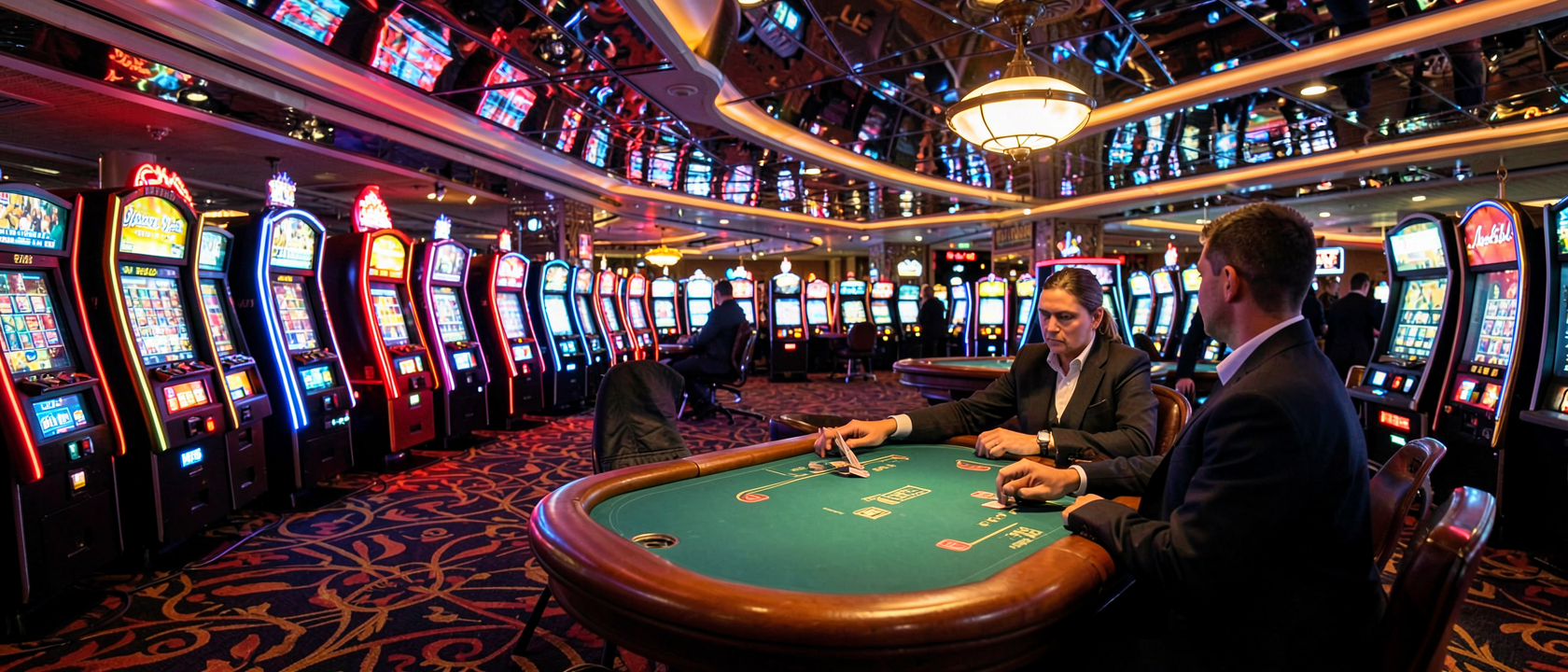
The Unbeatable Game
Walk into any casino and the math is already working against you. Not because the games are rigged in some back-room sense, but because every game on the floor carries a built-in house advantage. American roulette has a house edge of 5.26%. Keno, at some casinos, runs as high as 35%. According to gambling consultant Bill Zender, roughly 90 percent of casino visitors have no real idea of the odds stacked against them when they sit down.
Zender is not a self-help guru with a system to sell. He has been a professional card counter, a casino dealer, a floor manager, and a Nevada Gaming Control Board enforcement agent, and served as vice president and Director of Casino Operations at the Aladdin Hotel-Casino in Las Vegas. He has seen casinos from every direction. His position is measured: yes, the house usually wins. But “usually” is doing a lot of work in that sentence.
If the Math Is Locked In, What Could Possibly Help?
A house edge is a statistical description, not a physical force. It describes what happens on average across thousands of hands or spins, and says nothing reliable about a single session. That gap between long-run average and short-run reality is where human error and mechanical imperfection can, in principle, create small but genuine openings. Zender, whose tips were reported in Mental Floss magazine, says some of them are real.
When the Human in the Loop Makes a Mistake
In blackjack, the dealer holds one card face-down. The game depends on not knowing what it is. But dealers develop habitual movements, and a tired or inexperienced dealer may briefly expose that card as they draw it from the shoe. Catching it gives you information the game assumes you do not have.
This practice is called card holing, and Zender estimates it can give a disciplined observer a 6 to 9 percent advantage over the house. For comparison, expert card counting yields only about 1.5 percent, and Zender estimates fewer than 100 professional card counters exist worldwide. He took card holing seriously enough to keep a notebook tracking 35 weak dealers across 16 casinos. It is legal in the United States; a casino can ask you to leave if they spot it, but cannot have you arrested.
A Spinning Wheel Is a Machine, and Machines Wear Out
Roulette wheels absorb thousands of spins over months and years. A slightly worn fret or uneven ball track can cause certain numbers to appear more frequently than probability predicts, wheel bias. Identifying it requires recording thousands of spins before placing a single bet. Modern casinos monitor their wheels and rotate them out before bias can develop, so the principle is real but the opportunity, at a well-run casino, is rare.
The Simplest Edge: Knowing When to Leave
The house edge is a rate. The longer you play, the more opportunity it has to work on your bankroll. A player who is ahead after an hour and walks out has, mathematically, beaten the house for that session. Casinos are not designed to make this easy, there are no clocks on the gaming floor and some casinos prohibit dealers from wearing watches. Zender’s point is that recognizing that design and acting against it is a discipline available to anyone.
What Zender’s Tips Don’t Tell You
None of this comes with hard numbers attached. The Mental Floss piece does not say how often these approaches have actually produced sustained profit, and casinos adapt: staff are trained, equipment is monitored, and anyone watching a dealer’s hands with unusual focus will be noticed. The framework Zender offers is genuinely interesting, it treats casino gambling as partly dependent on observation and discipline, not purely on luck. But it is a reframing, not a system. One number helps calibrate what any strategy is up against: the odds of matching all 20 numbers on a 20-spot keno ticket are 1 in 3,535,316,142,212,174,336. No amount of notebook-keeping changes the height of that mountain.