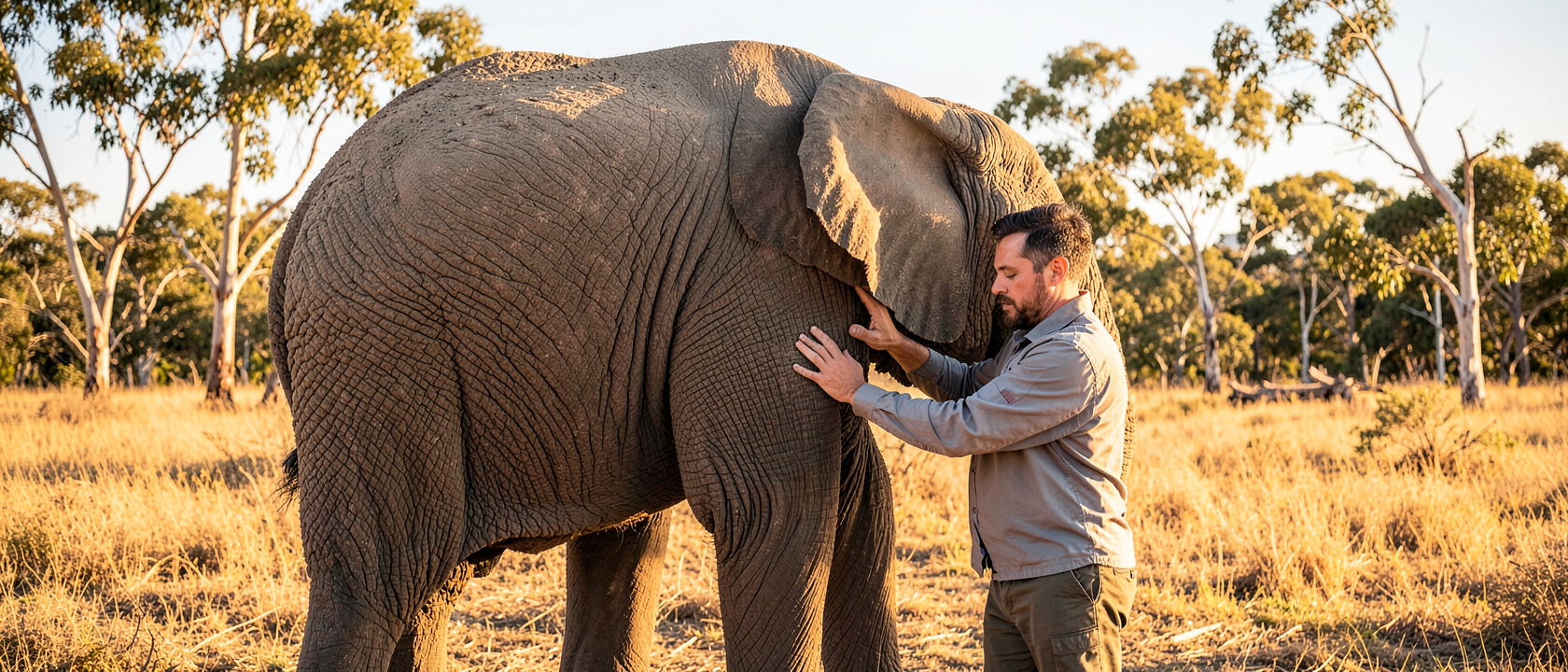
The Chiropractor and the Elephant
Picture a chiropractic appointment, except the patient weighs several tons and has a spine roughly the size of a tree trunk. Dr. Norman “Rod” Block, a Southern California practitioner with approximately 30 years of human chiropractic behind him, has performed spinal adjustments on an elephant at the Meadowbrook Animal Sanctuary and Haven in Perris, California. His patient list also includes llamas, pigs, a turkey, a paralyzed iguana, and a long list of dogs and horses.
The foundational logic is the same as a human chiropractic visit. The anatomy is almost nothing alike. Which raises the real question: can the principles behind spinal manipulation actually travel across species this different from us?
Even Vets Were Skeptical, Including One Who Now Teaches It
Dr. Gene Giggleman trained as a conventional veterinarian, graduating magna cum laude from Texas A&M University College of Veterinary Medicine. His opinion of chiropractors at the time was not generous, he considered them quacks. He is now a professor at Parker University in Dallas, a co-founder of its Animal Chiropractic Program, and a former president of the American Veterinary Chiropractic Association (AVCA).
One case offers a partial explanation. A cocker spaniel named Sparky was having seizures, had been put on three medications by three different veterinarians, and was close to being euthanized. Giggleman identified a subluxation in the dog’s neck, adjusted it, and by his account Sparky lived another six years without a seizure. Stories like that, whether or not they hold up under controlled study, have a way of shifting convictions.
The Working Principle: Spine, Nerves, Movement
The idea practitioners carry into animal work is that restrictions or misalignments in the spine can interfere with nerve function and movement, and that a targeted manual adjustment can relieve that interference. Block describes it as restoring normal function to joints where a blockage is disrupting energy flow through the body.
The concept of spinal “subluxation” as chiropractic uses it is not a recognized clinical entity in mainstream medicine. The working model is plausible enough to build a practice around, but the underlying mechanism has not been established to modern medical standards. That does not mean the treatments have no effect; it means controlled trial data is absent.
Thousands of Dogs, Cats, and the Occasional Rodeo Bull
Giggleman reports performing adjustments on thousands of dogs and cats, along with snakes, hamsters, gerbils, and guinea pigs. Colleagues have worked on pigs, goats, and rodeo bulls. Since the AVCA was founded in 1989, it had certified over 1,000 veterinarians and chiropractors by 2013, with around 560 active members at that point. Parker University’s program had graduated roughly 400 practitioners by around 2014. Certification requires about a year of post-graduate study, renewed every three years with written and practical exams, and is open only to those already holding an active chiropractic or veterinary license.
The regulatory picture is a patchwork. California and Texas require certified animal chiropractors to work under veterinary supervision. Nevada and Oklahoma allow the certificate alone as sufficient to practice.
What We Still Don’t Know
The paralyzed iguana Block treated is a useful marker for where the field honestly sits. Whether it recovered is simply not on record. The Sparky case is the kind of anecdote practitioners find compelling and researchers find insufficient. Both reactions make sense.
Veterinary chiropractic has developed real procedural range over roughly three decades, a credentialing body, post-graduate training, practitioners treating everything from pocket-sized rodents to working livestock, and a legal framework some states have thought carefully enough about to regulate. Published clinical outcome data is not yet part of the picture. The question of whether it works, for which animal and under what conditions, remains unanswered.