She Could Name the Badge Before She Could Name the Color
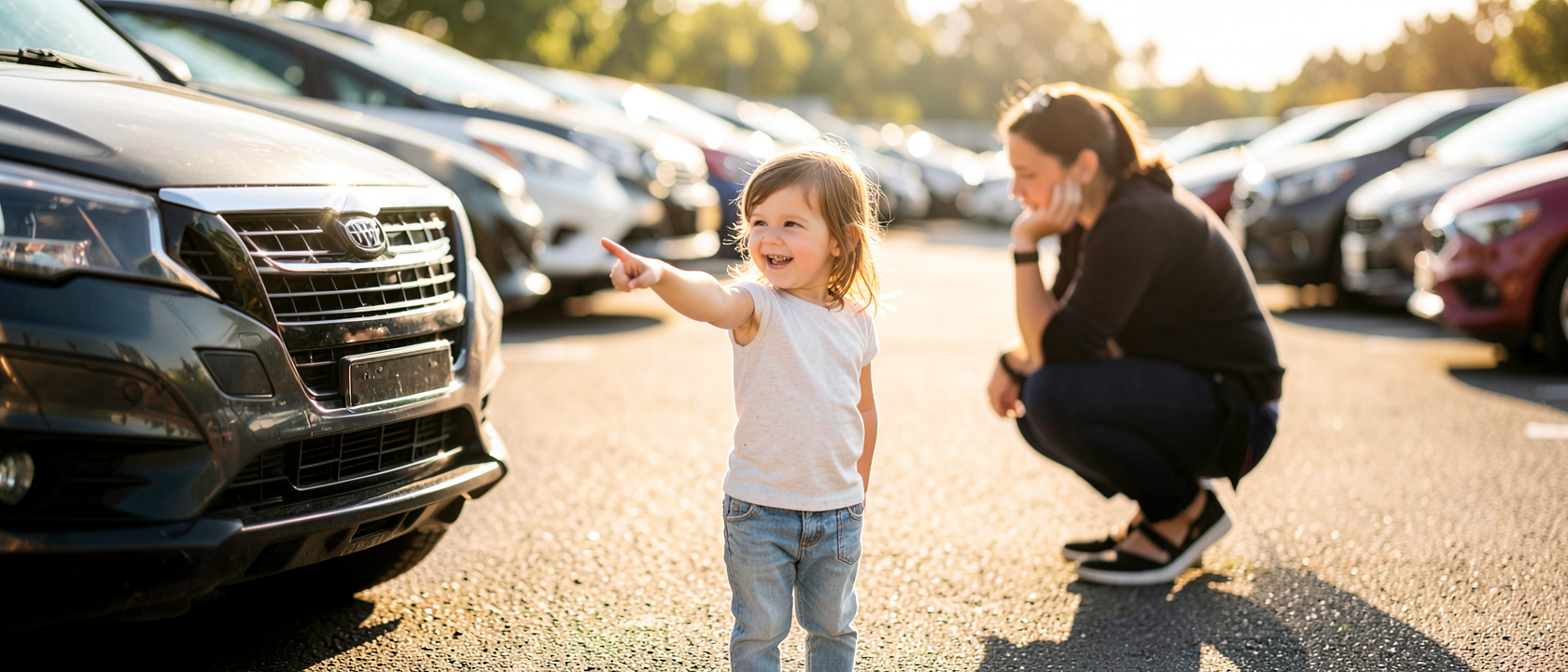
Picture a parking lot somewhere in Russia. A toddler, two years old, is being walked between the cars. A parent points at a hood. The girl looks up, takes in the chrome emblem, and says the brand name. Then the next car. Then the next. By the end, she has correctly named a couple of dozen vehicle marques, each identified purely from its badge. The video was uploaded to YouTube on July 26, 2013, and published on Neatorama on July 27, 2013, and it spread quickly, because the gap between what this child could do and what most adults can manage is genuinely strange.
The brand names she produced sound slightly different from their English pronunciations, because she was speaking Russian, but every identification was accurate. No second-guessing, no hints. Just a small person reading the visual language of the car industry as if it were the most natural thing in the world.
Why Is This Hard for Adults in the First Place?
A quick test: without looking anything up, could you reliably tell a Lexus badge from an Infiniti one? Or distinguish a Škoda from a SEAT at a glance? Most people cannot. There are a lot of marques out there, many sharing similar visual logic, three-pointed stars, interlocking rings, stylized initials, animal silhouettes. Telling them apart requires strong visual memory for specific shapes and repeated motivated exposure over time.
The original Neatorama post was candid about this. Its author noted they had not been able to reliably name general car brands from their logos until their twenties, and only reached confidence with American brands specifically in their forties. The skill is not automatic; it has to be built. Which is precisely what makes a two-year-old having it worth examining.
No Flashcards Required: How Immersion Does the Teaching
The most straightforward explanation is that at least one adult in this girl’s life genuinely loves cars, notices logos on the road, names them aloud, points them out with real interest, repeatedly across months. When something clearly matters to someone a young child loves, the child’s brain pays attention, filing away whatever keeps appearing when someone they love clearly cares about it.
Research supports this. A Dutch study published in the Journal of Applied Development Psychology in 2005, involving 234 children aged 2 to 8, found that 2- and 3-year-olds correctly identified an average of 8 out of 12 brand logos shown to them. Logo recognition at this age is documented, not mythological. What makes the Russian girl notable is the sheer number of car-specific brands she recognized, a couple of dozen from a single specialized domain, pointing strongly toward repeated, targeted exposure. The same study found that children’s ability to recognize a brand develops earlier than their ability to spontaneously recall its name. The girl was doing something toward the harder end: naming brands on demand in a real environment, recall layered on top of recognition, in a two-year-old, in a parking lot.
A 1991 study published in JAMA, measuring logo recognition in 229 children aged 3 to 6, stated plainly: “Very young children see, understand, and remember advertising.” Research from Harvard’s Center on the Developing Child adds a structural reason for why this works: during early childhood, more than 1 million new neural connections form every second. At age two, this capacity is not slowly coming online, it is already running at a pace it will never quite match again. A 2019 study from researchers at Lund University and the University of Oslo, published in Frontiers in Psychology, found that toddlers’ ability to recognize shapes at 20 months was a strong predictor of their language and cognitive abilities at ages 6 and 7. The girl in the parking lot was not just showing off memory, she was doing exactly the kind of high-speed pattern work that young brains are structurally built for.
The Domain Almost Does Not Matter
A child raised around someone who loves cars learns car logos. One raised around a birdwatcher learns calls. One who grows up in a kitchen where every herb gets named picks up flavor vocabulary before they can read. The subject is almost incidental. What drives the learning is immersion, repetition, and an adult whose enthusiasm makes the details feel worth noticing. The parking lot required no lesson plan, just someone who looked at cars with genuine interest, and a child paying the kind of complete, unhurried attention that very young children are especially good at.