Someone Had to Answer That
You have a question strange enough that you would never ask a coworker, a doctor, or even a close friend. In most years of the past two decades, you type it privately into a search bar and move on. In 1967, you picked up a telephone, dialed the New York Public Library, and said it out loud to a stranger.
People did exactly that. Between the 1940s and the late 1980s, NYPL reference librarians fielded calls and in-person visits covering everything from the medically practical to the philosophically puzzling to the genuinely inexplicable. What lifts this beyond a footnote in library history is that someone on staff wrote the questions down, and kept them.
The Closest Thing to an All-Knowing Resource
To understand why people trusted librarians with these questions, you have to remember what the public library actually was before the internet. The NYPL main branch at 476 Fifth Avenue opened May 23, 1911, above one of the most comprehensive research collections in the world; the system now holds approximately 53 million items across 92 branches in Manhattan, the Bronx, and Staten Island.
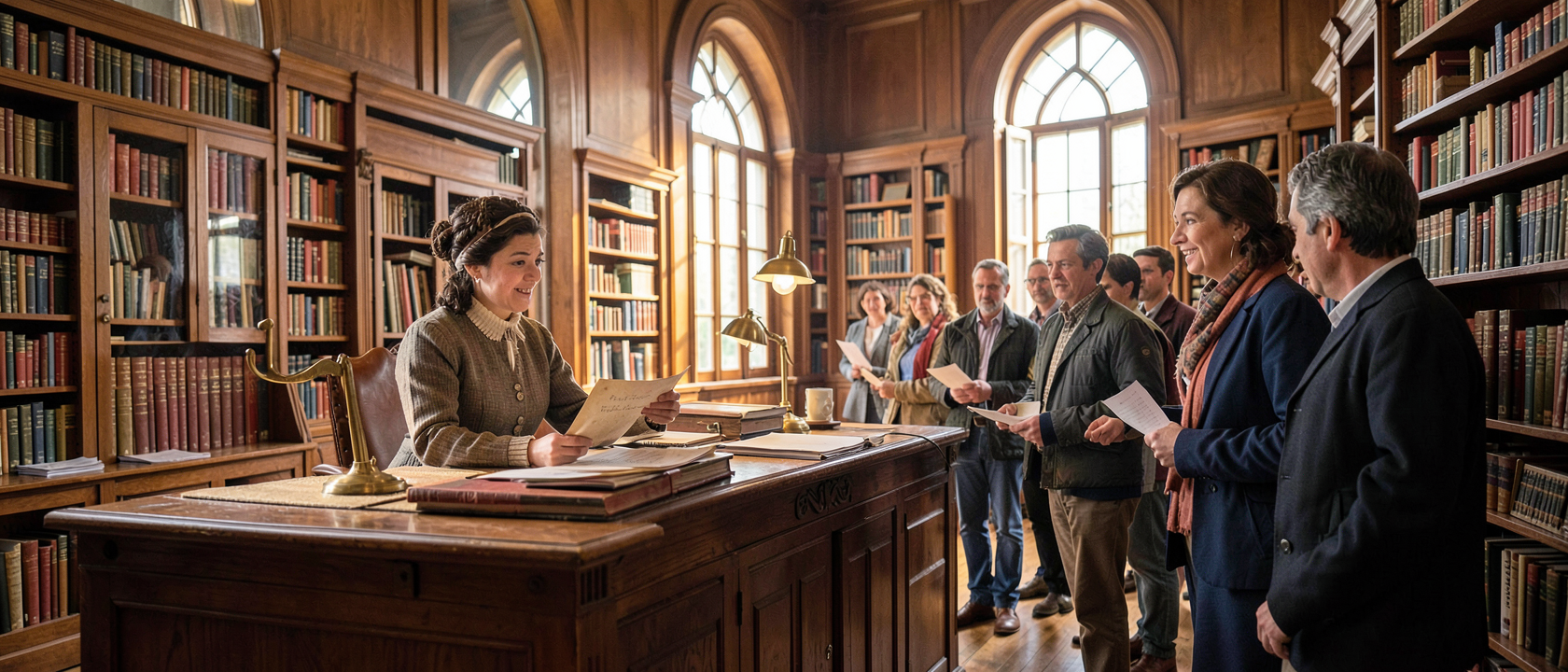
A reference librarian was not a shelf organizer. The job was a specific professional skill: knowing which source had what, how to cross-check, and where a question fit within recorded knowledge. For someone with a query too specialized for a neighbor, too embarrassing for a doctor, or too strange for any newspaper, the reference desk was the most capable option available. The NYPL launched a dedicated telephone reference service in 1968, extending that expertise to callers who could not come in person. The library functioned, effectively, as a combined encyclopedia and advice column, one that heard you out without judgment.
They Kept the Questions
The archive surfaced by accident. While cleaning out a desk, NYPL staff found a small gray file box, resembling an old recipe box, labeled “Interesting Reference Questions.” Inside were index cards with transcribed patron inquiries spanning roughly four decades.
The questions run the full length of human curiosity. Someone in 1976 wanted to know why 18th-century English paintings contain so many squirrels. On New Year’s Day 1967, a caller described on the card as having a “somewhat uncertain female voice” rang in the mid-afternoon to ask about the etiquette for having unexpectedly stayed overnight at a New Year’s Eve party. A 1946 card asks whether DDT was the right solution for a mouse in the kitchen. One from 1966 asks whether the NYPL has a computer for public use; the librarian’s written answer: “No sir.” Other cards carry no date, whether an octopus can be kept in a private home; how many neurotic people live in the United States; what kind of apple Eve ate; whether Jules Verne wrote Alice in Wonderland.
On December 22, 2014, the NYPL began sharing these cards on social media under the hashtag #LetMeLibrarianThatForYou. The collection became the basis for Peculiar Questions and Practical Answers, published October 22, 2019 by St. Martin’s Griffin and illustrated by New Yorker artist Barry Blitt, drawing on more than 100 cards.
What the Archive Doesn’t Tell You
The records don’t clarify the total number of cards, and entries don’t always indicate whether a question arrived by phone or in person. The library hasn’t explained who first decided to preserve these notes or why the practice continued for so long. The file box turned up during a desk-cleaning, suggesting the record-keeping may have been one staff member’s habit rather than institutional policy. The current Ask NYPL desk receives more than 100 questions every 24 hours, according to Rosa Caballero-Li, manager of Reference and Research Services, context that makes the historical cards an unusual but not unrepresentative sample.
The questions on those index cards were not pranks. Nobody walked up to a reference desk or dialed a library phone number to be funny, the effort alone argues against it. They are a record of what people genuinely needed to understand at a moment when a building at the corner of Fifth Avenue and 42nd Street was the best answer they could think of.