The Frozen Food Aisle Meets the Internet
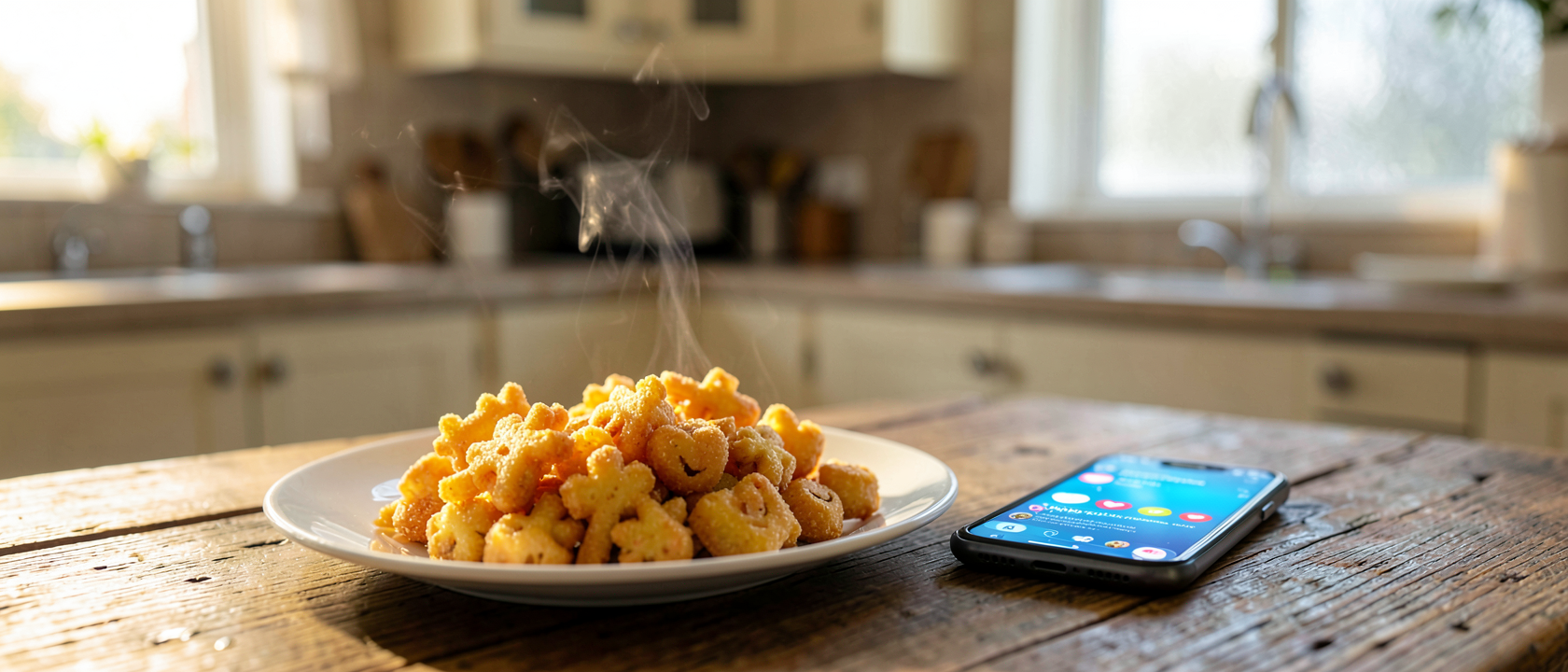
In February 2014, Birds Eye, a brand that had spent decades putting fish fingers and potato waffles on British dinner tables, announced a product called Mashtags. These were frozen potato pieces pressed into five shapes: a hashtag, an @ sign, an asterisk, a heart, and a smiley face. Not animals. Not letters. Not dinosaurs. The punctuation of the internet, made edible, with a planned retail price of £1.75 at Asda, Sainsbury’s, and Tesco.
A mainstream frozen food company had looked at Twitter and Instagram and decided the logical response was to reproduce their visual grammar in potato form.
A Dinner-Table Conversation Starter, Shaped in Potato
The answer Birds Eye gave was, on the surface, simple: Mashtags were designed to start conversations at dinner. Pete Johnson, the company’s senior brand manager, framed it around the idea that hashtags and emoticons had become a shared visual language across generations. A child and a parent might use them differently, but both would recognize them. That shared recognition was the product’s whole premise.
By early 2014, Twitter and Instagram had already saturated phones in millions of British households, and Birds Eye had apparently done enough research to feel confident that a frozen hashtag would read as familiar rather than baffling to a broad family audience. The company cited its own research suggesting that 52% of people in the UK regularly photographed their meals. They were watching where the culture was going and decided dinner plates were already part of it.
The same marketing push included a pop-up restaurant in London called Picture House, where the price of a meal was not money but an Instagram post tagged with #BirdsEyeInspirations. The product in the freezer aisle was the retail arm of a campaign that was always more about social media than about potatoes.
The Name That Had to Be Spelled Two Ways
The product name is a pun: “mash” (as in mashed potato, which is what Mashtags are made from) fused with “hashtags.” Spoken aloud, it works cleanly. Written down, it created a small practical complication, because the brand also used the alternate spelling Mas#tags, with the # character embedded in the middle of the word. Search engines and spellcheckers in 2014 frequently treated the # character as a formatting instruction rather than part of a word, sometimes stripping it out entirely. The name of the thing was itself quietly tangled up in the digital quirks it was trying to celebrate.
Underneath the Novelty, Just a Waffle
Strip the shapes away and what you have is essentially a potato waffle in a different outline. The taste was described as similar to Birds Eye’s established potato waffles, a product the company had been making since 1981. Made from British potatoes, formed into shapes, and frozen, the only new thing was the silhouette.
That was deliberate. A familiar flavor meant parents did not need to gamble on an unknown product; children got the novelty without the food itself changing. It is a fairly reliable template for how cultural moments get absorbed into consumer products: take something ordinary, press a new shape into it, and let the shape carry all the meaning. The potatoes were the same. The hashtag was the product.