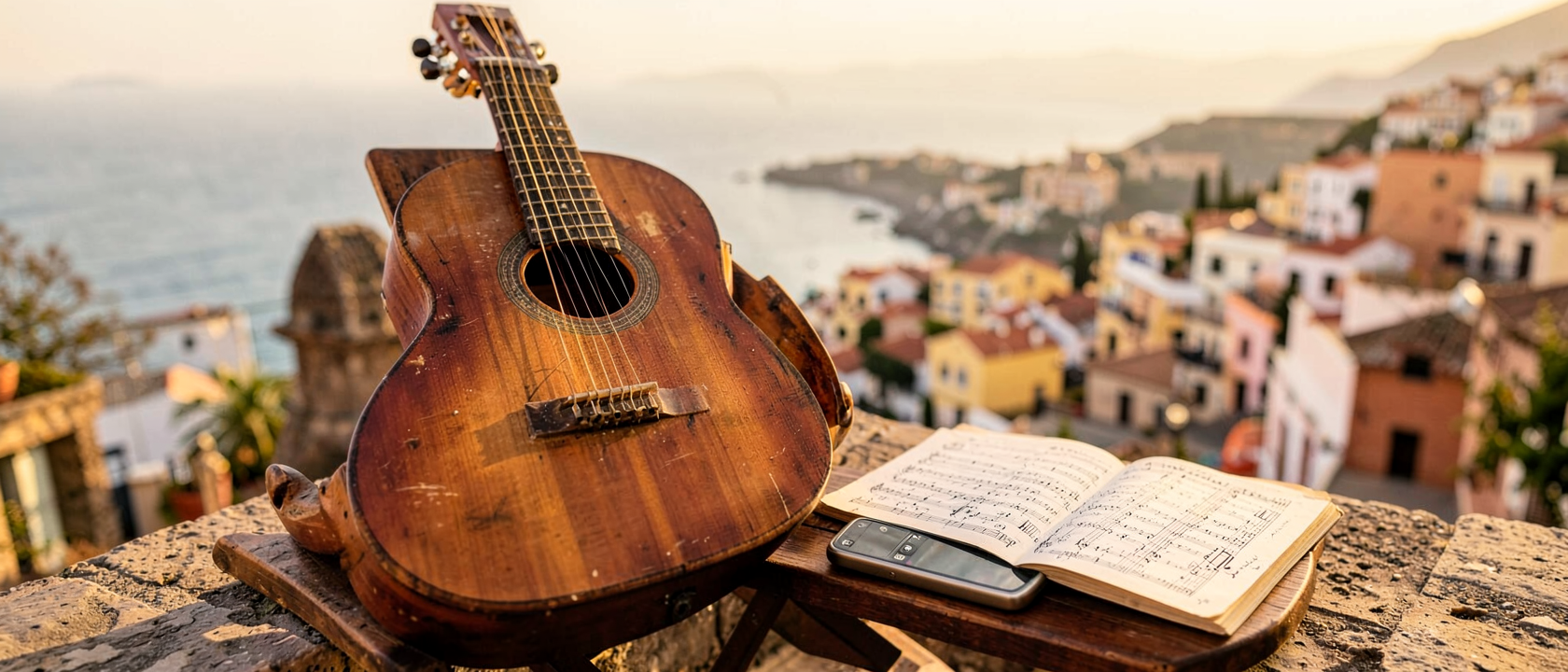
The Sound Everyone Knows, From a Place No One Expects
You can probably hum the sound a Nokia phone makes when it rings. Estimates of how often it plays vary wildly, from around 800,000 phones a day to a much larger claim of 1.8 billion plays a day from a 2009 report. Neither figure traces back to an official Nokia source, and the two don’t remotely agree, so treat them as competing guesses rather than a settled number. Even the low estimate makes this a serious contender for the most-heard piece of music in history.
Here’s what doesn’t fit: nobody wrote this tune in a Finnish sound lab for a phone launch. It comes from a quiet, 19th-century classical guitar piece that almost no one outside guitar circles has ever heard.
How Does a Ringtone Get Older Than the Phone Itself?
Nokia’s mobile phones are a late-20th-century invention. The first Nokia phone to carry this exact sound as a built-in ringtone, the Nokia 2110, arrived in 1994. So how can a tune that feels built for the mobile age actually be older than the phone it plays on?
What would it even mean for a phone company’s signature sound to be borrowed, and from what? Guess before you read on. The answer sits in a different century, played on a different instrument.
Meet Francisco Tárrega, and His Accidental Ringtone
The trail leads to Francisco Tárrega, a Spanish guitarist and composer who lived from 1852 to 1909, working in the late Romantic period. Guitarists already knew his name from pieces like “Recuerdos de la Alhambra.” In 1902 he wrote a solo guitar piece titled “Gran Vals” (also known as “Grande Valse”).
“Gran Vals” is unhurried and gentle, the kind of piece you’d hear in a small recital hall, nothing like a digital chime. Listen past the 15-second mark of a good recording, and you’ll hear four bars in A major, bars 13 through 16 of the score, that any modern ear recognizes instantly. It’s not a one-time thing, either. The same short phrase returns more than once before the waltz ends.
Why a Ringtone Can Out-Listen Any Song on Earth
Calling something “the most-heard melody on Earth” sounds like a stretch for a phone company’s default ringtone, until you separate “most heard” from “most loved” or “most famous.”
The numbers themselves stay murky, as noted above, and both the 800,000-a-day and 1.8-billion-a-day figures should be read as unverified estimates rather than confirmed facts. But even the smaller number makes the point. A sold-out arena reaches its crowd once, for one night. A hit song still needs people to choose to press play. This tune needs no one to choose anything: it fires automatically, unattended, on nightstands and in pockets worldwide, day after day. That’s not popularity. That’s raw repetition.
Did Nokia Actually Borrow This, or Is It a Coincidence?
The link itself isn’t really in doubt. When the Nokia 6110 launched in 1997, this ringtone had a name inside the phone’s menu: “Grande valse,” an echo of the piece’s own alternate title. It became “Nokia tune,” the name most people know, a year later on the Nokia 5190.
What’s shakier is exactly how it got picked. One account has Nokia executive Anssi Vanjoki bringing the whole “Gran Vals” to a colleague in 1993 so the two of them could choose the excerpt together. Another account puts the moment a year earlier, in 1992, with Vanjoki hearing the melody during a phone call at a conference. The two versions disagree on the year and the details, so the exact “how” stays unconfirmed.
One practical reason for the choice does hold up. Tárrega had been dead for more than 70 years by the time Nokia needed a ringtone, and European copyright law releases a composer’s work into the public domain 70 years after death. His music was simply free to use, no license, no fee.
The Kind of Thing You Notice, and Nobody Else Does
A ringtone nobody thinks twice about turns out to carry a thread back more than a century, unnoticed by millions who’ve heard it thousands of times.
Go find a recording of “Gran Vals” and listen past the 15-second mark. The phrase is right there, sitting inside a piece of music that predates the mobile phone by close to a hundred years. Once you’ve heard the connection, the ringtone won’t sound the same again, and neither will it for whoever you tell next.