The Forest That Remembers
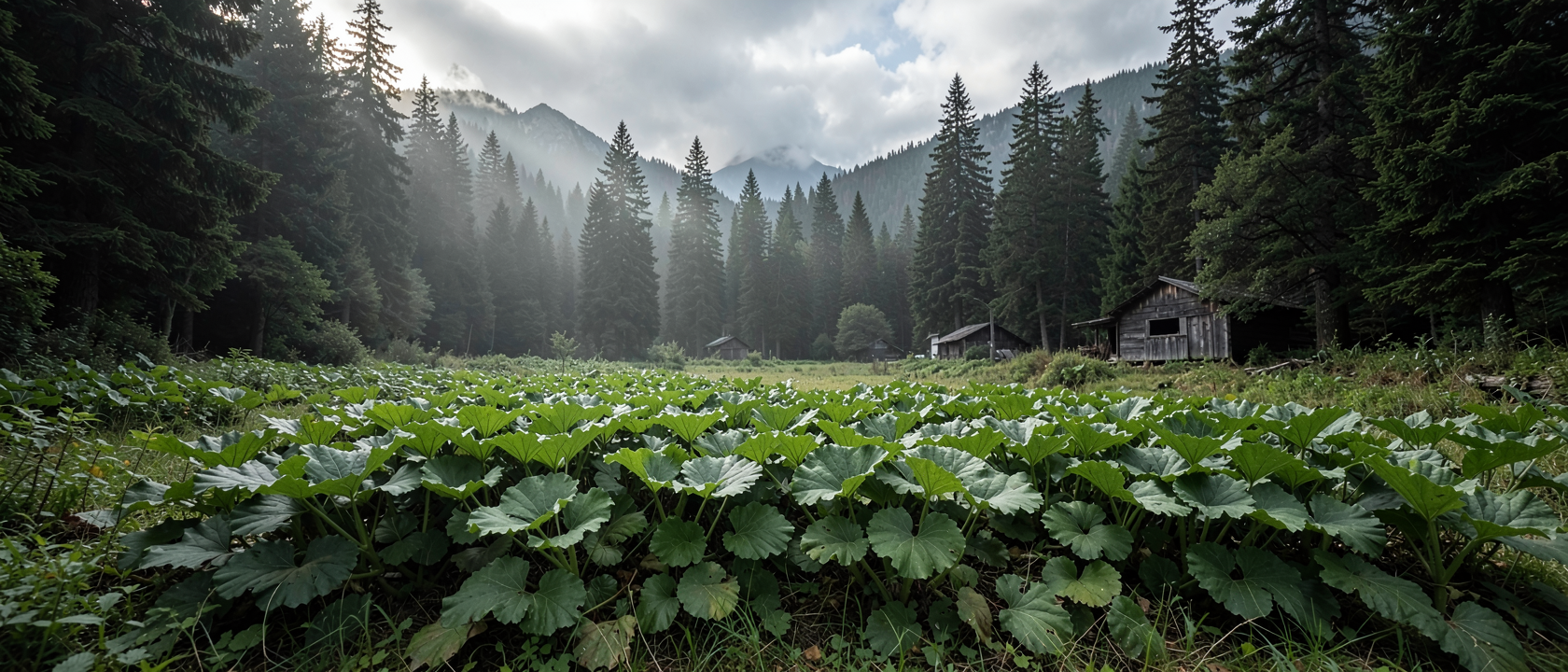
Hikers who stray off the trail near Hope, British Columbia, sometimes stumble on something strange: broad, umbrella-sized leaves growing in thick, oddly deliberate patches. Nothing about the layout looks natural.
That’s because it isn’t. The spot sits on the former Tashme internment camp, one of several sites where Canada forced more than 22,000 Japanese Canadians to relocate starting in 1942, stripping them of their homes, boats, and property along the way. The barracks are gone. The plant is not.
It’s fuki, also known as Japanese butterbur, and there’s no obvious reason it should be growing wild in a Canadian forest at all.
A Plant Doesn’t Grow Here by Accident
Fuki is native to Japan. It doesn’t drift in on the wind or hitch a ride with migrating birds. Tashme, like the other camps, was chosen for the opposite reason: a remote valley 14 miles (22.5 km) southeast of Hope, picked precisely because it was hard to reach.
So how does a Japanese vegetable end up rooted in the exact footprint of a Canadian internment camp, surviving with no one tending it for more than eighty years? Someone put it there on purpose, and the reason has nothing to do with gardening for its own sake.
Smuggled in Plain Sight
Under Order-in-Council P.C. 1486, issued in 1942, Prime Minister Mackenzie King’s government forced every Japanese Canadian within 100 miles of the BC coast out of their homes, some given only 24 hours’ notice, while stripping them of property and boats. Camps like Tashme ran on thin, unreliable food supplies.
Some of them wrote letters. Not to officials, but to former neighbors, often white Canadians they’d known before the war, asking a simple favor: send fuki seeds or roots. Ryan Ellan, curator of the Tashme Museum, says plenty of former neighbors did exactly that, mailing the plant material in or driving it out themselves. Money and property were controlled closely. Garden seeds were not.
It wasn’t a protest. It was a quiet workaround inside a system that regulated almost everything else.
Why Fuki, Specifically
Fuki arrived in Canada with Japanese settlers in the early 1900s, and by the 1930s it was common in Japanese Canadian gardens from Steveston to Prince Rupert, usually cooked into stir fries or simmered in dashi, a kelp-based broth.
What made it worth smuggling, though, was toughness. Fuki is a perennial: once established, it is extremely resilient, coming back on its own year after year without replanting or much upkeep. For families with no guarantee of stable food, that reliability mattered more than taste or tradition.
The Plant Became the Museum
Tashme opened in September 1942 and closed on August 26, 1946, after holding as many as 2,644 people across 1,200 acres (486 hectares), making it the largest internment camp in British Columbia. Once it closed, the barracks were dismantled and the land slowly reverted to forest and farmland.
The fuki stayed. Patches of it kept growing on the north side of the old property for decades, a quiet leftover from camp gardens. That persistence helped inspire the Sunshine Valley Tashme Museum, now housed in the camp’s original butcher shop about 10 miles (16 km) southeast of Hope. Curator Ryan Ellan, who grew up with family friends among former internees, got drawn into the site’s history and worked with the community to turn it into a place that tells this story out loud, something the plant had already been doing on its own.
The Gap Nobody Can Fully Explain
Here’s what doesn’t quite add up. A government that seized homes, boats, and property, and controlled where people could live, apparently never thought to stop a package of garden seeds. Why did fuki slip through?
No record settles it. Maybe it was indifference toward something that looked harmless. Maybe rules written for obviously “dangerous” items simply had no category for a vegetable. Maybe no one drafting wartime policy ever imagined a plant worth regulating. Whatever the reason, that gap is why fuki still grows in a BC forest, more than eighty years after it was planted out of necessity, long after everything else about the camp was taken away or torn down.