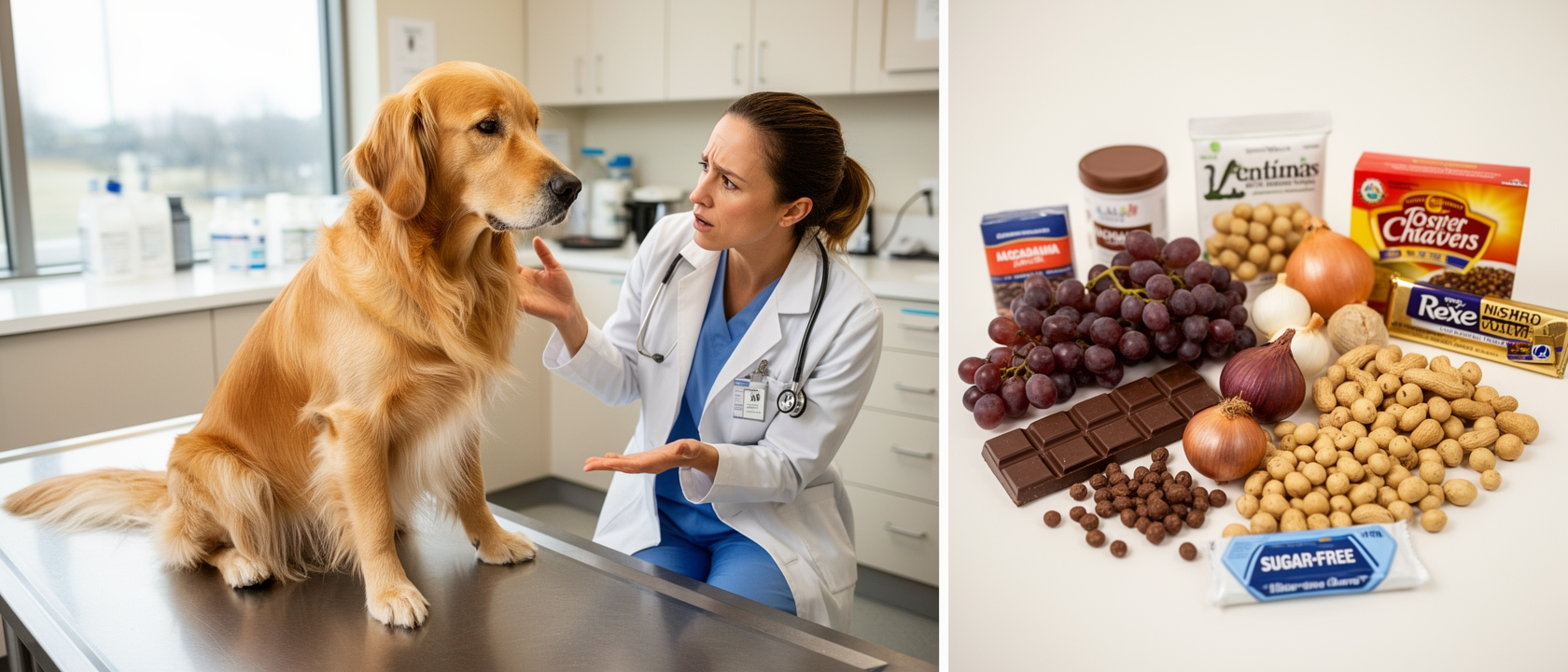
The Healthy Alternative Trap
There’s a reasonable logic to “sugar-free.” Less sugar, fewer calories, better teeth. For people managing diabetes or trying to eat lighter, xylitol-sweetened products can be genuinely useful. So a devoted dog owner might snap off a corner of a sugar-free cereal bar, or let their dog lick the spoon after making “guilt-free” peanut butter cookies. That impulse is kind. It can also be fatal.
Xylitol, a sugar alcohol sweetener widely used in “better-for-you” human foods, works fine in the human body. A dog’s body responds in a fundamentally different way, and the consequences can escalate from mild to life-threatening in under an hour.
Beyond a Simple Stomach Ache
Clinical signs can begin as little as 30 minutes after ingestion. A dog may vomit, then become weak and wobbly, ataxia, which looks like drunkenness. Without intervention, things can progress to lethargy, seizures, and coma. In severe cases, liver damage follows: jaundice, blood-clotting problems, a drop in platelet count. Some formulations, certain gums especially, can delay first symptoms by up to 12 to 18 hours, making it harder to connect what the dog ate to what is going wrong.
Veterinary sources are consistent: treatment before symptoms appear gives a dog a good chance. Once liver failure develops, the outlook shifts to guarded to poor.
The Insulin Surge
The reason xylitol hits dogs so hard comes down to a case of mistaken identity in the pancreas. In most mammals, xylitol triggers little insulin release. Dogs are a clear exception. When xylitol enters a dog’s bloodstream, the pancreas releases insulin at roughly 3 to 7 times the amount it would produce in response to the same quantity of ordinary sugar, a massive, inappropriate surge.
Insulin moves glucose out of the blood and into cells. With that much circulating at once, blood glucose plummets. This hypoglycemia drives the early symptoms: weakness, disorientation, seizures. The brain runs almost entirely on glucose, so when blood sugar crashes hard, neurological function follows.
At doses above 0.5 g per kilogram of body weight, xylitol can also cause liver failure (hepatic necrosis), possibly by depleting cellular energy stores and producing compounds that damage liver cells directly, though the exact mechanism is not fully understood. Liver enzyme damage can appear in bloodwork within 4 to 12 hours, and full clinical liver failure within 24 to 72 hours. The lower threshold for hypoglycemia alone, above 0.1 g per kilogram, means a small or medium dog doesn’t need to eat much before crossing into serious risk.
Xylitol in the Pantry
The list of products containing xylitol is longer than most owners expect: sugar-free gum, breath mints, toothpaste, chewable vitamins, mouthwash, and packaged foods sold as “diet” or “low-sugar.” Baked goods marketed to people managing blood sugar are another common vehicle.
The one that tends to catch people off guard is peanut butter. Standard peanut butter is generally safe for dogs and routinely used to hide pills or as a training reward. Some “natural” brands, however, substitute xylitol for sugar. The product may sit on the same shelf as conventional peanut butter and look identical. Checking the ingredients list is the only way to know.
Xylitol ranks among the top 10 most frequent causes of dog poisoning reported to the ASPCA. It stands out largely because it hides inside products that carry a health halo, and because the margin between a small amount and a dangerous one is narrow enough that guessing is a poor strategy.
The ASPCA Animal Poison Control Center operates around the clock at 1-888-426-4435. Contacting them before any symptoms appear gives a dog the best odds.