A Kid, a Sign, and a Sacramento Street Corner
Picture the intersection of Truxel Road and West El Camino Avenue in the Natomas neighborhood of Sacramento. Strip malls, traffic lights, cars rolling through on an ordinary morning. Nothing about the corner suggests anything unusual is happening.
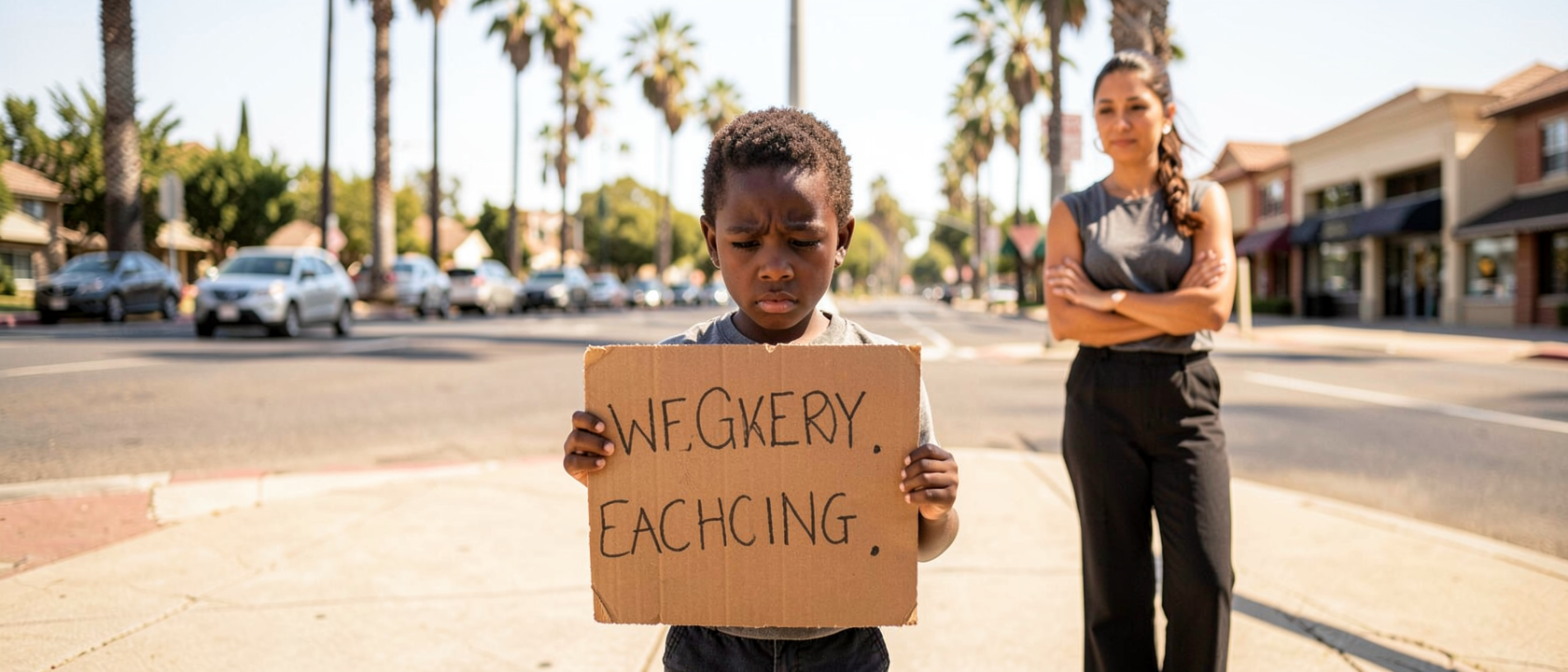
Then you notice the kid. A fifth grader, standing at the edge of the sidewalk, holding a piece of paper up for every passing car to read. The handwriting is plain and a little uneven, the kind you’d expect from an actual ten- or eleven-year-old. It says: “I called my 5th grade teacher a jackass. Sorry Mr. Smith.”
Cars slow down. Some drivers do a double take. A kid, alone at an intersection, confessing to strangers. Whatever this is, it isn’t happening behind a closed bedroom door. It’s happening in public, on purpose, where anyone can see it.
Why Would Anyone Choose the Public Option?
A rude comment to a teacher is the kind of thing plenty of parents handle with a grounding, a confiscated phone, a stern conversation at the dinner table. Private, contained, over by dinner.
So why pick the one option guaranteed to involve strangers, neighbors, a TV crew, and eventually the internet?
It’s the kind of decision most people form an opinion about within seconds, before they know a single detail, an instinct worth noticing, since the actual reasoning complicates the snap judgment more than expected.
A Mother’s Calculation, Not a Snap Decision
The boy’s name was Ahmad Rollins. His mother, Cassandra Rollins, was the one holding the marker. According to reporting at the time, calling his teacher, Mr. Smith, a “jackass” wasn’t an isolated slip. Ahmad had reportedly been acting up at school for a while, and this comment was the last straw in a longer pattern, not the first offense.
That detail reframes the sign from an overreaction into the end point of a strategy. Cassandra Rollins said her goal was to teach her son a lesson, and that she believed the discomfort of being seen, of strangers reading his own handwriting back at him, would land harder than anything done quietly at home. In her calculation, private punishments had already been tried; this was the escalation she reached for when those hadn’t worked.
That’s her stated logic, as reported. Whether it’s sound parenting or something else is exactly the question the rest of the story leaves open.
How One Street Corner Reached a Wider Audience
A punishment at a family’s chosen intersection doesn’t automatically become news. This one did because local station FOX40 filmed Ahmad holding the sign and ran it as a video clip, and a photo of the scene was picked up by The Natomas Buzz, a community blog covering that part of Sacramento.
From there it traveled the way local human-interest stories did before social media turned public shaming into its own recognizable genre. It was visual: a kid, a sign, cars slowing down. It was short and easy to explain in one sentence. And it plugged directly into a debate that never really closes, where discipline ends and something else begins.
What Nobody Ever Followed Up On
Here’s what the coverage never tells you: whether Mr. Smith ever commented on being publicly apologized to, whether Ahmad’s behavior at school actually changed afterward, whether any school official or child welfare authority ever looked into it. None of that surfaces in the record. The original article closed the way it opened, putting the question back to readers directly: was this sensible discipline, or was it child abuse? Readers split, some calling it fair, others questioning whether it worked at all, and the piece never tells them who was right.
That gap is the actual reason the story still gets passed around. A fully resolved anecdote gets read once and forgotten. An open one gets handed to the next person, because everybody wants to test their own answer against someone else’s reaction. If you noticed, reading this, that the story never actually settles the question it raises, that’s worth noticing about yourself too, most people skim past the ambiguity and assume they already know.