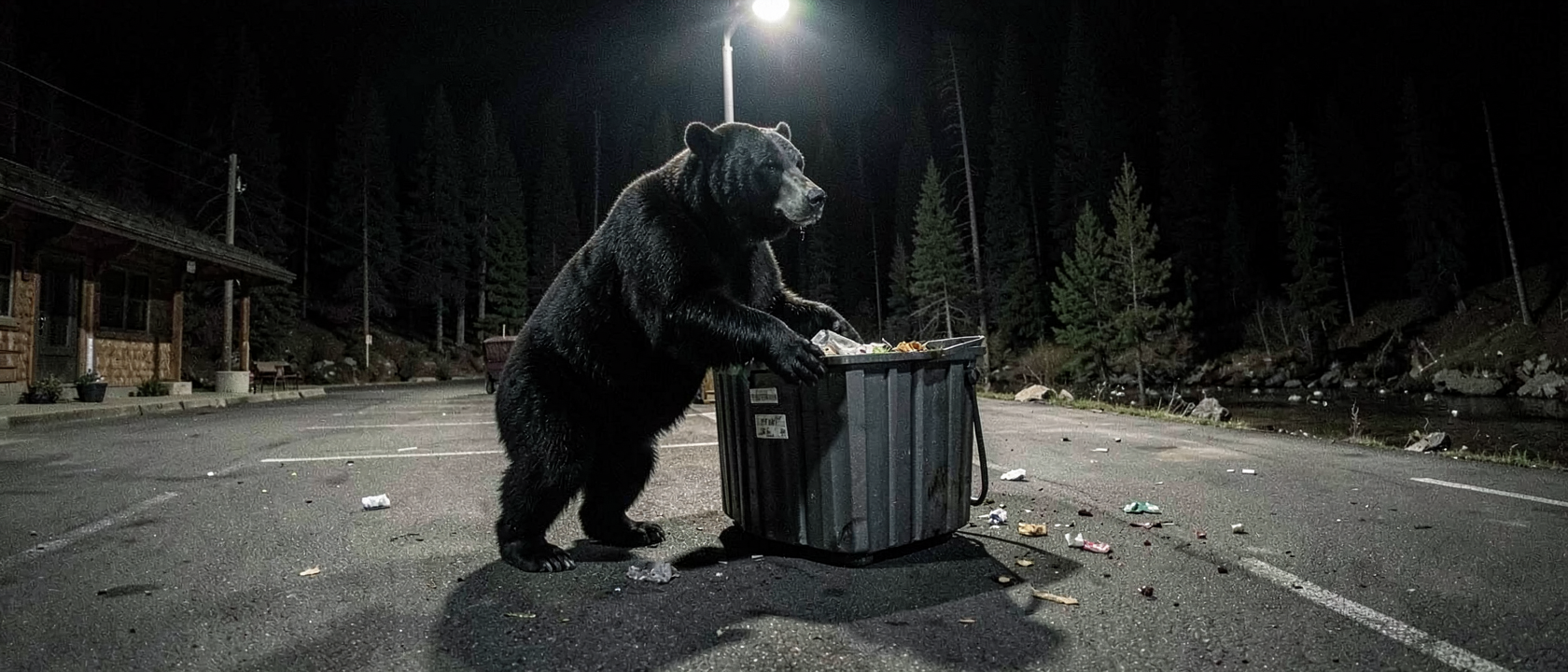
It Just Left, With the Dumpster
Vandalism earlier in 2013 pushed the owners of Edelweiss, a German restaurant in Colorado Springs, Colorado, to install security cameras over the back alley. On Tuesday night, July 30, 2013, those cameras caught something nobody expected to review the next morning.
A bear walked up to the restaurant’s dumpster, rose onto its hind legs to about six feet (1.8 m), grabbed the top edge, then backed up and dragged the entire unit 50 feet (15 m) across the parking lot before tipping it over and digging in.
Employees who arrived on Wednesday, July 31, found the dumpster far from where it belonged, with no idea how it got there until someone pulled up the footage. Manager Dieter Schnackenberg summed it up plainly, saying the bear “walks over and just grabs a hold of the dumpster and just drags it away.” That’s not the raccoon-in-the-trash image most people picture. It looked almost planned.
Why Steal the Whole Bin?
Bears getting into dumpsters near Edelweiss isn’t new. The restaurant sits close to a wooded area next to a creek bed, and bears had raided the trash there before. What’s strange this time is the method. Tipping a bin, or pulling a bag through a gap, takes a fraction of the effort of hauling an entire loaded container across open pavement. So why upgrade from raiding to relocating?
The explanation that circulated at the time was almost disarmingly simple: the bear supposedly couldn’t decide which leftovers it wanted, so rather than pick and choose, it just took the whole dumpster somewhere quieter to sort through everything at its own pace. It’s a charming idea, and it fits what the footage shows, an animal opting for “all of it” instead of digging through one bag at a time. But it’s worth remembering that’s an interpretation of the video, not a confirmed account of what was going through the bear’s head. No biologist examined this particular bear’s reasoning that night.
What We Know About the Bear’s Incentive
What we do know is what was inside. Among the restaurant’s regular leftovers was rouladen, thin rolled beef with bacon, pickles, onion, and mustard, braised in a dark gravy and usually served with fried potatoes and red cabbage. Whatever the bear’s exact strategy, that dumpster wasn’t short on reasons to stick around.
Black bears also have real pulling strength for their size, which explains how dragging a loaded dumpster 50 feet was even possible in the first place. Strength made the move doable; the smell of dinner made it worth doing.
The Second Night: Memory, Not Luck
One wild night could be a fluke. What happened next wasn’t. The restaurant reported that the bear came back on Wednesday night, July 31, 2013, for a second round.
That return matters more than the original theft. A single raid could be opportunism, an animal stumbling onto an easy meal by chance. Coming back to the exact same spot points to memory instead, the bear registering that this location had paid off before. Bears are known for holding onto the location of a reliable food source, which is why wildlife officers treat a repeat visit as a pattern, not a coincidence.
What Never Got Fully Explained
By its third visit, the bear found something new waiting: boards lined with upward-pointing nails, set out by Colorado Parks and Wildlife as a harmless deterrent. On Thursday, August 1, 2013, it set one paw on a board, backed off, and left. It came back once more on Friday, August 2, 2013, but didn’t stay long. The owner eventually settled things for good by ordering bear-proof dumpsters.
Even with that resolution, a few things stay unclear, like whether one individual bear was behind every single visit or more than one animal found the same easy target. A wildlife officer involved made a point worth keeping in mind: the biggest obstacle to keeping bears wild isn’t the bears, it’s people who see a clip like this, decide it’s cute, and never report it, letting a bear get comfortable around humans and their food.
The German Food Joke, and Why We Made It
Local coverage at the time couldn’t resist the obvious joke, that a bear kept coming back for the one restaurant in town serving rouladen. It’s a fun line, and it almost certainly has nothing to do with why the bear actually returned. Food is food to a bear, regardless of the cuisine.
That joke says more about us than about the bear. We rarely let an animal just be resourceful on camera; we hand it a motive, a taste, a punchline, because a hungry bear with a plan makes a better story than a hungry bear, full stop. Noticing that gap, between what the footage actually shows and what the caption adds on top, is its own small skill, and usually the reason one version of a story spreads while another one doesn’t.