Fed, Hugged, and Called Family in an Hour
Michael Powell and Juergen Horn built a project around one simple idea: move to a new city every three months, live there like a local, then move on. They call the project For 91 Days. During one of those three-month stretches based in Savannah, Georgia, they drove out to a small restaurant called The Old School Diner, expecting nothing more than a routine meal.
An hour later, they walked out having been hugged, fed, and told, flatly, that they were family now. Most people don’t earn that word from a stranger in an hour, let alone from someone standing behind a cash register.
What Actually Turns a Meal into a Homecoming?
Restaurants sell food. Plenty of them sell good food with a smile on top, which is what most people mean by “friendly service.” But friendly and family are not the same category of experience, and it’s worth asking what closes that gap. It wasn’t a loyalty program or a script handed to staff. It was one man’s behavior, repeated so consistently that it became the entire feel of the place.
That’s the real question: how does the personal warmth of a single person turn into something an entire room feels?
Meet the Chef Who Does It Alone
The diner runs on one man: a chef named Jerome, identified in local news coverage as Jerome Brown, who does all the cooking himself in a kitchen lined wall to wall with deep fryers, and who personally comes out to greet whoever walks through the door.
He doesn’t shake hands. He wraps new arrivals in a bear hug and tells them, “You’re family here,” and clearly means it. Then comes a tour, not of the dining room but of his life: stories about his work, and at some point, love letters he’s written his wife over the years, some of them illustrated with his own drawings.
That detail is the mechanism worth noticing. Rehearsed hospitality feels rehearsed no matter how polished it is. Showing a stranger something as private as a love letter isn’t part of any service script. It’s disclosure, and disclosure resets the whole interaction: you stop being a customer being served and become a guest being let into someone’s home.
A Reputation That Reached Hollywood
None of this stayed a local secret. The diner’s walls carry photos of past visitors, including actor Ben Affleck and former NFL player Michael Oher, known from the film “The Blind Side,” hanging just above the fryers Jerome runs alone. The place has also turned up in Southern Living and on local television, with no PR firm behind any of it. Whatever pulled in a movie star pulled in two traveling bloggers the same way: word of mouth, running purely on one person’s reputation.
The Carpet in the Driveway
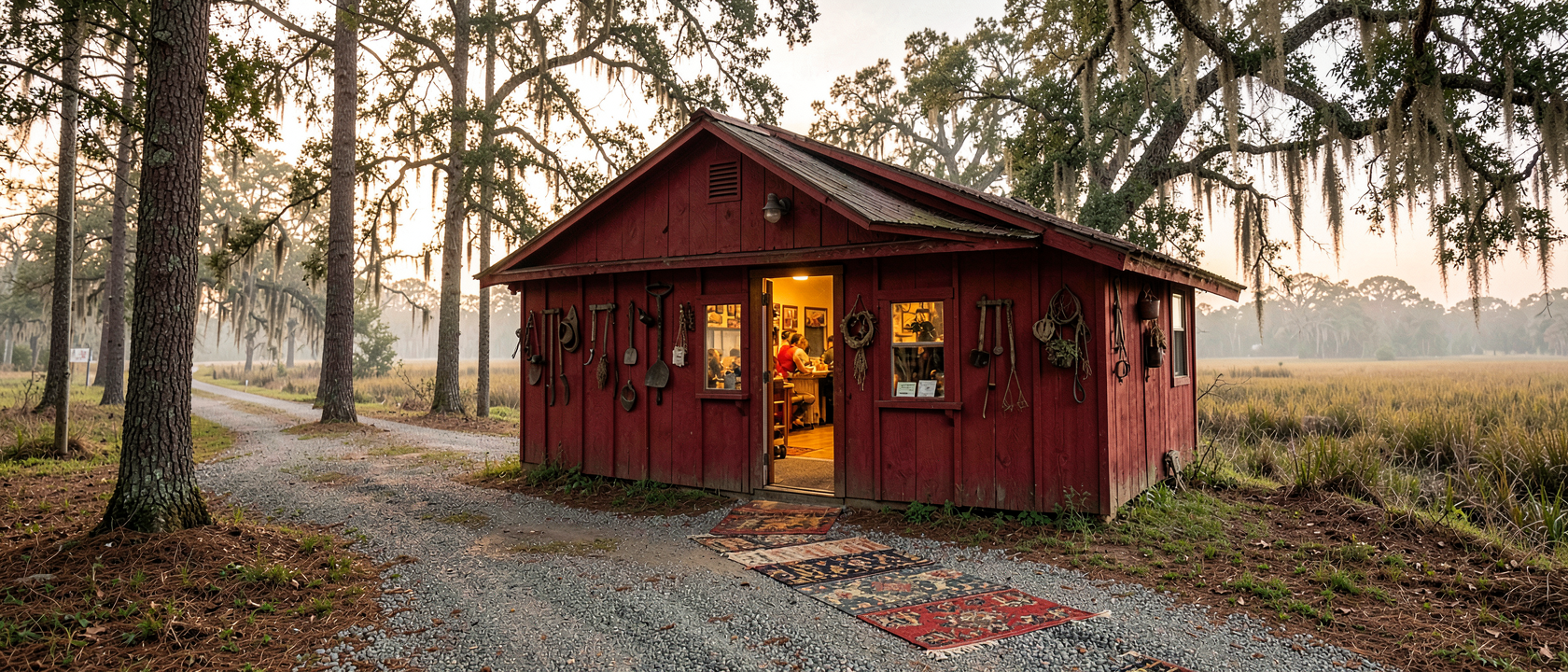
The smallest detail is the most telling one. When it was time to leave, Jerome walked his guests out himself, across a driveway that, oddly, is carpeted, repeating that they were family and always welcome back.
Nobody needs a carpeted driveway to run a diner. That’s exactly why it works as proof: a gesture nobody asked for is much harder to fake than a smile at the register. It’s the kind of detail that shows up only when warmth has become a habit, not a performance.
Why This Stop Stood Out
Powell and Horn have published more than 2,000 articles about the places they’ve passed through, chasing exactly this kind of moment. Out of everywhere they’ve stopped, they singled out this hour as among the warmest they found, which says less about how rare a good diner is and more about how rare an unguarded welcome actually is.
Once you notice that Jerome’s version of hospitality is a practiced habit rather than a personality trait he simply happened to be born with, it’s hard to stop noticing the difference elsewhere: between service that’s friendly because it’s supposed to be, and warmth that’s real because somebody decided, meal after meal, to keep making it that way.