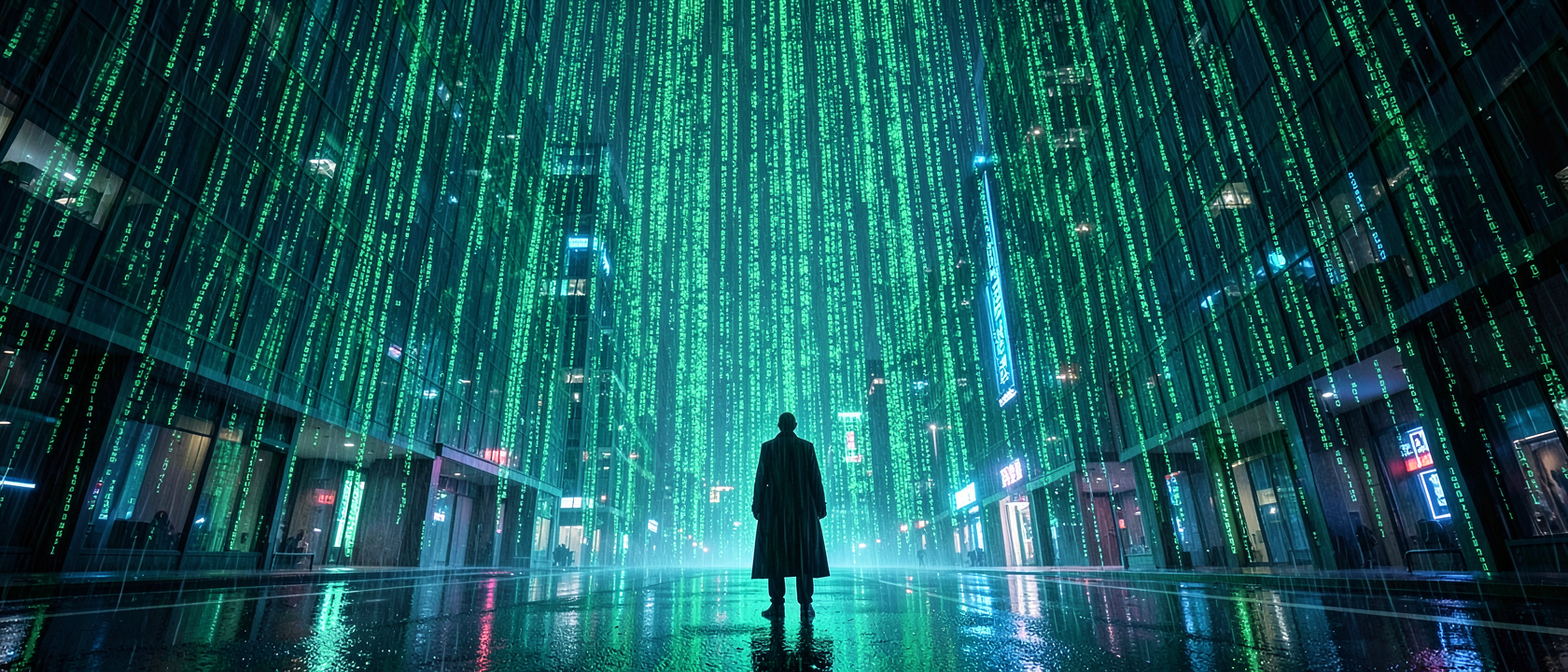
An Announcement Twenty Years in the Making
On Tuesday, August 20, 2019, Warner Bros. Pictures confirmed something fans had speculated about for years: a fourth Matrix film was actually happening. The studio was teaming up again with Village Roadshow, the same partner behind the original trilogy, and the news came from Toby Emmerich, chairman of the Warner Bros. Pictures Group. “We could not be more excited to be re-entering The Matrix with Lana,” he said in a statement. “Lana is a true visionary, a singular and original creative filmmaker, and we are thrilled that she is writing, directing and producing this new chapter in The Matrix universe.”
Twenty years earlier, the first Matrix film had given the culture bullet time, the red pill and blue pill, and a visual language that philosophy classrooms still borrow from. The trilogy that followed went on to earn more than $1.6 billion worldwide. At the time of the 2019 announcement, no release date had been set. All anyone knew was that the machines, the pods, and the question of what’s real were coming back.
The Name That Wasn’t There
Look closely at that announcement, though, and something is missing. Lana Wachowski was named as writer, director, and producer. Her sister Lilly, who co-created the entire Matrix universe and co-directed all three original films alongside her, wasn’t mentioned at all. No statement addressed it. No reason was given.
Commentator Red Pill Junkie, writing for the Daily Grail, was among the first to point out how strange that was. The Wachowskis had never made a Matrix film apart from one another. Reports at the time simply noted that Lilly did not appear to be involved. Lana herself offered a warmer, more personal note in a statement to Variety: “Many of the ideas Lilly and I explored 20 years ago about our reality are even more relevant now. I’m very happy to have these characters back in my life and grateful for another chance to work with my brilliant friends.” Lilly’s name is there, in memory. Her involvement isn’t. Why remains an open question.
The Team Behind the Curtain
Lana wasn’t working alone, though. The screenplay was co-written with novelists Aleksandar Hemon and David Mitchell, the latter known for genre-bending, reality-questioning fiction like Cloud Atlas, an oddly fitting résumé for a Matrix sequel. Producing duties were shared with Grant Hill and James McTeigue, both longtime collaborators from the original trilogy. Production was expected to begin at the top of 2020, and filming did start that February, though it was later halted. The project eventually reached theaters under the title The Matrix Resurrections.
When the Movie’s Premise Started Getting Real
In 1999, the idea at the center of The Matrix, that machines could simulate reality so convincingly humans couldn’t tell the difference, was speculative fiction built on then-fringe tech concepts. By 2019, the ground had shifted. Artificial intelligence could already generate convincing fake faces, fake text, and fake voices. Virtual reality headsets had moved from research labs into ordinary living rooms.
None of that means anyone had built a Matrix-style simulation, or was close to it; that leap is still enormous. But the individual building blocks the film once imagined as science fiction, machine-generated deception and immersive artificial environments, were no longer fictional at all. The question the movie asked in 1999 was pure thought experiment. Twenty years later, pieces of it had quietly become buildable.
A Question You Can’t Test From Inside
That’s what makes the timing of this return worth sitting with. The original trilogy’s real hook was never the special effects; it was the question underneath them: how would you know if what you’re experiencing is real? Philosophers have circled that question for centuries, from Descartes’ demon to modern discussions of the simulation hypothesis, and it has never been fully settled, because by definition you can’t test it from inside the system you’re questioning.
A fourth Matrix film arriving right as AI and VR closed some of the distance between fiction and possibility is worth noting on its own. It’s the kind of pattern easy to miss if you only ever watched the franchise as an action movie: the sequel returned when its central question stopped being purely hypothetical.