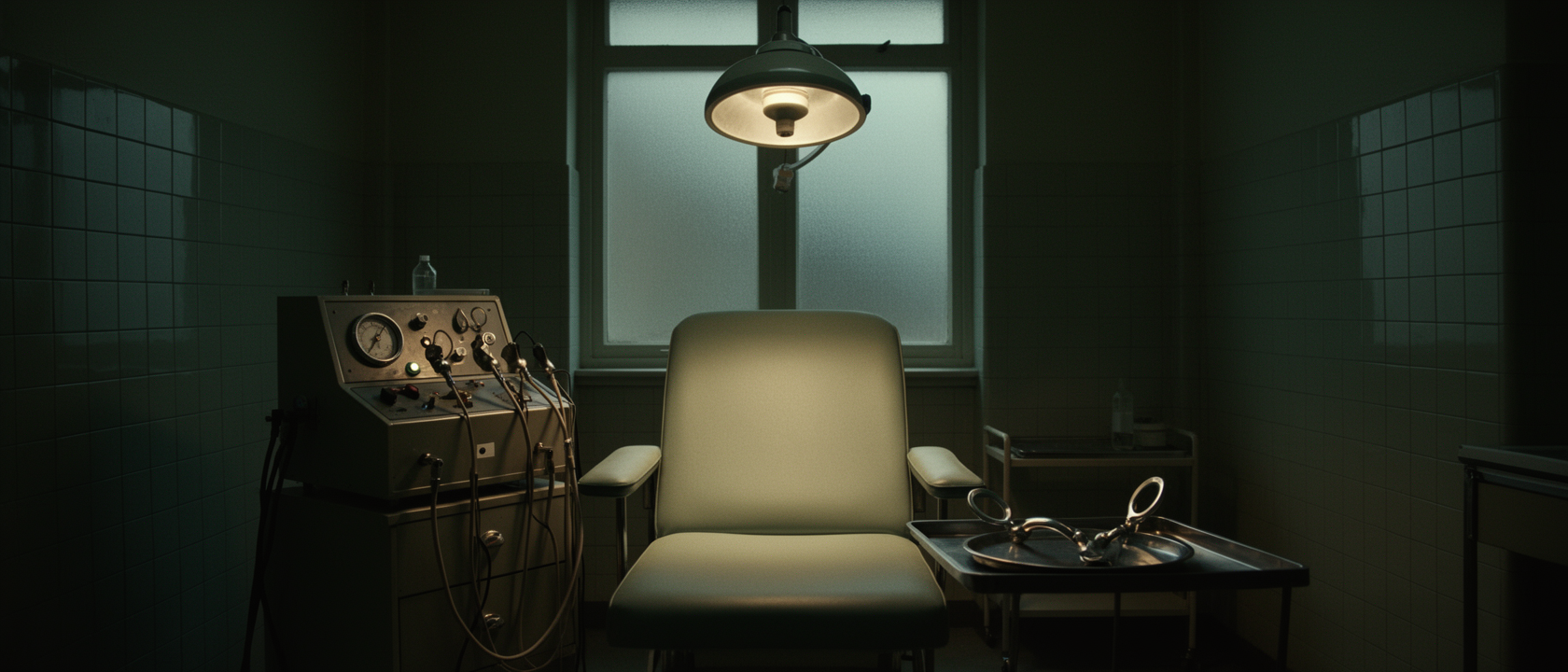
The Treatment That Began at a Slaughterhouse
Ugo Cerletti was a neurologist, not a butcher. But it was a Roman slaughterhouse that pointed him toward one of psychiatry’s most controversial tools. During animal research in the 1930s, Cerletti observed workers applying electric shocks to pigs before slaughter. The current didn’t kill them, it knocked them into a brief seizure, and they recovered. His reasoning followed: if a controlled shock could do that safely in a pig, perhaps it could produce a therapeutic seizure in a human patient.
In April 1938, Cerletti and his colleague Lucio Bini, who had built the electrical device, applied that logic to a person for the first time. Their patient was a mute man found wandering the streets of Naples, living with paranoid schizophrenia. After several sessions, his symptoms resolved. Electroconvulsive therapy had arrived. The popular anecdote of Cerletti stumbling upon a butcher shop by accident is a later embellishment; the record shows deliberate observation at the slaughterhouse as part of ongoing animal research.
What Clinicians Had Before Electricity
In 1927, Manfred Sakel began using massive insulin doses to drive patients into repeated comas, reversed with glucose, running fifty to sixty sessions per course, with a mortality rate between 0.5 and 2 percent. Then came Ladislas Meduna, a Hungarian neuropsychiatrist. On January 23, 1934, he injected camphor dissolved in oil into a 33-year-old patient with catatonic schizophrenia to trigger a seizure; after five sessions, symptoms cleared. Meduna later switched to Metrazol, which acted faster but left patients fully conscious as it took hold, experiencing overwhelming dread before losing awareness. ECT, whatever its other faults, was less distressing than what it replaced.
The Logic Behind Inducing a Seizure
Meduna had noticed that epilepsy and schizophrenia appeared to rarely coexist. His hypothesis: the two conditions were biologically antagonistic, and artificially provoking a seizure might suppress schizophrenic symptoms. The reasoning was later shown to be statistically unsound, but it was the framework that launched an entire era of convulsive treatments.
The Myth of the Miracle Cure
Early proponents of insulin coma therapy reported improvement rates of 70 to 88 percent in schizophrenia patients. On November 7, 1953, Harold Bourne’s paper “The Insulin Myth” appeared in The Lancet, arguing that the apparent success reflected selection bias, patients chosen for the demanding treatment were already those most likely to improve on their own. A 1957 controlled study confirmed it, finding no meaningful difference between insulin coma therapy and conventional sedation. The dramatic success rate didn’t survive scrutiny.
When the Tool Became a Weapon
ECT’s darkest chapter was not a clinical failure. At the Allan Memorial Institute at McGill University in Montreal, psychiatrist Ewen Cameron ran what he called “psychic driving”, intensive ECT combined with prolonged drug-induced sleep, sensory deprivation, and audio conditioning, aimed at erasing a patient’s existing personality. Between 1957 and 1964, these experiments were secretly funded by the CIA under Project MKUltra, subproject 68. Patients had no knowledge of what was being done to them; many suffered severe, lasting memory loss.
This period fixed ECT into popular culture as a tool of punishment. The 1975 film One Flew Over the Cuckoo’s Nest depicted it as coercion rather than medicine, won five Academy Awards, and had a measurable effect on the therapy’s availability in the years that followed.
Precise Delivery, Unknown Mechanism
Modern ECT looks very different from 1938. Patients receive general anesthesia and muscle relaxants. Unilateral electrode placement reduces memory side effects, and pulses are calibrated to 600, 700, or 800 milliamperes. ECT remains one of the more effective interventions for treatment-resistant depression and bipolar disorder, the only one of the four major somatic psychiatric treatments developed in the 1930s still in routine clinical use.
What nobody has worked out, after more than 88 years of practice, is exactly why it works. Researchers have proposed shifts in neurotransmitter levels, changes in gene expression, immune modulation, and increases in neuroplasticity through brain-derived neurotrophic factor. Each is a hypothesis. None is confirmed. A seizure reliably improves certain psychiatric conditions, and the precise reason remains a question the brain has not answered.