The Photographer Who Gave Up Choice
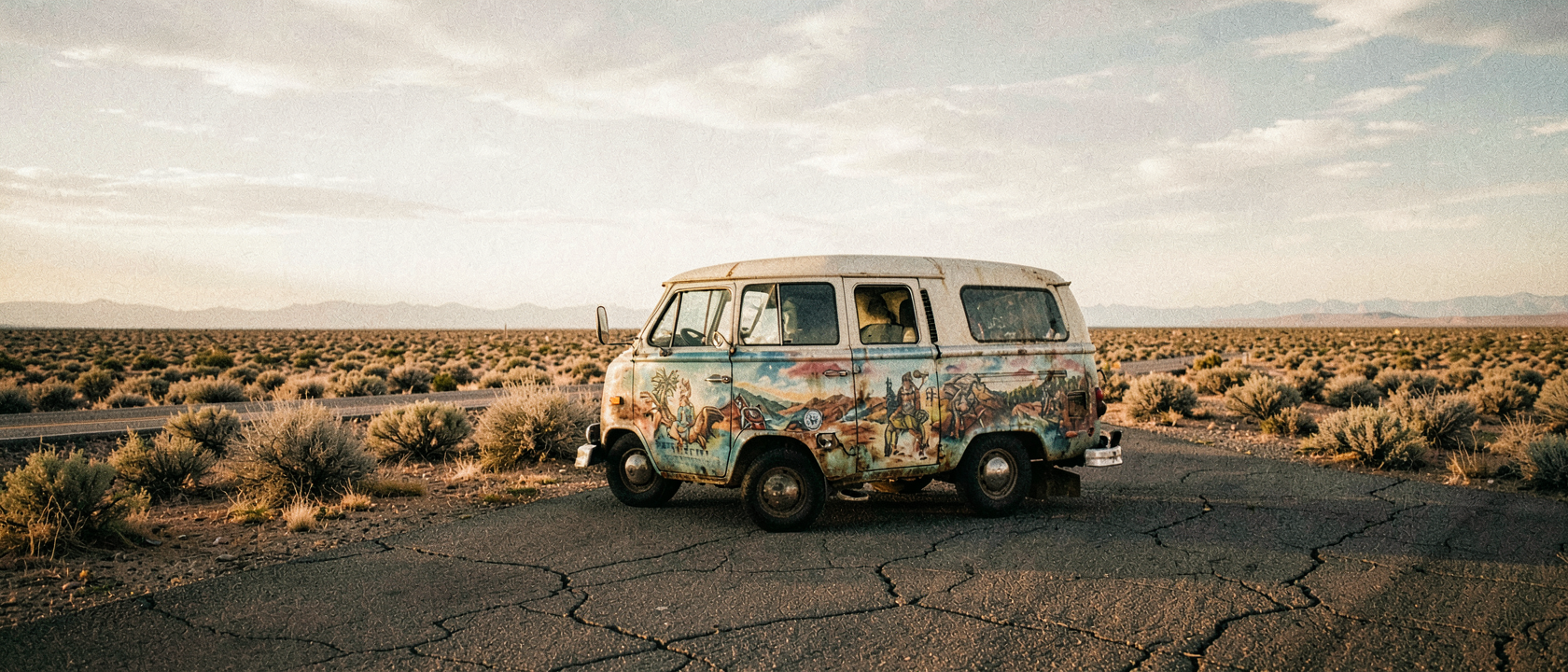
Since 1996, Los Angeles-based filmmaker and photographer Joe Stevens has been doing something that sounds, on first description, like a recipe for monotony. He drives around the American West looking for surviving custom and conversion vans, and whenever he finds one, he photographs it. Every photograph uses the same compositional formula: same angle, same distance from the vehicle, same framing rules, applied identically across hundreds of images and, as of the February 2010 article that first brought wider attention to the project, thirteen years of ongoing work.
No hunting for more flattering light. No crouching for a dramatic low angle. No creative departure from the rule, ever. The project, collected under the title Vans and the Places They Were, is built on a deliberate, unbroken formula.
The Obvious Objection
The first reaction most people have is reasonable skepticism. Photography as an art form prizes the decisive moment, the unexpected angle, the composition nobody else thought to try. Its vocabulary is built around variation and instinct. So what separates photograph number one from photograph number four hundred if the framing is always identical? Does the project just produce four hundred nearly identical pictures?
The question is worth pressing. The discomfort it creates is exactly where the project becomes interesting.
What Happens When You Control for Everything You Can
Think about how a scientist designs an experiment. To understand what one variable does, you hold everything else constant. Change one thing; measure what happens. Stevens is doing the same thing with a camera loaded with 120 mm medium-format film.
By locking the compositional frame completely, he removes himself as a variable. The angle, the distance, the framing: all fixed. What remains free to vary are only two things: the van and the landscape behind it. Because the container never changes, those two elements are always in direct, unobstructed conversation with each other. A van painted with sweeping desert murals parked in front of an actual desert reads as something very different from the same van against a parking-lot chain-link fence. A vehicle that looks garish in isolation might look entirely at home against the right backdrop. Without the fixed frame, those differences would be harder to see. The rigidity is what makes them legible.
Stevens has described the project as examining the dialogue that exists between a van’s design aesthetic and that of its surrounding environment. That concept is doing real work. The fixed method is the instrument that makes the dialogue audible in the first place.
Why These Vans, and Why Now
The vehicles Stevens photographs are not random choices. Custom and conversion vans are genuinely disappearing, worn down by rust, changing tastes, and government initiatives encouraging more fuel-efficient transportation. Stevens photographs the survivors, vehicles that have outlasted the era that produced them.
Stevens has said his ultimate goal is to photograph the last remaining van on the final frame of photographic film in existence, at which point the project will be finished. That framing is partly poetic, but it points at something concrete: medium-format film photography is also declining, running a kind of parallel course with the vehicles it documents. Two things fading at roughly the same rate, with one recording the other.
The One Word the Project Never Explains
The title is Vans and the Places They Were. Past tense.
Stevens offers no explanation for “were” over “are” anywhere in the project. It could mean the vans have since moved on from the spots where he found them. It could mean some have been scrapped. Or it might simply be a photographer’s acknowledgment that a photograph always captures a moment already gone by the time you look at it. The project declines to tell you which reading is correct, or whether all three apply at once.
A fixed, methodical, almost scientific approach ends not in a tidy conclusion but in a title that quietly refuses to close. The most controlled element of the whole project is the framing. What the images mean is left entirely open.