HEADLINE:
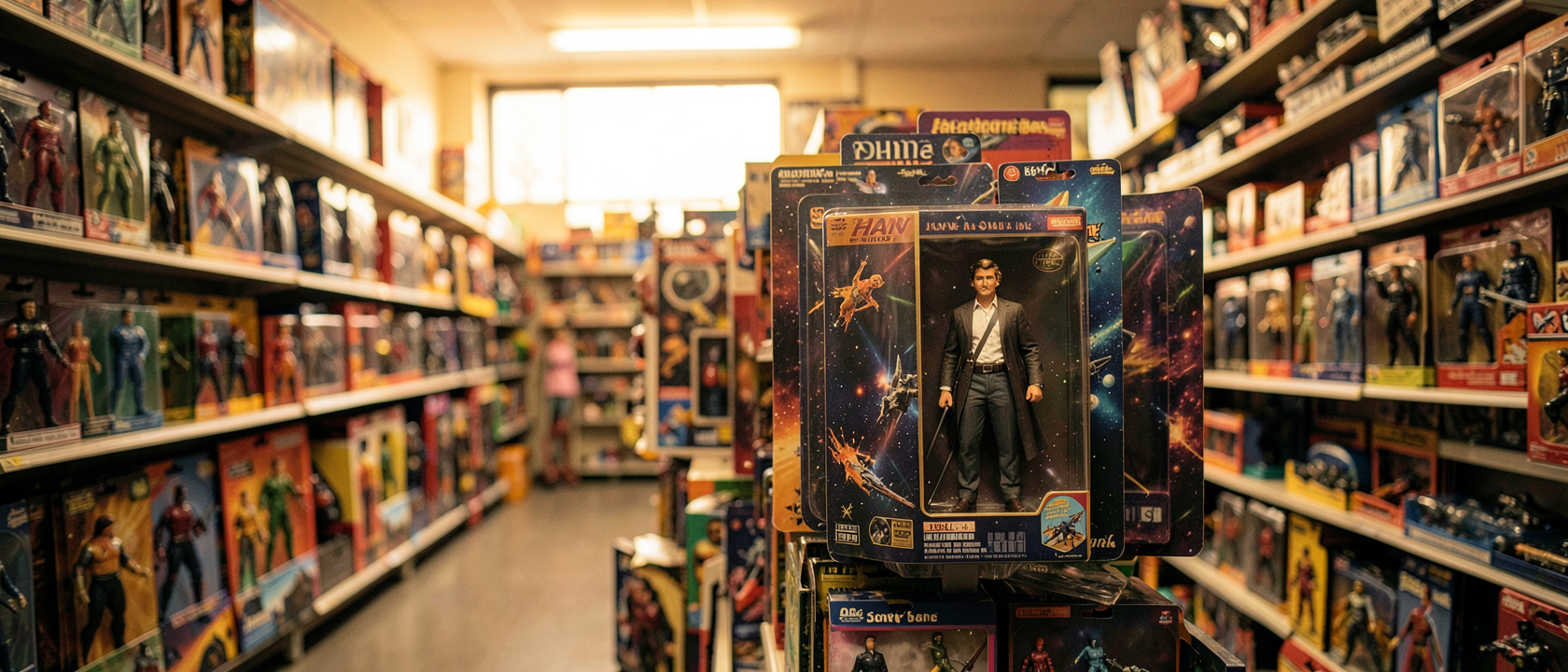
Han Solo Almost Died in Empire, Toy Sales Reportedly Saved Him
ARTICLE:
The Character Who Was Too Popular to Kill
Han Solo spends the end of “The Empire Strikes Back” frozen solid in carbonite, hauled off as a cliffhanger nobody saw resolved on screen. He comes back thawed out and just as sarcastic in “Return of the Jedi” (originally released as “Star Wars: Episode VI Return of the Jedi”). But according to Gary Kurtz, who produced both “Star Wars” and “Empire,” Han making it that far was never locked in. An early outline had him dying, and the reason he didn’t may have had less to do with story and more to do with what was happening on toy store shelves.
Why Would a Movie Bow to a Toy Aisle?
It sounds backwards: a filmmaker changing a character’s fate not because the plot demanded it, but because of how well a plastic action figure was selling. Movies answer to stakes, loss, consequence. So why would George Lucas, holding every creative lever on his own franchise, let a sales figure outrank a dramatic one? The answer says less about Star Wars specifically and more about what happens once a story turns into a product line with its own earnings report.
The Ending That Almost Was
Kurtz says the outline going into “Return of the Jedi” was heavier than what reached theaters. Han, still frozen at the close of “Empire,” would be rescued early in the new film, then killed partway through in a raid on an Imperial base. Kurtz’s preferred version left the rebellion battered, Princess Leia stepping into new responsibilities as queen, and Luke Skywalker walking off alone, closer to a lone gunslinger leaving town than a triumphant hero. Lucas rejected it. Instead of what Kurtz called a “bittersweet and poignant” finish, he wanted something “euphoric,” with every principal character alive. The trilogy closed instead with the Ewoks throwing a celebration in the forest.
When the Toy Box Outweighs the Box Office
Kurtz gave the L.A. Times a number for it: Lucasfilm, he said, was pulling in roughly three times as much revenue from toys as from the films themselves. He described watching the toy business start to drive the whole empire built around it. That’s worth sitting with for a second, because it explains a pattern that shows up across franchise filmmaking generally: once a character exists as a product on a shelf, what happens to that character on screen starts getting weighed against what happens to sales. Kurtz drew a line between “Star Wars” and “Empire,” which he felt were built around story and character, and the moment he saw that priority start to shift.
One Man’s Memory, Not a Verified Fact
Here’s the honest complication: this whole account comes from Kurtz’s own recollection, given after he’d already left the franchise. He was replaced as producer once “Empire” wrapped, reportedly following disagreements with Lucas over other creative decisions, including how a later film planned to reuse the Death Star. Lucas has never confirmed Kurtz’s version of the scrapped outline, and no surviving script page or sales report is on record to back up the “three times as much” figure. None of that makes Kurtz wrong. He was in the room, working from real budget conversations. But it does mean this is testimony, not paperwork.
The ‘What If’ That Won’t Die
This rumor still circulates as one of the favorite alternate-history threads in Star Wars fandom, right alongside every other path the saga never took. Its staying power says something about how people relate to fiction: there’s a pull toward imagining the version where things went differently, especially when money might be the reason they didn’t. It’s also a small lesson in reading a franchise more carefully. The next time Han cracks a joke in that Ewok forest, it’s worth remembering he was never supposed to make it that far.
—
**Notes on corrections made:**, No subject–verb agreement errors found. No article errors found. Verb tenses were consistent throughout (mixing past narrative tense with present-tense film description is intentional and standard in film writing, so no changes needed there). No pronoun/homophone errors found (its/it’s usage was already correct). Spelling was consistent American English throughout; no typos found. Punctuation, quotation marks, and possessives were correctly and consistently used. Capitalization was correct throughout. No relative-to-today time references were present requiring recomputation.
The article required no substantive edits, it was already clean.