Class Is in Session… in a Video Game?
Picture a lecture hall built entirely out of pixels: a professor’s avatar clicking through a slideshow while student avatars sit in neat rows of virtual chairs. This was a real class, taught by a real university, inside a video game called Second Life.
The mid-2000s were the golden age of massively multiplayer online games, when players logged in by the thousands to fantasy worlds built for slaying monsters and leveling up characters. Second Life stood apart from that crowd, and it somehow convinced accredited colleges and universities to build actual campuses inside it.
Why would any university spend real money on a school inside a video game?
Not Your Typical Game
Second Life barely counted as a “game” by the usual definition. There were no monsters to fight, no levels to grind, no built-in objective at all. Users designed their own avatars, built and sold property, ran small businesses, and socialized much like they might in an ordinary town, except this one existed only online.
That was the whole point. Instead of offering an escape from reality, Second Life offered a parallel version of it, where “residents” built a second, recognizable life rather than a fantasy one. That distinction caught the attention of institutions looking for more than entertainment.
The Realism Gambit
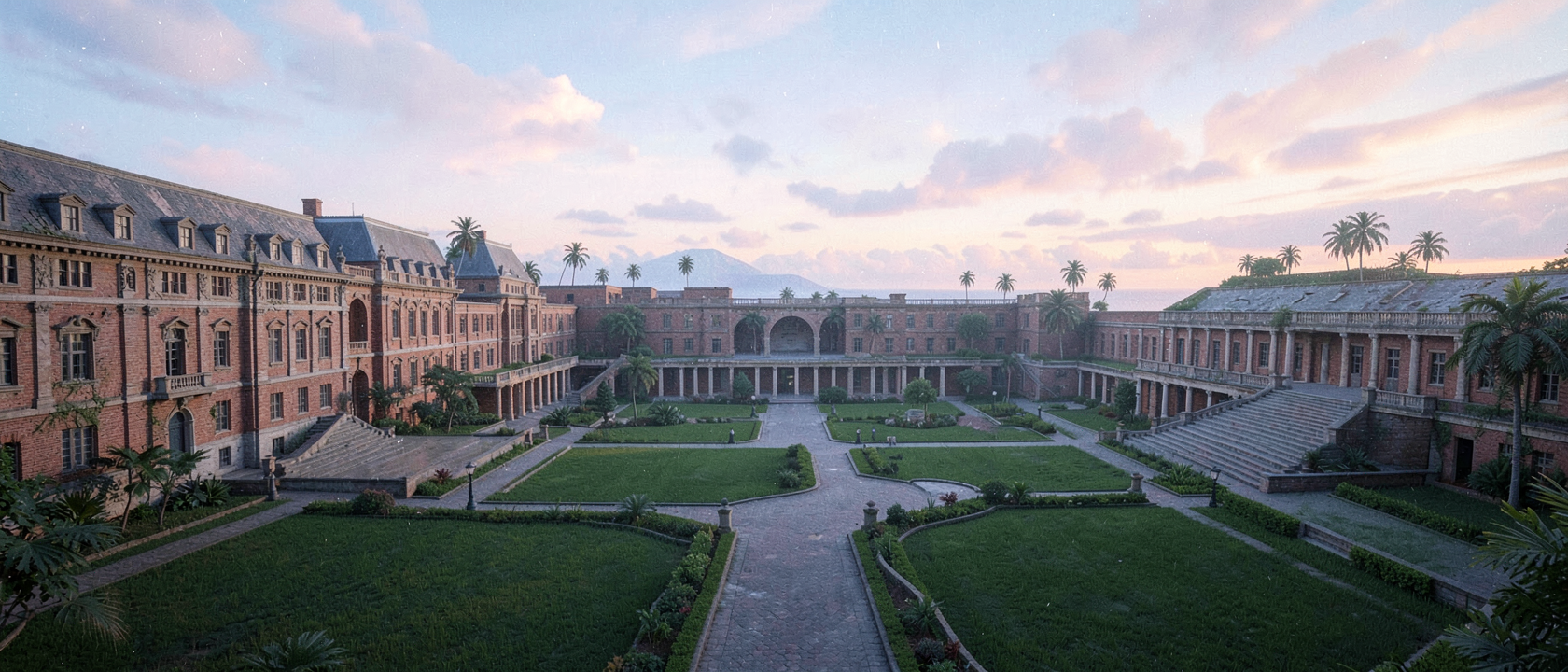
The logic clicked for educators: if Second Life could mimic real-world property, commerce, and identity, maybe it could mimic real-world education too. Universities built lecture halls, libraries, and plazas rendered in 3D, some even holding graduation ceremonies conducted entirely through avatars.
East Carolina University’s campus included a pirate ship where visitors could learn about test anxiety. Northern Virginia Community College ran real, numbered classes, with lesson material displayed on flat virtual boards. This wasn’t a side project for a few enthusiasts: by 2008, Second Life’s own creators claimed more than 300 universities worldwide were teaching classes or conducting research on the platform, years before Zoom or MOOCs existed.
A Serious Bet on the Future of Learning
The seriousness of this effort is easy to miss in hindsight. In the mid-2000s, “distance learning” and “online education” were still unproven ideas, nothing like the standard practice they’ve become. A 3D immersive space where students could walk around a virtual quad felt like a genuine frontier, not a gimmick.
The appeal went beyond novelty. In Second Life, geography stopped mattering: a student in one state could sit in the “same room” as classmates scattered across the country without anyone leaving home. For a while, that felt like a real answer to a real question: what learning could look like once it went fully digital.
Logging Back In
Years later, Fusion journalist Patrick Hogan went looking for what remained. His account, published August 13, 2015, toured islands built by Arkansas State University, Ohio University, East Carolina University, Northern Virginia Community College, and the University of Wisconsin-Milwaukee.
What he found was quiet. Lecture halls stood empty, plazas sat abandoned. At Ohio University, an advertisement promised a “virtual worlds certification” coming in 2009, a program he couldn’t find a trace of anywhere else. At Northern Virginia Community College, the classrooms had shrunk to flat boards labeled “Test Questio,” and an “office hours” area was just a ring of easy chairs around a virtual campfire. Hogan reported not seeing a single other user during his entire visit.
What Happened to the Dream
A few plausible reasons stand out for why the experiment faded, though no single cause explains it. The technology was clunky by later standards, running an island cost real money (Second Life’s website lists setup fees of $1,000 plus $295 a month just to keep a private island online), and simpler, cheaper platforms eventually offered the same convenience without asking anyone to steer a 3D avatar through a virtual quad.
None of that means the idea was wrong. Ambitious tech experiments often fade out not because the concept fails, but because the tools and the timing aren’t ready yet. Hogan himself noted that these abandoned islands still show something modern, polished ed-tech platforms often lack: a willingness to get weird with the format. Modern remote classrooms are, in a sense, distant descendants of those empty virtual lecture halls, built years before anyone had heard of a Zoom link.